Yellow Rattle
Rhinanthus minor
Wildflowers and Natives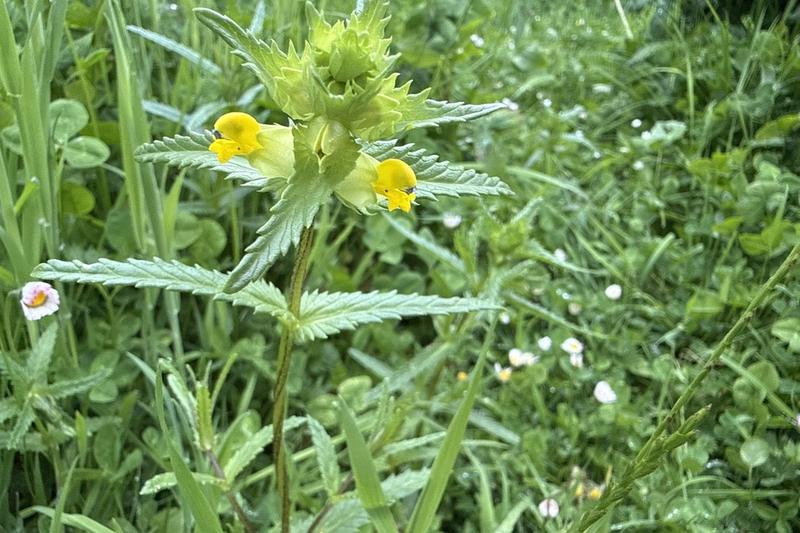
Quick facts
- Watering
- Rainfall sufficient once established
- Sunlight
- Full sun to partial shade
- Soil
- Poor, well-drained, low fertility
- Humans
- Unknown
- Cats
- Unknown
- Dogs
- Unknown
- Height
- 20–50 cm
- Spread
- 10–20 cm
- Spacing
- 15–30 cm apart
About Yellow Rattle
Yellow Rattle is a charming native British annual wildflower with bright yellow, two-lipped flowers that bloom from May to September. This semi-parasitic plant is renowned among UK gardeners and conservationists as a powerful tool for meadow creation, as it naturally suppresses vigorous grasses by feeding on their roots. Growing 20–50 cm tall, it produces distinctive seed pods that rattle when ripe, giving the plant its common name. Yellow Rattle is essential for establishing species-rich wildflower meadows across Britain, making it invaluable for wildlife gardening and habitat restoration.
UK fact: Yellow Rattle is considered the 'meadow maker' in British conservation circles, as it can reduce grass vigour by up to 60%, allowing other native wildflowers such as oxeye daisies, knapweeds, and orchids to establish and thrive in traditional hay meadows.
Watering Yellow Rattle
Yellow Rattle requires minimal watering once established, as it is adapted to natural British rainfall patterns. Newly sown seed may benefit from light watering during prolonged spring dry spells to aid germination, but avoid waterlogging. Established plants are drought-tolerant and require no supplementary watering in typical UK conditions. Excessive moisture can lead to fungal issues and poor establishment.
Sunlight requirements
Yellow Rattle thrives in full sun but tolerates partial shade, though flowering may be reduced in shadier positions. In UK gardens, south or west-facing meadow areas provide ideal conditions. Avoid deep shade under trees, as the plant requires reasonable light levels to photosynthesize whilst parasitizing grass roots.
Soil and feeding
Yellow Rattle performs best in poor, low-fertility soils with good drainage, thriving where grasses are less vigorous. It tolerates a wide pH range from slightly acidic to alkaline (pH 5.5–7.5) but struggles in rich, heavily fertilised soils where competitive grasses dominate. Clay, loam, chalk, and sandy soils are all suitable provided fertility is low. Avoid improved lawns or recently fertilised ground, as high nutrient levels favour grasses over Yellow Rattle.
No feeding is required or recommended for Yellow Rattle, as it thrives in nutrient-poor conditions. Adding fertiliser will encourage vigorous grass growth, which outcompetes the wildflower and defeats its meadow-making purpose. If establishing Yellow Rattle in former lawn or agricultural land, avoid any soil amendments and allow natural nutrient depletion over time.
Pruning Yellow Rattle
Yellow Rattle requires no pruning in the traditional sense, but meadow management is essential for successful reseeding. Allow plants to set seed fully before cutting the meadow, typically from late July to September depending on your region. Cut meadow vegetation to 5–10 cm after seeds have ripened and dispersed, leaving cuttings in situ for a few days to shake out remaining seeds before removing. This annual cut prevents scrub encroachment and creates ideal conditions for next year's germination.
Propagating Yellow Rattle
Yellow Rattle is propagated exclusively from fresh seed sown in autumn, as the seed requires a cold period (stratification) to germinate and loses viability rapidly. Sow seed from late August to November directly into prepared ground where grasses have been cut short and the soil surface lightly disturbed or scarified. Seed must make good contact with soil; simply broadcasting onto long grass will fail. Commercial seed is available, but collecting your own from established meadows in late summer ensures fresh, viable seed. Yellow Rattle cannot be grown from cuttings or division.
Common problems
Yellow Rattle is largely trouble-free and suffers from few pests or diseases in UK gardens. The main challenge is establishment failure, usually caused by sowing old seed, sowing in spring rather than autumn, or sowing onto unsuitable ground with vigorous grasses or high fertility. Seedlings may be grazed by slugs and snails in wet springs, though damage is rarely severe. Powdery mildew can occasionally affect foliage in humid conditions but does not significantly impact plant performance. Poor germination is almost always due to seed age or incorrect sowing timing rather than disease.
Spot a problem with your plant? Photograph the affected area using the Loam app and it will suggest the most likely cause and treatment.
Safety
- Humans
-
Unknown
Yellow Rattle toxicity to humans is not well documented. As with all wildflowers, it should not be consumed.
- Cats
-
Unknown
No specific toxicity data available for cats. Unlikely to be consumed due to meadow habitat.
- Dogs
-
Unknown
No specific toxicity data available for dogs. Unlikely to be consumed due to meadow habitat.
Toxicity information is for general guidance only. If a person or pet has been exposed to this plant and you are concerned, seek advice from a medical professional or vet.
Seasonal care calendar
Monthly care guide for Yellow Rattle in the UK, based on average conditions.
| Month | Care tasks |
|---|---|
| January | No action needed. Seeds are undergoing cold stratification in the soil. |
| February | No action needed. Seeds continue stratification; germination begins late in mild winters. |
| March | Seedlings emerge. Avoid walking on meadow areas to prevent damage to young plants. |
| April | Young plants establish and begin parasitizing grass roots. Monitor for slug damage in wet weather. |
| May | Flowering begins. Enjoy the display and observe visiting pollinators, especially bumblebees. |
| June | Peak flowering period. Plants continue to suppress surrounding grasses effectively. |
| July | Flowering continues into early July. Seed pods begin to form and ripen through the month. |
| August | Seeds ripen and rattle in pods. Collect fresh seed for sowing elsewhere or allow natural dispersal. Cut meadow from late August once seeds have dropped. |
| September | Sow fresh seed into prepared ground. Scarify soil lightly and ensure good seed-to-soil contact for best germination. |
| October | Continue sowing fresh seed until mid-October. Seeds require cold stratification over winter to germinate in spring. |
| November | Final opportunity for autumn sowing. Ensure meadow is cut short to reduce grass competition for emerging seedlings. |
| December | No action needed. Seeds lie dormant, stratifying naturally through winter cold. |
Frequently asked questions
- When should I sow Yellow Rattle seed in the UK?
- Sow Yellow Rattle seed from late August to November for germination the following spring. Fresh seed sown in autumn is essential, as it requires cold stratification over winter and loses viability quickly. Spring sowing almost always fails.
- Why isn't my Yellow Rattle germinating?
- Poor germination usually results from old seed, spring sowing, or sowing onto unsuitable ground. The Loam app can help you track sowing dates and set autumn reminders, plus diagnose establishment issues with personalised advice for your meadow conditions.
- How does Yellow Rattle help create wildflower meadows?
- Yellow Rattle is semi-parasitic, feeding on grass roots and reducing their vigour by up to 60%. This weakens competitive grasses, allowing other wildflowers to establish and thrive, making it the cornerstone of successful meadow creation in the UK.
Got a question about growing Yellow Rattle that isn't covered here? Ask the Garden Advisor in the Loam app. It knows your saved plants and local conditions.
Related plants
This page was compiled with AI assistance and reviewed by our team. .