Bird's Foot Trefoil
Lotus corniculatus
Wildflowers and Natives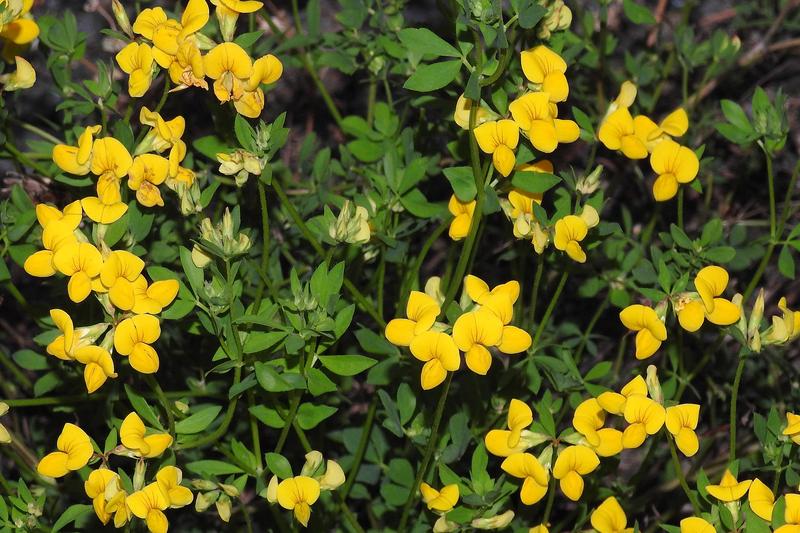
Quick facts
- Watering
- Minimal once established
- Sunlight
- Full sun to partial shade
- Soil
- Well-drained, poor to moderate fertility
- Humans
- Safe
- Cats
- Safe
- Dogs
- Safe
- Height
- 10–40 cm
- Spread
- 30–60 cm
- Spacing
- 20–30 cm apart
About Bird's Foot Trefoil
Bird's Foot Trefoil is a low-growing, spreading perennial wildflower native to the UK, producing clusters of bright yellow pea-like flowers from late spring through summer. The name derives from the distinctive seed pods that resemble a bird's clawed foot, arranged in a radiating pattern. UK gardeners value this plant for wildlife-friendly meadows, green roofs, and naturalised lawns, as it fixes nitrogen in the soil and provides nectar for bees and butterflies. Its tolerance of poor soils and ability to thrive in challenging conditions make it an excellent choice for low-maintenance, biodiverse planting schemes.
UK fact: Bird's Foot Trefoil is the food plant for several British butterfly species including the Common Blue, and was historically known as 'Eggs and Bacon' in rural Britain due to the red-tinged buds contrasting with the yellow flowers.
Watering Bird's Foot Trefoil
This drought-tolerant wildflower requires little watering once established, making it ideal for low-maintenance schemes. Water newly planted specimens during dry spells in their first growing season to help roots establish. Mature plants are remarkably resilient and will survive extended UK droughts without supplementary watering. Avoid overwatering, as this can lead to lush growth at the expense of flowers and may encourage fungal issues in heavy soils.
Sunlight requirements
Bird's Foot Trefoil thrives in full sun, producing the most abundant flowers in open, sunny positions. It tolerates partial shade but may become leggy with reduced flowering in shadier spots. In UK gardens, south or west-facing aspects are ideal, though it will perform adequately in most exposures except deep shade.
Soil and feeding
Bird's Foot Trefoil performs best in well-drained, neutral to alkaline soils (pH 6.5-8.0) and actually thrives in poor, infertile conditions where many other plants struggle. It tolerates sandy, chalky, and even stony soils, making it perfect for difficult sites, green roofs, and wildflower meadows. Avoid rich, fertile soils as these encourage excessive leaf growth and reduce flowering. Heavy clay soils should be improved with grit or sharp sand to ensure adequate drainage.
No feeding required for this wildflower, as it fixes its own nitrogen through root nodules containing beneficial bacteria. Applying fertiliser will encourage vigorous foliage growth at the expense of flowers and may allow more competitive plants to crowd it out in meadow settings.
Pruning Bird's Foot Trefoil
Bird's Foot Trefoil requires minimal pruning in naturalistic settings. In wildflower meadows, cut back once in late summer or early autumn after seeds have dispersed, removing growth to 5-8cm to prevent thatch build-up. For tidier garden settings, deadhead spent flowers to prolong blooming, though leaving some seed heads benefits wildlife. Avoid cutting during the main flowering period (May-September) to maximise nectar availability for pollinators.
Propagating Bird's Foot Trefoil
Bird's Foot Trefoil is easily grown from seed sown in spring or autumn directly where it is to grow, as it dislikes root disturbance. Scarify seeds lightly with sandpaper to improve germination, then sow on the soil surface or barely cover, as light aids germination. Division of established clumps can be carried out in spring, though success rates are lower than seed propagation. Self-seeding often occurs naturally in suitable conditions, allowing colonies to spread gradually over time.
Common problems
Bird's Foot Trefoil is largely trouble-free with few significant pest or disease problems in UK gardens. Powdery mildew may occasionally appear on foliage in dry conditions with poor air circulation, though this rarely affects plant vigour. Aphids can sometimes colonise young growth but are usually controlled by natural predators. The main cultural issue is competition from more vigorous grasses and weeds in meadow settings, so ensure adequate spacing and consider annual cutting regimes to maintain balance.
Spot a problem with your plant? Photograph the affected area using the Loam app and it will suggest the most likely cause and treatment.
Safety
- Humans
- Safe
- Cats
- Safe
- Dogs
- Safe
Toxicity information is for general guidance only.
Seasonal care calendar
Monthly care guide for Bird's Foot Trefoil in the UK, based on average conditions.
| Month | Care tasks |
|---|---|
| January | No action needed; plant is dormant. |
| February | No action needed; plant is dormant. |
| March | Sow seeds directly outdoors in prepared soil. New growth begins to emerge. |
| April | Continue sowing seeds. Water new plantings during dry spells. |
| May | First flowers begin to appear. Avoid disturbing plants as pollinators visit. |
| June | Peak flowering period. Deadhead if desired to prolong blooming. |
| July | Flowering continues. Monitor for powdery mildew in dry conditions. |
| August | Late flowers and seed pods developing. Allow some seeds to mature for wildlife. |
| September | Collect ripe seed pods if desired. Cut back meadow plantings after seed dispersal. Sow fresh seed. |
| October | Complete autumn cutting if not done in September. Sow seeds in mild areas. |
| November | Plant begins to die back. No action needed. |
| December | No action needed; plant is dormant. |
Frequently asked questions
- Is Bird's Foot Trefoil invasive in UK gardens?
- No, Bird's Foot Trefoil is a native UK wildflower that spreads gradually and is not considered invasive. It self-seeds modestly in suitable conditions and can be easily controlled by regular mowing or cutting, making it ideal for wildflower meadows and naturalised areas without overwhelming other plants.
- Why isn't my Bird's Foot Trefoil flowering well?
- Poor flowering is usually caused by overly rich soil, excessive shade, or competition from vigorous grasses. The Loam app can help you diagnose site conditions and adjust care, including soil testing recommendations and personalised advice for improving flowering in your specific garden conditions.
- Can I grow Bird's Foot Trefoil in a lawn?
- Yes, Bird's Foot Trefoil works well in low-maintenance, wildlife-friendly lawns that are mown infrequently. Allow grass to grow to at least 10cm and mow no more than once a month during the growing season to let it flower. It tolerates light foot traffic and adds colour and biodiversity to traditional turf.
Got a question about growing Bird's Foot Trefoil that isn't covered here? Ask the Garden Advisor in the Loam app. It knows your saved plants and local conditions.
Related plants
This page was compiled with AI assistance and reviewed by our team. .