Common Vetch
Vicia cracca
Wildflowers and Natives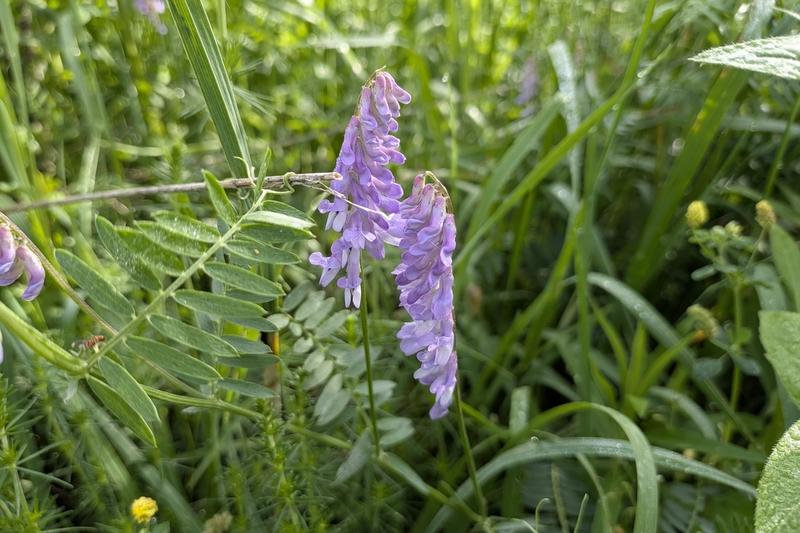
Quick facts
- Watering
- Minimal once established
- Sunlight
- Full sun to partial shade
- Soil
- Well-drained, moderately fertile
- Humans
- Toxic
- Cats
- Toxic
- Dogs
- Toxic
- Height
- 60–200 cm
- Spread
- 30–60 cm
- Spacing
- 30–45 cm apart
About Common Vetch
Common Vetch is a scrambling perennial wildflower native to the UK, producing beautiful spikes of violet-blue flowers from June to August. This nitrogen-fixing legume climbs using tendrils and can reach up to 2 metres, making it ideal for wildlife gardens and meadow plantings. UK gardeners value it for attracting bumblebees and other pollinators, whilst its ability to enrich soil makes it a valuable companion plant. Its delicate, feathery foliage and abundant blooms bring a cottage garden charm to hedgerows and borders.
UK fact: Common Vetch has been part of British agricultural history for centuries, traditionally grown as green manure and fodder crop across the countryside, and remains a key component of wildflower meadow restoration projects throughout the UK.
Watering Common Vetch
Common Vetch is remarkably drought-tolerant once established and requires little supplementary watering in most UK conditions. Water newly sown seeds or transplants regularly during the first few weeks to aid establishment, then reduce watering as the plant develops its deep root system. In prolonged dry spells during summer, an occasional deep watering will support flowering, but this native wildflower generally thrives on natural rainfall alone. Avoid overwatering, which can lead to lush growth at the expense of flowers.
Sunlight requirements
Common Vetch thrives in full sun but tolerates partial shade, particularly in south-facing positions where it receives at least 4-6 hours of direct sunlight. In shadier spots, flowering may be reduced but the plant will still provide attractive foliage and nitrogen fixation benefits. Avoid deep shade under dense tree canopies where growth becomes leggy and weak.
Soil and feeding
Common Vetch adapts to a wide range of soil types but performs best in well-drained, moderately fertile ground with a neutral to slightly alkaline pH of 6.5-7.5. It tolerates poor, sandy, or chalky soils remarkably well, making it ideal for difficult sites where other plants struggle. As a legume, it fixes atmospheric nitrogen through root nodules, actually improving soil fertility over time. Heavy clay soils should be improved with grit or organic matter to ensure adequate drainage, as waterlogged conditions can cause root rot.
Common Vetch requires no supplementary feeding due to its nitrogen-fixing capabilities, which allow it to manufacture its own nutrients from atmospheric nitrogen. Excessive fertilisation, particularly high-nitrogen feeds, can promote leafy growth at the expense of flowers and reduce the plant's natural resilience. If growing in exceptionally poor soil, a light application of general-purpose fertiliser in early spring may support initial establishment.
Pruning Common Vetch
Pruning is minimal for Common Vetch, though cutting back after the main flowering period in late summer can encourage a second flush of blooms and prevent excessive self-seeding if desired. In wildlife gardens, leave seed heads intact through autumn and winter to provide food for birds and overwintering habitat for beneficial insects. Cut back dead growth to ground level in late winter or early spring before new growth emerges. If the plant becomes too vigorous or invasive, simply pull out unwanted stems or cut back hard to control spread.
Propagating Common Vetch
Common Vetch is easily propagated from seed sown directly outdoors in spring (March-May) or autumn (September-October). Scarify seeds by rubbing with sandpaper or nicking the hard seed coat to improve germination rates, then sow 1-2cm deep in prepared soil. Germination typically occurs within 2-3 weeks in spring sowings. Established plants self-seed readily, and seedlings can be transplanted whilst young, though the deep taproot makes older plants difficult to move successfully.
Common problems
Common Vetch is generally trouble-free but can occasionally suffer from aphid infestations, particularly on young growth in spring, though these rarely cause serious damage and attract beneficial predatory insects. Powdery mildew may appear on foliage in dry conditions with poor air circulation, but this is typically cosmetic and doesn't significantly harm the plant. The main cultural issue is its vigorous, scrambling habit, which can smother smaller neighbouring plants if not managed, so provide adequate support or position carefully. In very fertile soils, growth can become excessively lush and floppy.
Spot a problem with your plant? Photograph the affected area using the Loam app and it will suggest the most likely cause and treatment.
Safety
- Humans
-
Toxic
Contains canavanine and other compounds that can cause digestive upset if consumed in quantity. Generally not considered highly toxic but should not be eaten.
- Cats
-
Toxic
Can cause mild gastrointestinal upset if ingested. Keep cats away from large quantities.
- Dogs
-
Toxic
Can cause vomiting and diarrhoea if consumed in quantity. Monitor dogs around this plant and discourage chewing.
Toxicity information is for general guidance only. If a person or pet has been exposed to this plant and you are concerned, seek advice from a medical professional or vet.
Seasonal care calendar
Monthly care guide for Common Vetch in the UK, based on average conditions.
| Month | Care tasks |
|---|---|
| January | No action needed; plant is dormant. |
| February | Prepare planting sites by clearing weeds and improving drainage if needed. |
| March | Sow scarified seeds directly outdoors; cut back any remaining dead growth from previous year. |
| April | Continue sowing seeds; water new seedlings during dry spells. |
| May | Thin seedlings to 30-45cm spacing; provide support for climbing stems if desired. |
| June | Enjoy the first flowers; monitor for aphids on new growth. |
| July | Peak flowering period; deadhead spent blooms to prolong display or leave for wildlife. |
| August | Cut back after flowering for potential second flush; allow some seed heads to develop for self-seeding. |
| September | Collect ripe seed pods for sowing; sow fresh seeds for autumn germination. |
| October | Leave seed heads and stems standing for wildlife habitat through winter. |
| November | No action needed; plant entering dormancy. |
| December | No action needed; plant is dormant. |
Frequently asked questions
- Is Common Vetch invasive in UK gardens?
- Common Vetch can be vigorous and self-seeds readily, but it's a native British wildflower rather than an invasive species. It's easily controlled by removing unwanted seedlings and cutting back after flowering. In wildlife gardens, its spreading habit is often welcomed for ground cover and pollinator support, but position it carefully away from delicate plants that might be smothered.
- Why isn't my Common Vetch flowering well?
- Poor flowering is usually caused by too much shade, overly rich soil promoting leafy growth, or excessive nitrogen fertiliser. The Loam app can help diagnose your specific growing conditions and provide personalised advice on improving flowering based on your garden's light levels and soil type.
- Can I grow Common Vetch as a green manure crop?
- Absolutely. Common Vetch is an excellent green manure, fixing nitrogen in the soil through its root nodules and adding organic matter when dug in. Sow in spring or autumn, allow it to grow for 8-12 weeks, then cut down and dig into the soil before it sets seed. This traditional practice enriches the soil naturally for subsequent crops.
Got a question about growing Common Vetch that isn't covered here? Ask the Garden Advisor in the Loam app. It knows your saved plants and local conditions.
Related plants
This page was compiled with AI assistance and reviewed by our team. .