Weigela
Weigela florida
Shrubs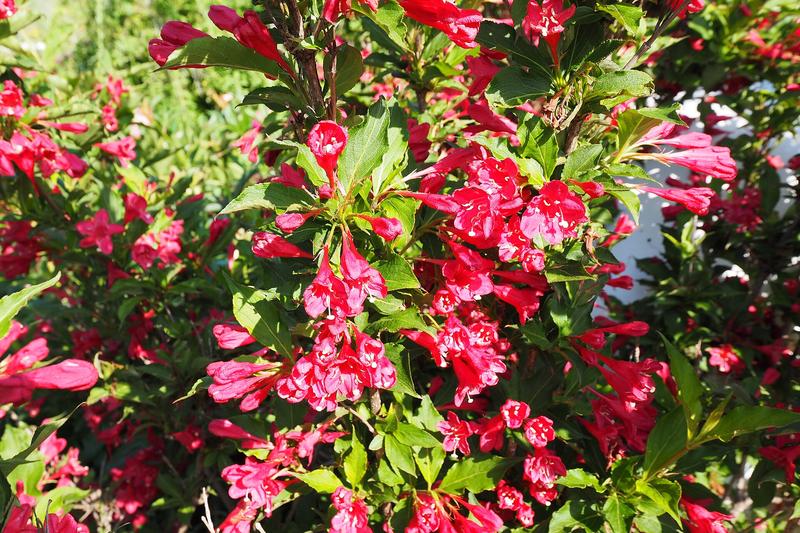
Quick facts
- Watering
- Weekly during first year
- Sunlight
- Full sun to partial shade
- Soil
- Moist, well-drained, fertile
- Humans
- Safe
- Cats
- Safe
- Dogs
- Safe
- Height
- 120–200 cm
- Spread
- 150–250 cm
- Spacing
- 150–200 cm apart
- RHS recognition
- Award of Garden Merit
About Weigela
Weigela is a deciduous flowering shrub native to East Asia, prized by UK gardeners for its profuse display of tubular flowers in late spring and early summer. The arching branches are smothered in blooms ranging from white and pale pink to deep crimson, often attracting bees and hummingbird hawk-moths. Many modern cultivars offer additional interest through purple, bronze, or variegated foliage that extends the season of appeal. Weigela is a reliable, low-maintenance choice for mixed borders, cottage gardens, and wildlife-friendly planting schemes throughout the UK.
UK fact: Several Weigela cultivars, including 'Bristol Ruby' and 'Florida Variegata', have received the RHS Award of Garden Merit, recognising their outstanding performance in British gardens and their ability to thrive in the UK's temperate maritime climate.
Watering Weigela
Newly planted weigela requires consistent moisture, so water weekly during dry weather in the first year, applying approximately 10–15 litres per plant. Established shrubs are fairly drought-tolerant but will flower more reliably if watered during extended dry periods in late spring and summer. Apply a 5–7 cm mulch of organic matter around the base each spring to conserve soil moisture and suppress weeds. Avoid overhead watering during flowering, as this can damage the delicate blooms and encourage fungal issues.
Sunlight requirements
Position weigela in full sun for the best flowering display, ideally with at least six hours of direct sunlight daily. In partial shade, the shrub will still grow well but may produce fewer blooms. South- or west-facing positions are ideal in most of the UK, though in hot, dry gardens a spot with dappled afternoon shade will help prevent foliage stress during summer heatwaves.
Soil and feeding
Weigela adapts to a wide range of soil types, from sandy loams to heavier clay, provided drainage is adequate. The ideal soil is fertile, moisture-retentive yet well-drained, with a pH between 6.0 and 7.5. On heavy clay, incorporate plenty of organic matter and grit at planting time to improve drainage and aeration. Avoid waterlogged sites, as weigela is susceptible to root rot in poorly drained conditions, particularly during wet UK winters.
Feed weigela in March with a general-purpose granular fertiliser such as Growmore or blood, fish, and bone, scattering approximately 70 g per square metre around the root zone. Follow up with a 5 cm layer of well-rotted garden compost or farmyard manure to boost soil organic matter and provide a steady supply of nutrients throughout the growing season. Avoid high-nitrogen feeds after midsummer, as these promote soft growth that may be damaged by early frosts.
Pruning Weigela
Weigela flowers on the previous year's wood, so prune as soon as the blooms fade, typically in late June or July. Cut back flowered shoots to a strong pair of buds or a healthy side shoot lower down the stem. Every two to three years, remove up to one-third of the oldest, thickest stems at the base to rejuvenate the shrub and promote fresh, floriferous growth from the base. Avoid autumn or winter pruning, as this will remove the flowering wood and result in a poor display the following spring.
Propagating Weigela
The most reliable method for propagating weigela is from semi-ripe cuttings taken in midsummer when the current season's growth has begun to firm up. Alternatively, hardwood cuttings can be taken in November or December and inserted into a sheltered trench outdoors. Both methods have high success rates and will produce flowering plants within two to three years. Layering is also effective for low-growing branches that can be pegged down into the soil.
Common problems
Weigela is generally trouble-free but can occasionally suffer from aphid infestations in spring, which cause distorted new growth and sticky honeydew on leaves. Leaf spot fungi may appear during wet summers, causing brown or purple blotches on foliage, though this is rarely serious. Dieback of stems can occur if the shrub is planted in poorly drained soil or damaged by late frosts. Good air circulation, adequate spacing, and prompt removal of any dead or diseased wood will minimise most problems.
Spot a problem with your plant? Photograph the affected area using the Loam app and it will suggest the most likely cause and treatment.
Safety
- Humans
- Safe
- Cats
- Safe
- Dogs
- Safe
Toxicity information is for general guidance only.
Seasonal care calendar
Monthly care guide for Weigela in the UK, based on average conditions.
| Month | Care tasks |
|---|---|
| January | No action needed. The shrub is fully dormant. |
| February | Check ties and stakes on newly planted specimens after winter gales. |
| March | Apply a balanced fertiliser and mulch around the base with well-rotted compost or manure. |
| April | Watch for aphids on emerging shoots and treat if necessary. Water newly planted shrubs during dry spells. |
| May | Enjoy the first flush of flowers. Deadhead spent blooms if desired, though this is not essential. |
| June | Main flowering period. Begin pruning as soon as blooms fade, removing flowered shoots and thinning congested growth. |
| July | Complete pruning by mid-month. Take semi-ripe cuttings for propagation. Water during dry spells. |
| August | Continue taking semi-ripe cuttings if needed. Water established plants during prolonged drought. |
| September | Reduce watering as growth slows. Some cultivars may produce a light second flush of flowers. |
| October | Foliage begins to colour and drop. Clear fallen leaves from around the base to reduce disease risk. |
| November | Take hardwood cuttings and insert into a sheltered trench outdoors. Plant new specimens while soil is still workable. |
| December | No action needed. The shrub is entering full dormancy. |
Frequently asked questions
- When should I prune weigela?
- Prune weigela immediately after flowering in June or July. Weigela flowers on the previous year's wood, so pruning in autumn or winter removes the flowering stems. Remove spent flower clusters and cut back flowered shoots to a strong bud or side shoot. You can also remove up to one-third of the oldest stems to ground level to maintain shape and vigour.
- Why are the leaves on my weigela turning yellow?
- Yellowing leaves can indicate waterlogging, particularly on heavy clay soils during wet winters. Ensure the planting site has adequate drainage. Nutrient deficiency, especially nitrogen or iron, can also cause yellowing. If you're unsure what's causing the problem, the Loam app can help diagnose leaf issues from photos and provide personalised care advice. Apply a balanced fertiliser in spring and mulch with organic matter to improve soil fertility.
- How do I propagate weigela from cuttings?
- Take softwood cuttings in June or July, or semi-ripe cuttings in late summer. Cut 10-15 cm lengths from healthy, non-flowering shoots just below a leaf node. Remove the lower leaves, dip the cut end in hormone rooting powder, and insert into pots filled with a mix of equal parts peat-free compost and perlite or sharp sand. Keep in a sheltered spot or cold frame, water regularly, and roots should develop within 6-8 weeks.
Got a question about growing Weigela that isn't covered here? Ask the Garden Advisor in the Loam app. It knows your saved plants and local conditions.
Related plants
This page was compiled with AI assistance and reviewed by our team. .