Deutzia
Deutzia scabra
Shrubs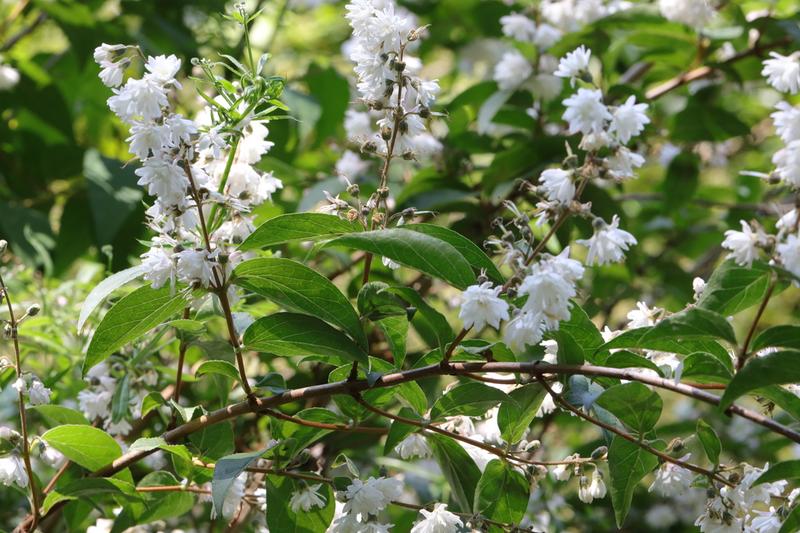
Quick facts
- Watering
- Weekly during establishment
- Sunlight
- Full sun to partial shade
- Soil
- Well-drained, moderately fertile
- Humans
- Safe
- Cats
- Safe
- Dogs
- Safe
- Height
- 200–300 cm
- Spread
- 150–250 cm
- Spacing
- 150–200 cm apart
- RHS recognition
- Award of Garden Merit
About Deutzia
Deutzia is a deciduous flowering shrub native to Japan and China, prized for its profusion of white or pink-tinged blooms in late spring and early summer. Growing 2–3 metres tall, it produces arching stems covered in clusters of star-shaped flowers that attract pollinators to the garden. UK gardeners value deutzia for its reliability, low maintenance requirements, and ability to thrive in most British gardens. Its graceful habit makes it ideal for mixed borders, cottage gardens, and informal hedging.
UK fact: Several Deutzia cultivars, including Deutzia × hybrida 'Strawberry Fields' and Deutzia × hybrida 'Mont Rose', have received the RHS Award of Garden Merit for their exceptional performance in British gardens.
Watering Deutzia
Newly planted deutzia requires consistent moisture, so water weekly during dry spells in the first year, applying 10–15 litres per plant. Once established, deutzia is reasonably drought-tolerant and typically relies on natural rainfall in most UK regions. During prolonged dry periods in summer, particularly in southern England, water fortnightly to maintain vigour and flowering. Avoid waterlogging, as deutzia dislikes sitting in saturated soil during the wetter autumn and winter months.
Sunlight requirements
Plant deutzia in a position receiving at least four to six hours of direct sunlight daily for the best flowering display. In the UK, a south- or west-facing aspect is ideal, though it will perform adequately on east-facing borders. Light dappled shade is tolerated, particularly in warmer southern regions, but may result in fewer blooms.
Soil and feeding
Plant deutzia in any reasonably fertile, well-drained soil, including clay, loam, or sandy soils, provided drainage is adequate. It tolerates a wide pH range from slightly acidic to slightly alkaline (pH 6.0–7.5), making it suitable for most British gardens. Improve heavy clay soils by incorporating organic matter or grit to prevent waterlogging during winter. Avoid extremely poor, dry soils, which may limit growth and flowering.
Feed deutzia in March with a general-purpose granular fertiliser such as Growmore or blood, fish, and bone, scattering approximately 70g per square metre around the base. A spring mulch of well-rotted compost or manure provides additional nutrients and helps retain moisture. Established plants in reasonably fertile soil require minimal feeding beyond an annual spring application.
Pruning Deutzia
Deutzia flowers on the previous year's wood, so prune as soon as flowering finishes in late June or July. Remove up to one-third of the oldest stems at ground level to encourage fresh growth from the base, and trim back flowered shoots to a strong pair of buds or side shoots. This rejuvenates the plant and prevents it becoming congested and leggy. Avoid autumn or winter pruning, as this removes the flowering wood and results in poor blooms the following year.
Propagating Deutzia
Take softwood cuttings in June from non-flowering shoots, or hardwood cuttings in October or November from mature stems. Softwood cuttings root quickly in a propagator, whilst hardwood cuttings can be inserted directly into a sheltered outdoor bed or cold frame. Both methods have high success rates, making deutzia one of the easier shrubs to propagate at home. Rooted cuttings are typically ready to plant out the following spring.
Common problems
Deutzia is generally trouble-free and suffers from few serious pests or diseases in UK gardens. Aphids may occasionally colonise young shoots in spring, causing distorted growth, but these are easily controlled with insecticidal soap or by encouraging natural predators. Leaf spot fungi can appear during wet summers, causing brown or purple spots on foliage, though this is rarely serious and requires no treatment. Poor flowering is usually due to incorrect pruning timing or insufficient sunlight rather than pest or disease issues.
Spot a problem with your plant? Photograph the affected area using the Loam app and it will suggest the most likely cause and treatment.
Safety
- Humans
- Safe
- Cats
- Safe
- Dogs
- Safe
Toxicity information is for general guidance only.
Seasonal care calendar
Monthly care guide for Deutzia in the UK, based on average conditions.
| Month | Care tasks |
|---|---|
| January | No action needed; plant is fully dormant. |
| February | Check ties and stakes on newly planted specimens after winter winds. |
| March | Apply balanced fertiliser around the base and refresh mulch. Plant bare-root specimens. |
| April | Monitor for aphids on emerging shoots and treat if necessary. Water newly planted shrubs during dry spells. |
| May | Enjoy the developing flower buds. Continue watering young plants weekly if rainfall is low. |
| June | Peak flowering period. Take softwood cuttings from non-flowering shoots for propagation. |
| July | Prune immediately after flowering finishes, removing old stems and trimming back flowered shoots. |
| August | Water during prolonged dry spells. Deadhead any remaining faded flowers if not already pruned. |
| September | Reduce watering as autumn rains arrive. Plant container-grown specimens. |
| October | Take hardwood cuttings and insert into outdoor trenches. Clear fallen leaves from around the base. |
| November | Plant bare-root deutzia. Mulch around established plants with compost or well-rotted manure. |
| December | No action needed; plant is dormant and requires no winter protection. |
Frequently asked questions
- When should I prune my deutzia?
- Prune deutzia immediately after flowering in July. Deutzia flowers on the previous year's wood, so pruning in autumn, winter, or spring removes the flowering shoots. Remove spent flower clusters and cut back flowered stems to a strong bud or side shoot. You can also thin out one-third of the oldest stems to ground level to maintain vigour and shape.
- Why are the leaves on my deutzia turning brown?
- Brown leaves on deutzia can indicate several issues: underwatering during dry spells, waterlogged soil causing root problems, or leaf scorch from intense sun in exposed positions. Check soil moisture levels and drainage. If you're unsure what's affecting your plant, the Loam app can help diagnose the problem through photos and provide personalised care advice based on your garden conditions.
- How do I propagate deutzia from cuttings?
- Take softwood cuttings in June or semi-ripe cuttings in July to August. Cut 10–15cm lengths from healthy, non-flowering shoots just below a leaf node. Remove lower leaves, dip the cut end in hormone rooting powder, and insert into pots of gritty compost. Keep in a sheltered spot or cold frame, misting regularly. Cuttings should root within 6–8 weeks and can be potted on the following spring.
Got a question about growing Deutzia that isn't covered here? Ask the Garden Advisor in the Loam app. It knows your saved plants and local conditions.
Related plants
This page was compiled with AI assistance and reviewed by our team. .