Spiraea
Spiraea japonica
Shrubs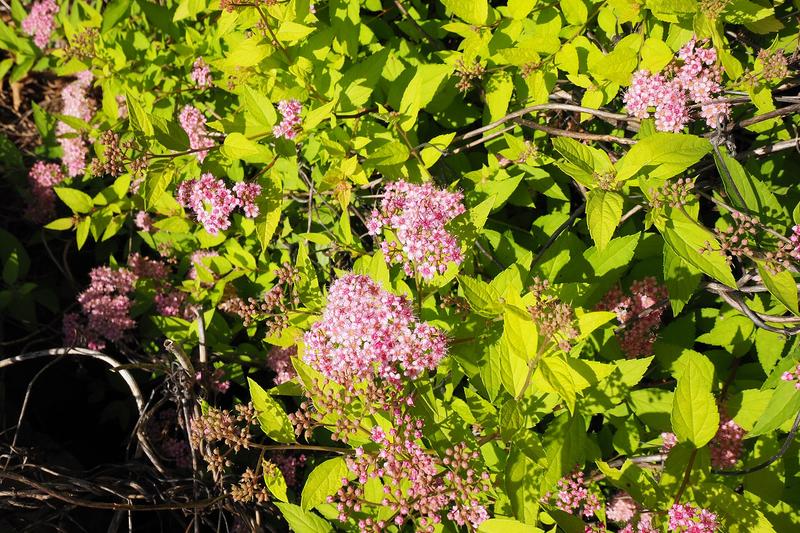
Quick facts
- Watering
- Weekly during establishment
- Sunlight
- Full sun to partial shade
- Soil
- Well-drained, moderately fertile
- Humans
- Safe
- Cats
- Safe
- Dogs
- Safe
- Height
- 60–120 cm
- Spread
- 60–120 cm
- Spacing
- 60–90 cm apart
- RHS recognition
- Award of Garden Merit
About Spiraea
Spiraea japonica is a deciduous flowering shrub native to Japan, Korea and China, prized for its clusters of pink to crimson flowers and compact, mounded habit. This versatile shrub blooms from late spring through summer, offering long-lasting colour in borders, containers and low hedging. UK gardeners value spiraea for its reliability, low maintenance requirements and ability to thrive in a wide range of conditions. Many cultivars offer attractive foliage in shades of gold, bronze or lime green, providing year-round interest even when not in flower.
UK fact: Several Spiraea japonica cultivars, including 'Anthony Waterer', 'Goldflame' and 'Little Princess', have received the RHS Award of Garden Merit, recognising their outstanding performance in British gardens and their suitability for UK growing conditions.
Watering Spiraea
Newly planted spiraea requires consistent moisture, with weekly watering during dry weather for the first year. Apply 10-15 litres per plant, soaking the root zone thoroughly rather than frequent shallow watering. Established plants are reasonably drought-tolerant but benefit from watering during extended summer dry periods, particularly when flowering. Container-grown specimens require more frequent watering, typically two to three times weekly in summer.
Sunlight requirements
Plant in a position receiving at least four to six hours of direct sunlight daily for the best flowering display. In Scotland and northern England, full sun is ideal, whilst in warmer southern counties, light afternoon shade helps prevent foliage bleaching on golden-leaved varieties. Avoid deep shade, which reduces flowering and causes leggy growth.
Soil and feeding
This adaptable shrub thrives in a wide range of soil conditions, from sandy loam to clay, provided the site is not waterlogged. The ideal pH range is 6.0-7.0, though spiraea tolerates slightly alkaline conditions. Improve heavy clay soils by incorporating organic matter and grit to enhance drainage. On poor, sandy soils, add well-rotted compost or manure to improve moisture retention and fertility.
Feed established plants in March with a general-purpose granular fertiliser such as Growmore or blood, fish and bone, applying 70-100g per square metre around the root zone. Alternatively, use a slow-release shrub fertiliser following manufacturer's instructions. Container-grown spiraea benefits from monthly liquid feeding during the growing season with a balanced fertiliser.
Pruning Spiraea
Spiraea japonica flowers on the current season's growth, so prune in February or March before buds break. Cut back all stems to 15-30cm from ground level to promote bushy growth and abundant flowers, or prune more lightly to maintain size, removing one-third of the oldest stems at the base. Deadhead spent flower clusters in summer to encourage a second flush of blooms. Renovate overgrown or neglected plants by hard pruning to 10cm above ground level in early spring; they will regenerate vigorously.
Propagating Spiraea
The most reliable propagation method is semi-ripe cuttings taken in July or August. Select healthy, non-flowering shoots and prepare 10-15cm cuttings, removing lower leaves and dipping the cut end in hormone rooting powder. Insert cuttings into pots of gritty compost and keep in a cold frame or sheltered spot until rooted. Softwood cuttings taken in May or June root quickly but require more careful moisture management. Mature clumps can be divided in autumn or early spring by lifting the plant and separating rooted sections with a sharp spade.
Common problems
Spiraea is generally trouble-free but may occasionally suffer from aphid infestations on new growth in spring, causing distorted leaves and sticky honeydew. Powdery mildew can appear as white patches on foliage during dry summers, particularly on plants in poor air circulation or dry soil. Leaf spot diseases occasionally occur in wet seasons but rarely cause serious damage. Poor flowering is usually due to insufficient sunlight, over-feeding with high-nitrogen fertilisers, or pruning at the wrong time of year.
Spot a problem with your plant? Photograph the affected area using the Loam app and it will suggest the most likely cause and treatment.
Safety
- Humans
- Safe
- Cats
- Safe
- Dogs
- Safe
Toxicity information is for general guidance only.
Seasonal care calendar
Monthly care guide for Spiraea in the UK, based on average conditions.
| Month | Care tasks |
|---|---|
| January | No action needed. Plants are fully dormant. |
| February | Prune established plants before buds break, cutting back to desired height and removing dead or damaged wood. |
| March | Complete pruning early in the month. Apply slow-release fertiliser around the base and refresh mulch. Plant new specimens. |
| April | New growth emerges. Water newly planted specimens weekly if weather is dry. Watch for aphids on young shoots. |
| May | Foliage develops fully. Take softwood cuttings mid to late month. Continue watering young plants during dry spells. |
| June | Flowering begins. Deadhead spent blooms to encourage further flowering. Water during dry periods, especially container plants. |
| July | Peak flowering period. Continue deadheading. Take semi-ripe cuttings. Water regularly in hot, dry weather. |
| August | Flowering continues. Take semi-ripe cuttings early in the month. Maintain watering during dry spells. |
| September | Late flowers fade. Reduce watering as growth slows. Foliage begins autumn colour on some varieties. |
| October | Leaves turn colour and begin to fall. Plant new specimens. Divide established clumps if required. |
| November | Plants enter dormancy. Continue planting bare-root specimens. Clear fallen leaves from around the base. |
| December | No action needed. Plants are dormant and fully hardy. |
Frequently asked questions
- When should I prune spiraea in the UK?
- Prune Spiraea japonica in late February or March before new growth begins. Cut back all stems to 15-30cm from ground level for vigorous flowering, or prune more lightly to maintain shape. Avoid autumn or winter pruning as this removes wood that will carry next season's flowers.
- Why are my spiraea leaves turning brown and how can I diagnose the problem?
- Brown leaf edges usually indicate drought stress, particularly on container-grown plants or those in free-draining soil. Water deeply during dry spells and apply a 5-7cm mulch of organic matter to conserve moisture. On golden-leaved varieties, some scorching may occur in intense sun. If you're unsure about the cause or need personalised advice based on your specific conditions, the Loam app can help diagnose plant problems and provide tailored care reminders.
- How do I propagate spiraea from cuttings?
- Take softwood cuttings in late spring or semi-ripe cuttings in July and August. Cut 10-15cm lengths just below a leaf node, remove lower leaves, and dip in hormone rooting powder. Insert into pots of gritty compost, water well, and cover with a plastic bag or place in a propagator. Cuttings should root within 4-6 weeks. Keep in a sheltered spot and pot on the following spring.
Got a question about growing Spiraea that isn't covered here? Ask the Garden Advisor in the Loam app. It knows your saved plants and local conditions.
Related plants
This page was compiled with AI assistance and reviewed by our team. .