Caryopteris
Caryopteris x clandonensis
Shrubs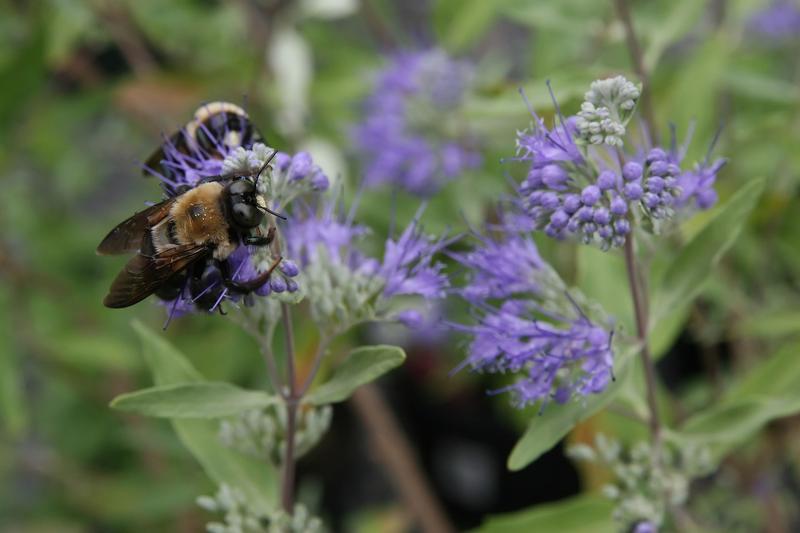
Quick facts
- Watering
- Weekly when establishing, then drought-tolerant
- Sunlight
- Full sun
- Soil
- Well-drained, moderately fertile
- Humans
- Safe
- Cats
- Safe
- Dogs
- Safe
- Height
- 60–100 cm
- Spread
- 60–100 cm
- Spacing
- 75–100 cm apart
- RHS recognition
- Award of Garden Merit
About Caryopteris
Caryopteris is a compact deciduous shrub prized for its late-summer display of vivid blue flowers that appear when many other plants are fading. This hybrid originated from crosses made in the mid-20th century and has become a staple in British gardens for its aromatic grey-green foliage and ability to attract bees and butterflies. UK gardeners value it particularly for providing colour from August through September, filling the gap before autumn bloomers take over. Its neat, rounded habit makes it ideal for mixed borders, cottage gardens, and sunny courtyard plantings.
UK fact: Several Caryopteris cultivars hold the RHS Award of Garden Merit, with 'Heavenly Blue' being one of the most popular in British gardens since receiving its award in 1993, proving reliably hardy across most of the UK.
Watering Caryopteris
Water newly planted Caryopteris weekly during the first growing season to establish a deep root system. Once established (typically after one year), plants are remarkably drought-tolerant and rarely need supplementary watering in the UK climate except during prolonged dry spells in summer. Overwatering or waterlogged conditions are more problematic than drought, so err on the side of underwatering. In containers, water when the top 5cm of compost feels dry to the touch.
Sunlight requirements
Caryopteris requires full sun to flower profusely and maintain its compact habit. In the UK, plant in south or west-facing positions where it will receive at least six hours of direct sunlight daily. Shaded positions result in leggy growth and significantly reduced flowering, making sunny spots essential for success.
Soil and feeding
Caryopteris thrives in well-drained soil and will not tolerate heavy clay or waterlogged conditions, which can cause root rot. It performs best in moderately fertile, neutral to slightly alkaline soil (pH 6.5-7.5), though it tolerates a range of soil types provided drainage is good. On heavy soils, improve drainage by incorporating horticultural grit and planting on a slight mound. Sandy or gravelly soils are ideal and require no amendment.
Apply a balanced slow-release fertiliser such as blood, fish and bone in early spring at the manufacturer's recommended rate. Avoid high-nitrogen feeds which promote leafy growth at the expense of flowers. Established plants in reasonably fertile soil often require no supplementary feeding.
Pruning Caryopteris
Prune hard in early to mid-spring (March or early April) as new growth begins, cutting back all stems to within 10-15cm of the ground or to a low framework of woody growth. Caryopteris flowers on the current season's growth, so this hard pruning encourages vigorous new shoots that will carry abundant flowers in late summer. Without annual pruning, plants become woody, sparse, and flower less freely. Deadheading spent flowers is unnecessary as the seed heads provide winter interest.
Propagating Caryopteris
Caryopteris is easily propagated from softwood cuttings taken in late spring or semi-ripe cuttings in mid to late summer. Take 8-10cm cuttings from non-flowering shoots, remove the lower leaves, and insert into gritty compost in a propagator or covered pot. Cuttings typically root within 4-6 weeks and can be potted on individually. Alternatively, layer low-growing stems in spring by pegging them to the soil surface; they should root by autumn and can be severed from the parent plant the following spring.
Common problems
Caryopteris is generally trouble-free with few serious pest or disease problems in the UK. Occasionally, aphids may colonise soft new growth in spring, but these are easily controlled with a jet of water or organic insecticidal soap if necessary. The main cultural problem is die-back or failure to thrive caused by poor drainage or waterlogged soil, particularly on heavy clay in wet winters. Ensure excellent drainage at planting time to prevent root rot. In very cold winters or exposed positions, some stem die-back may occur, but plants usually regenerate from the base in spring.
Spot a problem with your plant? Photograph the affected area using the Loam app and it will suggest the most likely cause and treatment.
Safety
- Humans
- Safe
- Cats
- Safe
- Dogs
- Safe
Toxicity information is for general guidance only.
Seasonal care calendar
Monthly care guide for Caryopteris in the UK, based on average conditions.
| Month | Care tasks |
|---|---|
| January | No action needed; plant is fully dormant. |
| February | No action needed; wait for signs of new growth before pruning. |
| March | Prune hard back to 10-15cm from ground level as new growth emerges. Apply slow-release fertiliser around the base. |
| April | Complete any remaining pruning early in the month. Water newly planted specimens weekly. Take softwood cuttings late in the month. |
| May | Continue watering young plants weekly. Take softwood cuttings. Mulch around the base with gravel or grit to suppress weeds. |
| June | Water during dry spells, especially newly planted specimens. Take semi-ripe cuttings from mid-month onwards. |
| July | Water during prolonged dry periods. Take semi-ripe cuttings. Watch for aphids on new growth. |
| August | Enjoy the peak flowering display. Continue taking semi-ripe cuttings early in the month. Water containers regularly. |
| September | Flowering continues. Ideal month for planting new specimens. Reduce watering as growth slows. |
| October | Flowers fade but seed heads provide interest. Good month for planting. Stop feeding and reduce watering. |
| November | Leave seed heads and stems intact for winter structure and to protect the crown. Plant bare-root specimens. |
| December | No action needed. Stems and seed heads provide winter interest in the border. |
Frequently asked questions
- When should I prune Caryopteris in the UK?
- Prune Caryopteris hard in early to mid-spring (March or early April) just as new growth begins, cutting all stems back to within 10-15cm of the ground. This encourages vigorous new shoots that will carry abundant flowers in late summer, as Caryopteris blooms on the current season's growth.
- Why is my Caryopteris not flowering well?
- Poor flowering is usually caused by insufficient sunlight, lack of annual pruning, or overly rich soil promoting leafy growth. The Loam app can help diagnose your specific conditions and send timely reminders for essential tasks like spring pruning to ensure abundant blooms each year.
- Is Caryopteris suitable for clay soil?
- Caryopteris struggles in heavy clay unless drainage is significantly improved. Incorporate plenty of horticultural grit at planting time and consider planting on a raised mound or in a raised bed. Sandy or gravelly soils are ideal, but well-amended clay can work if waterlogging is prevented.
Got a question about growing Caryopteris that isn't covered here? Ask the Garden Advisor in the Loam app. It knows your saved plants and local conditions.
Related plants
This page was compiled with AI assistance and reviewed by our team. .