Potentilla
Potentilla fruticosa
Shrubs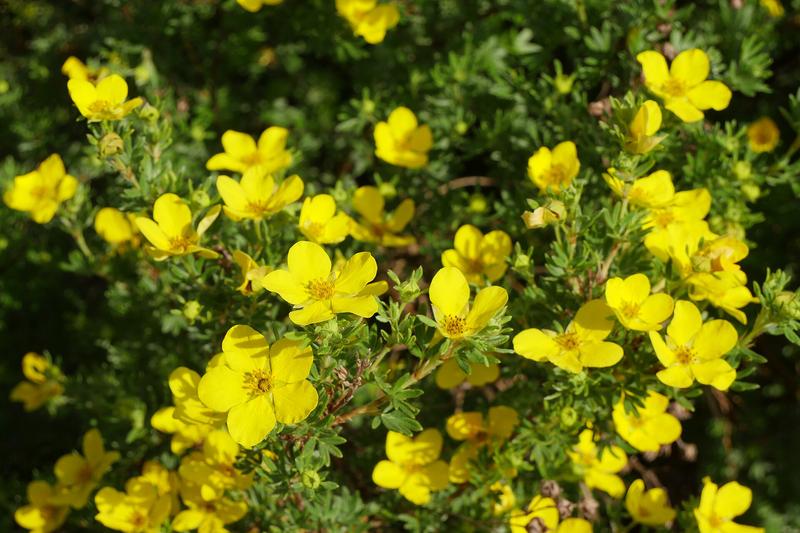
Quick facts
- Watering
- Weekly when young, minimal once established
- Sunlight
- Full sun to partial shade
- Soil
- Well-drained, moderately fertile soil
- Humans
- Safe
- Cats
- Safe
- Dogs
- Safe
- Height
- 60–120 cm
- Spread
- 90–150 cm
- Spacing
- 90–120 cm apart
- RHS recognition
- Award of Garden Merit
About Potentilla
Potentilla is a hardy, deciduous shrub prized for its profusion of cheerful, saucer-shaped flowers that bloom continuously from late spring through to autumn. Native to the Northern Hemisphere, including parts of the British Isles, this compact shrub produces flowers in shades of yellow, white, pink, orange, or red above neat, divided foliage. UK gardeners value potentilla for its exceptional reliability, drought tolerance once established, and ability to thrive in exposed positions where many other flowering shrubs struggle. Its long flowering season and low-maintenance nature make it ideal for mixed borders, low hedging, and cottage garden schemes.
UK fact: Many potentilla cultivars have received the RHS Award of Garden Merit, with varieties such as 'Abbotswood' and 'Elizabeth' being particularly celebrated in British gardens since the mid-20th century for their performance in the unpredictable UK climate.
Watering Potentilla
Newly planted potentillas require weekly watering during dry weather for their first year, applying approximately 10 litres per plant to encourage deep rooting. Once established, typically after one full growing season, potentilla becomes highly drought-tolerant and rarely needs supplementary watering in most UK regions. During exceptionally dry summers, water deeply every fortnight rather than little and often, which encourages surface rooting. Container-grown specimens require more frequent watering, typically twice weekly in summer.
Sunlight requirements
Position potentilla in full sun for the best flowering performance, ideally receiving at least six hours of direct sunlight daily. In warmer parts of the UK, particularly south-facing gardens, some afternoon shade can help preserve flower colour, especially in pink and orange varieties which may fade in intense sun. North-facing positions are generally too shaded for good flowering, though the plant will survive.
Soil and feeding
Potentilla is exceptionally adaptable, growing well in most soil types provided drainage is adequate, from sandy loams to clay soils improved with grit or organic matter. It tolerates a pH range from slightly acidic to moderately alkaline (pH 6.0-7.5), making it suitable for chalky soils where many shrubs struggle. Avoid waterlogged or very heavy clay soils without amendment, as these can lead to root rot. The plant actually flowers better in moderately fertile rather than very rich soil, as excessive fertility promotes leafy growth at the expense of blooms.
Apply a balanced, slow-release fertiliser such as blood, fish and bone at 70g per square metre in early March, lightly forking it into the soil surface around the plant. Avoid high-nitrogen feeds which promote excessive foliage growth and reduce flowering. Container-grown potentillas benefit from a monthly liquid feed with a balanced fertiliser during the growing season from April to August.
Pruning Potentilla
Carry out the main pruning in March or early April, just as new growth begins. Remove about one-third of the oldest stems at ground level to encourage fresh, vigorous growth from the base, and trim remaining stems back by one-third to maintain a compact shape. Deadheading is not necessary as potentilla is self-cleaning, but you can lightly trim over the plant in midsummer if it becomes untidy. Renovate neglected or overgrown specimens by cutting all stems back to 15-20cm from ground level in early spring; they will regenerate vigorously.
Propagating Potentilla
The most reliable propagation method for potentilla is semi-ripe cuttings taken in July or August, which root readily within 4-6 weeks. Softwood cuttings taken in May or June also work well but require more careful attention to prevent wilting. Layering is another straightforward option for low-growing branches, though it takes longer to produce independent plants. Division is possible but less commonly practiced as potentilla doesn't naturally form separate crowns like herbaceous perennials.
Common problems
Potentilla is notably trouble-free, suffering from few serious pests or diseases in UK gardens. Occasionally, aphids may colonise soft new growth in spring, though these rarely cause lasting damage and can be controlled with a strong water spray or organic insecticide if necessary. In very wet summers or poorly drained soils, powdery mildew may appear as white patches on leaves, though this is usually cosmetic and improves with better air circulation and avoiding overhead watering. The main cultural problem is poor flowering, typically caused by excessive shade, overly rich soil, or pruning at the wrong time of year.
Spot a problem with your plant? Photograph the affected area using the Loam app and it will suggest the most likely cause and treatment.
Safety
- Humans
- Safe
- Cats
- Safe
- Dogs
- Safe
Toxicity information is for general guidance only.
Seasonal care calendar
Monthly care guide for Potentilla in the UK, based on average conditions.
| Month | Care tasks |
|---|---|
| January | No action needed. Plant remains dormant with bare stems. |
| February | Check plants for winter damage and remove any broken branches. Prepare for spring pruning. |
| March | Prune to shape, removing one-third of old stems at the base. Apply slow-release fertiliser around established plants. |
| April | New growth emerges. Water newly planted specimens weekly if dry. Apply mulch around the base. |
| May | First flowers begin to appear. Take softwood cuttings mid to late month. Continue watering young plants. |
| June | Peak flowering begins. Water during dry spells, especially container plants. Take softwood cuttings early in the month. |
| July | Flowering continues prolifically. Take semi-ripe cuttings from mid-month onwards. Water containers regularly. |
| August | Continue taking semi-ripe cuttings. Flowering remains strong. Maintain watering during dry weather. |
| September | Flowering continues into early autumn. Good time for planting new specimens. Reduce watering as weather cools. |
| October | Flowering finishes. Plant new potentillas or move existing plants. Leaves begin to turn and drop. |
| November | Plant bare-root specimens. Leaves fall completely. Tidy around the base but avoid heavy pruning. |
| December | No action needed. Plant fully dormant. Good time to plan new planting schemes for spring. |
Frequently asked questions
- When should I prune potentilla?
- Prune potentilla in March or early April, just as new growth begins. Cut back about one-third of the oldest stems to ground level and trim remaining growth by one-third. Avoid autumn or winter pruning as this can reduce flowering.
- Why are my potentilla leaves turning brown?
- Brown leaves on potentilla can indicate several issues including drought stress, waterlogging, or fungal problems. Check soil moisture levels and ensure good drainage. The Loam app can help diagnose the specific cause by analysing photos of your plant and provide personalised care advice based on your garden conditions.
- How do I propagate potentilla from cuttings?
- Take semi-ripe cuttings in July or August, selecting healthy non-flowering shoots about 10cm long. Remove lower leaves, dip the cut end in hormone rooting powder, and insert into pots of gritty compost. Keep in a sheltered spot and they should root within 6-8 weeks. Pot on individually once rooted and grow on for a full season before planting out.
Got a question about growing Potentilla that isn't covered here? Ask the Garden Advisor in the Loam app. It knows your saved plants and local conditions.
Related plants
This page was compiled with AI assistance and reviewed by our team. .