Cistus
Cistus ladanifer
Shrubs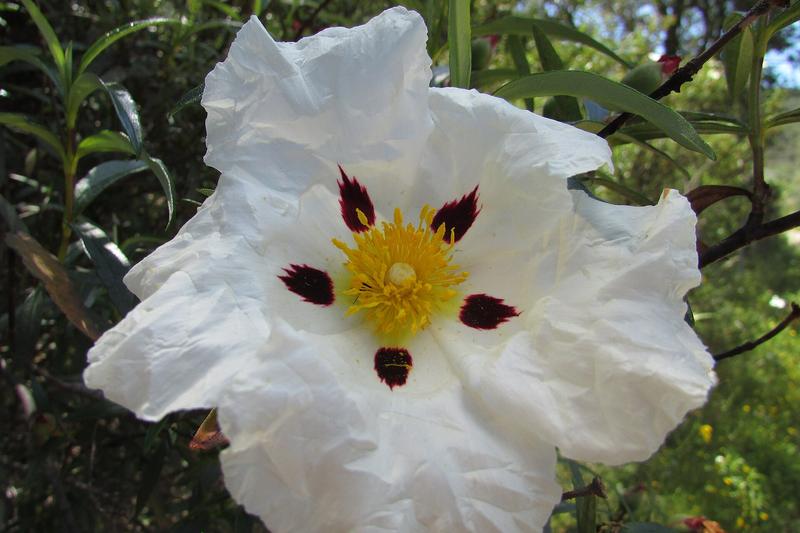
Quick facts
- Watering
- Minimal once established
- Sunlight
- Full sun
- Soil
- Well-drained, poor to moderate
- Humans
- Safe
- Cats
- Safe
- Dogs
- Safe
- Height
- 150–250 cm
- Spread
- 150–200 cm
- Spacing
- 150–180 cm apart
- RHS recognition
- Award of Garden Merit
About Cistus
Cistus ladanifer is an evergreen Mediterranean shrub prized for its large, papery white flowers with distinctive crimson blotches at the base of each petal. Native to Spain and Portugal, this aromatic species thrives in hot, dry conditions and produces fragrant, sticky resin on its leaves. UK gardeners value it for its drought tolerance, long flowering season from late spring to midsummer, and ability to bring a Mediterranean feel to sunny borders and gravel gardens. The dark green foliage provides year-round structure whilst the showy blooms attract bees and other pollinators.
UK fact: Cistus ladanifer holds an RHS Award of Garden Merit and performs particularly well in southern and coastal UK gardens where the milder winters and free-draining soils mirror its native Mediterranean habitat.
Watering Cistus
Water regularly during the first growing season to establish a deep root system, then reduce significantly. Once established, cistus is exceptionally drought-tolerant and requires watering only during prolonged dry spells in summer. Overwatering, particularly in winter, can lead to root rot and is the most common cause of failure in UK gardens. In heavy rainfall areas, ensure excellent drainage to prevent waterlogging.
Sunlight requirements
Cistus ladanifer requires full sun to thrive and flower profusely, making it ideal for south or west-facing positions. In the UK, plant in the sunniest, warmest spot available, such as against a sunny wall or in a sheltered gravel garden. Insufficient light results in leggy growth and reduced flowering, so avoid shaded or north-facing locations.
Soil and feeding
Cistus ladanifer thrives in poor to moderately fertile, well-drained soil and actually performs better in lean conditions than rich soil. It tolerates sandy, gravelly, or chalky soils and prefers a neutral to slightly alkaline pH (6.5-8.0). Heavy clay soils must be improved with grit and organic matter, or plant on a slope or raised bed to ensure drainage. Avoid enriching the soil with fertiliser or compost, as this promotes soft growth susceptible to frost damage.
Cistus requires little to no feeding and actually prefers lean soil conditions. Avoid fertilisers entirely, as rich soil produces lush growth that is less hardy and more prone to winter damage. If growth appears weak, a light application of general-purpose fertiliser in early spring is sufficient, but this is rarely necessary.
Pruning Cistus
Prune lightly after flowering in mid to late summer to maintain shape and remove any frost-damaged growth. Avoid cutting into old wood, as cistus does not regenerate well from hard pruning and may not recover. Deadheading is unnecessary as the plant is self-cleaning. If the shrub becomes leggy or overgrown, it is better to replace it than attempt rejuvenation pruning, as cistus typically has a lifespan of 10-15 years in UK gardens.
Propagating Cistus
Cistus ladanifer is best propagated from semi-ripe cuttings taken in late summer (July to August). Take 7-10cm cuttings from non-flowering shoots, remove lower leaves, and insert into gritty, free-draining compost. Root in a cold frame or unheated greenhouse, as bottom heat is not necessary. Cuttings typically root within 6-8 weeks. Seed is also viable but germination can be erratic; sow fresh seed in autumn in a cold frame and expect germination the following spring.
Common problems
Cistus is generally pest and disease-free in UK gardens, though poor drainage and wet winters are the primary causes of failure. Root rot and fungal diseases can occur in heavy, waterlogged soils, particularly during prolonged wet periods. Frost damage to new growth may occur in harsh winters, especially in colder regions or exposed sites. Aphids occasionally infest new shoots in spring but rarely cause significant harm. The sticky resinous foliage deters most pests naturally.
Spot a problem with your plant? Photograph the affected area using the Loam app and it will suggest the most likely cause and treatment.
Safety
- Humans
- Safe
- Cats
- Safe
- Dogs
- Safe
Toxicity information is for general guidance only.
Seasonal care calendar
Monthly care guide for Cistus in the UK, based on average conditions.
| Month | Care tasks |
|---|---|
| January | No action needed. Protect from severe frost with fleece if temperatures drop below -10°C. |
| February | No action needed. Check for frost damage and ensure good drainage during wet weather. |
| March | Remove any frost-damaged shoots. Plant container-grown specimens in mild areas. |
| April | Ideal planting month. Water new plants regularly to establish roots. |
| May | Flowering begins. Continue watering newly planted specimens. |
| June | Peak flowering period. Enjoy the blooms and observe pollinators visiting. |
| July | Flowering continues. Take semi-ripe cuttings for propagation. Light pruning after flowering finishes. |
| August | Prune lightly to shape after flowering. Continue taking cuttings if needed. |
| September | Reduce watering as autumn rains begin. Plant container-grown specimens in mild areas. |
| October | No action needed. Ensure drainage is adequate before winter rains. |
| November | No action needed. Avoid winter pruning. |
| December | No action needed. Protect young plants from severe frost if necessary. |
Frequently asked questions
- Why is my cistus dying after winter?
- Cistus often succumbs to waterlogged soil during wet UK winters rather than cold temperatures. Ensure excellent drainage by planting in gritty, free-draining soil or on a slope. Avoid heavy clay and never plant in areas prone to winter waterlogging. Once established, cistus is reasonably hardy but cannot tolerate wet roots in cold weather.
- How do I know when my cistus needs watering?
- Established cistus rarely needs watering in the UK except during prolonged summer drought. The Loam app can track local rainfall and send personalised reminders when watering is actually needed, preventing the overwatering that commonly kills cistus in British gardens.
- Can I hard prune an overgrown cistus?
- No, cistus does not respond well to hard pruning into old wood and may die if cut back severely. Only light pruning after flowering is recommended. If your cistus has become leggy or overgrown, it is better to replace it with a young plant, as cistus typically lives 10-15 years and does not rejuvenate from hard cuts.
Got a question about growing Cistus that isn't covered here? Ask the Garden Advisor in the Loam app. It knows your saved plants and local conditions.
Related plants
This page was compiled with AI assistance and reviewed by our team. .