Beauty Bush
Kolkwitzia amabilis
Shrubs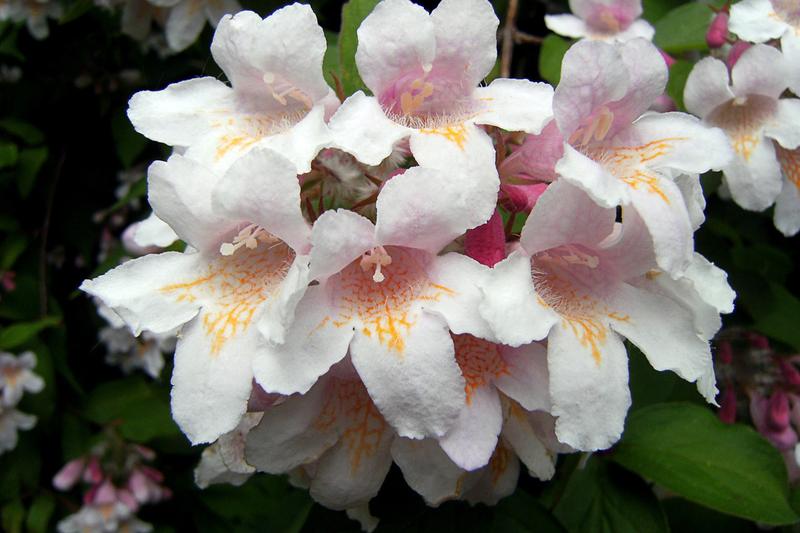
Quick facts
- Watering
- Weekly when young, fortnightly established
- Sunlight
- Full sun to partial shade
- Soil
- Well-drained, moderately fertile
- Humans
- Safe
- Cats
- Safe
- Dogs
- Safe
- Height
- 200–300 cm
- Spread
- 200–300 cm
- Spacing
- 250–300 cm apart
- RHS recognition
- Award of Garden Merit
About Beauty Bush
Beauty Bush is a deciduous flowering shrub native to China, prized for its profuse display of bell-shaped pink flowers in late spring and early summer. Growing 2–3 metres tall with arching branches, it creates a fountain-like shape that suits cottage gardens and mixed borders beautifully. UK gardeners value this hardy shrub for its reliable flowering, ease of cultivation, and tolerance of a wide range of soil conditions. The flowers are followed by bristly seed capsules and the foliage often develops attractive autumn tints.
UK fact: Beauty Bush received the RHS Award of Garden Merit in 1993, recognising its outstanding performance in British gardens and its ability to thrive in the UK's temperate climate with minimal maintenance.
Watering Beauty Bush
Newly planted specimens require thorough watering weekly during dry spells in their first and second years. Apply 10–15 litres per plant, soaking the root zone deeply to encourage roots to grow downwards. Established plants are drought-tolerant and typically require watering only during prolonged dry periods in summer, particularly on free-draining soils. In typical British summers with regular rainfall, mature plants rarely need supplementary watering. Avoid overhead watering during flowering to prevent damage to the delicate blooms.
Sunlight requirements
Plant in a position receiving at least four to six hours of direct sunlight daily for the best flowering display. In northern Britain, choose the sunniest spot available, whilst in warmer southern regions, light afternoon shade is beneficial. Avoid deep shade beneath trees, as this significantly reduces flowering and can lead to leggy growth.
Soil and feeding
This adaptable shrub grows well in a wide range of soil types, from sandy loams to clay soils, provided drainage is adequate. It tolerates pH levels from 6.0 to 8.0, making it suitable for most UK gardens including those on chalk or limestone. Improve heavy clay soils by incorporating grit and organic matter at planting time to enhance drainage. On very poor, sandy soils, add well-rotted compost or manure to improve moisture retention and fertility.
Feed established plants in March with a handful of blood, fish and bone or a balanced slow-release fertiliser such as Growmore, scattered around the base and lightly forked in. Apply a 5–7 cm layer of well-rotted garden compost or manure as a mulch in spring, keeping it clear of the stems. Avoid high-nitrogen feeds, which promote leafy growth at the expense of flowers.
Pruning Beauty Bush
Beauty Bush flowers on the previous year's wood, so timing is crucial—prune straight after flowering finishes, typically in late June or July. Remove one in three of the oldest stems completely at ground level each year to encourage fresh, vigorous growth from the base. Shorten any overlong or wayward shoots to maintain a balanced shape. Avoid autumn or winter pruning, as this removes the flowering wood for the following spring. Neglected or overgrown specimens can be renovated by cutting all stems to 30–60 cm above ground level in late winter, though this sacrifices one season's flowers.
Propagating Beauty Bush
Semi-ripe cuttings taken in mid to late summer root readily and are the most reliable method for home gardeners. Select healthy, non-flowering side shoots of the current season's growth, 10–15 cm long, and root them in a mixture of equal parts peat-free compost and horticultural grit. Hardwood cuttings taken in November can be inserted directly into a sheltered border outdoors. Layering is a foolproof alternative: peg a low-growing branch to the soil in spring, and it will root by the following autumn.
Common problems
Beauty Bush is generally trouble-free and suffers from few serious pests or diseases in UK gardens. Aphids may occasionally colonise young shoot tips in spring, but these rarely cause lasting damage and can be controlled by squashing or spraying with an insecticidal soap if necessary. Powdery mildew can appear on foliage in dry summers, particularly on plants in very sheltered positions with poor air circulation, but this is largely cosmetic. Ensure adequate spacing and avoid overhead watering to minimise fungal issues. Failure to flower is usually due to pruning at the wrong time or insufficient sunlight.
Spot a problem with your plant? Photograph the affected area using the Loam app and it will suggest the most likely cause and treatment.
Safety
- Humans
- Safe
- Cats
- Safe
- Dogs
- Safe
Toxicity information is for general guidance only.
Seasonal care calendar
Monthly care guide for Beauty Bush in the UK, based on average conditions.
| Month | Care tasks |
|---|---|
| January | No action needed. Plant is fully dormant. |
| February | Check ties and stakes on young plants after winter gales. Prepare planting sites for bare-root specimens. |
| March | Apply balanced fertiliser and mulch around the base. Plant container-grown or bare-root specimens. Buds begin to swell. |
| April | Fresh foliage emerges. Water newly planted specimens weekly if dry. Check for aphids on young shoots. |
| May | Flower buds develop rapidly. Ensure adequate water during dry spells to support flowering. Enjoy the emerging blooms from late May. |
| June | Peak flowering period. Deadhead spent blooms if desired. Begin pruning from mid-June onwards once flowering finishes. |
| July | Complete annual pruning by end of month. Take semi-ripe cuttings for propagation. Water young plants during dry weather. |
| August | Continue taking semi-ripe cuttings until mid-month. Water if prolonged dry spell occurs. New growth matures and hardens. |
| September | Foliage may begin to show autumn colour. Reduce watering as growth slows. Good time to plant new specimens. |
| October | Leaves turn yellow and drop. Plant bare-root specimens from late October. Clear fallen leaves from around the base. |
| November | Take hardwood cuttings and insert into sheltered border. Continue planting bare-root stock. Plant enters dormancy. |
| December | No action needed. Assess shape and structure whilst dormant to plan next year's pruning. |
Frequently asked questions
- When should I prune Beauty Bush?
- Prune Beauty Bush immediately after flowering finishes, typically in late June or July. This timing is crucial because the shrub flowers on the previous year's wood—pruning in autumn, winter or early spring will remove the flowering stems and result in no blooms the following year. Remove about one-third of the oldest stems at ground level to encourage fresh growth, and lightly shape the plant as needed. Avoid heavy pruning, which can spoil the natural arching habit.
- Why are my Beauty Bush leaves turning yellow?
- Yellowing leaves on Beauty Bush can indicate several issues including overwatering, poor drainage, nutrient deficiencies (particularly iron in alkaline soils), or pest problems such as aphids. Check soil moisture levels—the soil should be moist but not waterlogged. If you're unsure what's causing the problem, the Loam app can help you diagnose the issue through photo identification and provide personalised care recommendations based on your specific growing conditions.
- What soil does Beauty Bush need?
- Beauty Bush thrives in most well-drained soils and is remarkably adaptable, tolerating both slightly acidic and slightly alkaline conditions (pH 6.0–7.5). It performs best in fertile, moisture-retentive soil enriched with organic matter such as garden compost or well-rotted manure at planting time. Avoid waterlogged or very heavy clay soils, which can lead to root rot. In poor, sandy soils, incorporate plenty of organic matter and mulch annually to retain moisture.
Got a question about growing Beauty Bush that isn't covered here? Ask the Garden Advisor in the Loam app. It knows your saved plants and local conditions.
Related plants
This page was compiled with AI assistance and reviewed by our team. .