Watercress
Nasturtium officinale
Vegetables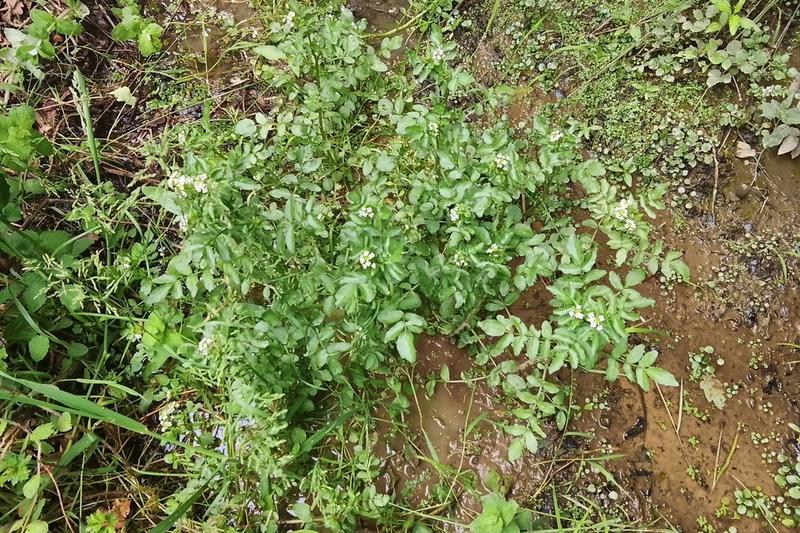
Quick facts
- Watering
- Constant moisture or standing water
- Sunlight
- Full sun to partial shade
- Soil
- Rich, moisture-retentive or aquatic
- Humans
- Safe
- Cats
- Safe
- Dogs
- Safe
- Height
- 10–30 cm
- Spread
- 30–60 cm
- Spacing
- 15–20 cm apart
About Watercress
Watercress is a fast-growing aquatic perennial with dark green, peppery leaves that form floating mats in shallow water or very wet soil. Native to Europe and Asia, it has been cultivated in Britain since Roman times and thrives in our cool, damp climate. UK gardeners prize it for its year-round harvest of nutrient-rich leaves, perfect for salads, soups, and sandwiches. Its hollow stems and rounded leaflets create attractive, edible ground cover in bog gardens or water features.
UK fact: Hampshire's Test Valley has been the heart of British watercress production since the 1850s, with the chalk streams providing ideal growing conditions, and the town of Alresford still hosts an annual Watercress Festival celebrating this heritage crop.
Watering Watercress
As an aquatic plant, watercress needs constant access to water to thrive. Ideally, grow in 5-10cm of standing water, refreshed regularly to prevent stagnation. If growing in soil, water daily or even twice daily during warm weather to maintain saturated conditions. In the UK, rainwater collection systems work well for maintaining water levels, though mains water is acceptable if left to stand for 24 hours to allow chlorine to dissipate.
Sunlight requirements
In the UK, position watercress in partial shade or dappled sunlight, especially in southern regions where summer heat can stress plants. North-facing aspects work well, or provide afternoon shade using taller crops. In Scotland and northern England, full sun is usually tolerated due to cooler temperatures, but ensure constant moisture is maintained.
Soil and feeding
The ideal growing medium is heavy, moisture-retentive soil enriched with well-rotted compost or manure, or a layer of good garden soil in the bottom of a water-filled container. Watercress tolerates a wide pH range but performs best in slightly alkaline conditions (pH 6.5-7.5), which mirrors the chalk streams of traditional British watercress beds. Clay soils work well if kept constantly saturated, whilst sandy soils require frequent watering or are best avoided in favour of container cultivation.
For water-grown watercress, apply a balanced liquid fertiliser at half strength every fortnight during the growing season, as nutrients leach away quickly. Soil-grown plants need less supplementary feeding if planted in compost-enriched ground, though a monthly feed with seaweed-based fertiliser supports vigorous leaf production and improves flavour.
Pruning Watercress
Pinch out growing tips regularly once plants are established, which promotes bushy growth and delays flowering. Remove any flower stems as soon as they appear, as flowering reduces leaf quality and makes foliage bitter. Harvest outer leaves and stems frequently, cutting just above a leaf node to encourage side shoots. In autumn, cut back straggly growth to rejuvenate plants for winter harvesting.
Propagating Watercress
The simplest method is to place fresh watercress stems from the supermarket in a glass of water on a windowsill, where they'll root within 5-7 days. Once roots are 2-3cm long, transplant into permanently wet soil or shallow water. Alternatively, take 10-15cm cuttings from established plants in spring or late summer, removing lower leaves and inserting into wet compost or directly into growing positions. Watercress also self-seeds readily in wet conditions.
Common problems
Watercress is relatively trouble-free but can suffer from flea beetle damage, which creates small holes in leaves, particularly in dry conditions. Aphids occasionally colonise young shoots in spring and summer, whilst slugs and snails may graze on foliage in soil-grown plants. The main cultural problem is bolting in hot, dry weather or if water levels drop, which makes leaves bitter and tough. Ensure water is changed regularly in container systems to prevent stagnant conditions that can harbour mosquito larvae.
Spot a problem with your plant? Photograph the affected area using the Loam app and it will suggest the most likely cause and treatment.
Safety
- Humans
- Safe
- Cats
- Safe
- Dogs
- Safe
Toxicity information is for general guidance only.
Seasonal care calendar
Monthly care guide for Watercress in the UK, based on average conditions.
| Month | Care tasks |
|---|---|
| January | Harvest sparingly from established plants. Refresh water in containers and check water levels remain constant despite freezing weather. |
| February | Begin taking cuttings indoors on windowsills for early spring planting. Clear any dead foliage from overwintered plants. |
| March | Sow seeds in trays of wet compost or plant rooted cuttings outdoors in mild regions. Feed established plants with diluted liquid fertiliser. |
| April | Plant out rooted cuttings into final positions. Begin regular harvesting of outer leaves. Divide congested clumps and replant healthy sections. |
| May | Harvest regularly to encourage fresh growth. Pinch out any flower buds to maintain leaf quality. Ensure water levels remain topped up. |
| June | Continue frequent harvesting. Provide shade in hot weather to prevent bolting. Take cuttings to create succession plantings for autumn. |
| July | Monitor water levels daily in warm weather. Remove any flowering stems immediately. Refresh water in containers weekly to prevent stagnation. |
| August | Take cuttings for autumn and winter crops. Cut back straggly growth to rejuvenate plants. Maintain constant moisture as temperatures peak. |
| September | Plant rooted cuttings for winter harvesting. Reduce feeding frequency as growth slows. Clear fallen leaves from water to maintain quality. |
| October | Continue light harvesting. Protect containers from autumn gales. Ensure drainage holes don't become blocked by fallen leaves. |
| November | Harvest sparingly to allow plants to maintain energy through winter. Check water levels remain adequate despite reduced evaporation. |
| December | Harvest small amounts for festive salads. Protect containers from hard freezes by moving to sheltered spots or insulating with bubble wrap. |
Frequently asked questions
- Why does my watercress taste bitter?
- Bitterness usually indicates the plant is flowering or has been stressed by insufficient water or too much heat. Pinch out flower buds immediately, increase watering, and provide afternoon shade during warm weather.
- How do I know if my watercress is getting enough water?
- Watercress needs constant moisture – leaves should be vibrant green and crisp. Yellowing, wilting, or slow growth indicate water stress. The Loam app can send you watering reminders and help diagnose problems from photos if your watercress shows signs of distress.
- Can I grow watercress from supermarket bunches?
- Absolutely – this is the easiest propagation method. Simply place fresh stems in water on a windowsill, change the water every few days, and plant out once roots develop after 7-10 days.
Got a question about growing Watercress that isn't covered here? Ask the Garden Advisor in the Loam app. It knows your saved plants and local conditions.
Related plants
This page was compiled with AI assistance and reviewed by our team. .