Nasturtium
Tropaeolum majus
Herbs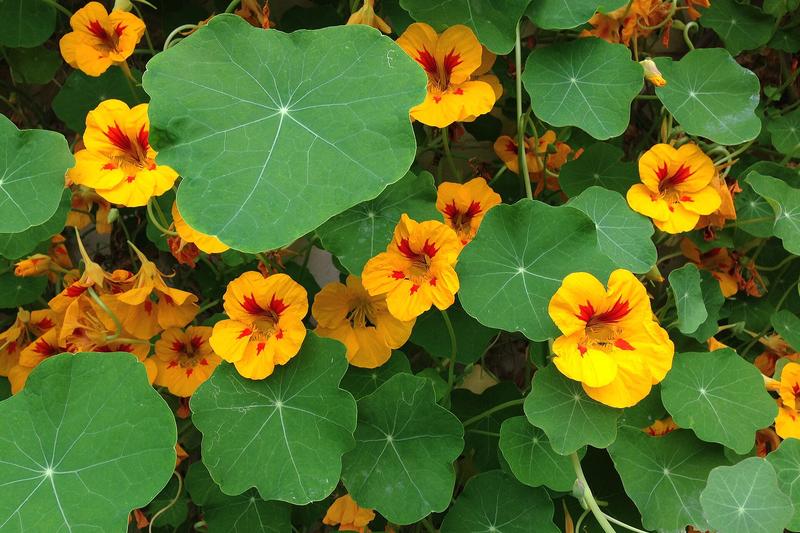
Quick facts
- Watering
- Weekly once established
- Sunlight
- Full sun to partial shade
- Soil
- Poor to moderately fertile, well-drained
- Humans
- Safe
- Cats
- Safe
- Dogs
- Safe
- Height
- 30–300 cm
- Spread
- 30–90 cm
- Spacing
- 20–30 cm apart
About Nasturtium
Nasturtium is a vibrant, fast-growing annual with round, lily-pad-like leaves and cheerful trumpet-shaped flowers in shades of orange, red, and yellow. Native to South America, it has been a cottage garden favourite in Britain since Victorian times. UK gardeners prize it for its edible flowers and leaves, companion planting benefits, and ability to thrive in poor soil. Both trailing and compact varieties are widely grown in borders, containers, and vegetable patches across the country.
UK fact: Nasturtiums were traditionally planted in British kitchen gardens as a 'sacrificial' crop to lure blackfly and cabbage white butterflies away from brassicas, a companion planting technique still recommended by the RHS today.
Watering Nasturtium
Water young plants regularly until established, then reduce frequency considerably. Mature nasturtiums are drought-tolerant and produce more flowers when kept on the dry side; overwatering encourages lush foliage at the expense of blooms. During typical British summers, established plants in the ground rarely need watering except during prolonged dry spells. Container-grown specimens require more frequent watering, approximately once or twice weekly, but allow the compost to dry out between waterings.
Sunlight requirements
Plant in a sunny, south or west-facing position for the best flower production and compact growth. In partial shade, plants produce more foliage and fewer blooms, though this can be advantageous if growing primarily for edible leaves. In very hot UK summers, particularly in southern regions, afternoon shade can prevent stress and extend the flowering season.
Soil and feeding
Plant in well-drained soil of low to moderate fertility; avoid enriching the soil with manure or high-nitrogen fertilisers, which promote leafy growth at the expense of flowers. Nasturtiums tolerate a wide pH range from slightly acidic to slightly alkaline (pH 6.0–8.0). Sandy or gravelly soils are ideal, whilst heavy clay should be improved with grit or sharp sand to ensure adequate drainage. In containers, use a soil-based compost such as John Innes No. 2 rather than nutrient-rich multipurpose compost.
Nasturtiums require minimal feeding and actively flower better in nutrient-poor conditions. If growing in containers for an extended period, a single application of a low-nitrogen, high-potassium liquid feed in midsummer can support continued blooming, but this is optional. Never apply general-purpose or high-nitrogen fertilisers, as these produce excessive foliage and significantly reduce flower production.
Pruning Nasturtium
Remove spent flowers regularly throughout summer to encourage continuous blooming and prevent the plant from setting seed prematurely. Trailing varieties can be trimmed back if they become too vigorous or start to smother neighbouring plants. Pinch out growing tips of young plants to encourage bushier growth. At the end of the season, pull up and compost plants after the first frost, as they will not survive winter outdoors in the UK.
Propagating Nasturtium
Nasturtiums are reliably propagated from seed and germinate readily with minimal effort. Sow seeds directly into their final positions from late April onwards in most of the UK, once the risk of frost has passed. For earlier flowers, sow indoors in individual pots from March, as nasturtiums dislike root disturbance. Seeds are large and easy to handle, making them ideal for children's gardening projects. Plants often self-seed freely in favourable conditions, providing volunteers the following year.
Common problems
Nasturtiums are generally trouble-free but can be affected by blackfly (black aphids), particularly on young growth and flower buds; spray with water or use an organic insecticide if severe. Cabbage white butterflies and their caterpillars may feed on the leaves, which is often intentional when using nasturtiums as companion plants. In damp conditions, plants may suffer from fungal issues such as powdery mildew or leaf spot; ensure good air circulation and avoid overhead watering. Slugs occasionally damage young seedlings in wet weather.
Spot a problem with your plant? Photograph the affected area using the Loam app and it will suggest the most likely cause and treatment.
Safety
- Humans
- Safe
- Cats
- Safe
- Dogs
- Safe
Toxicity information is for general guidance only.
Seasonal care calendar
Monthly care guide for Nasturtium in the UK, based on average conditions.
| Month | Care tasks |
|---|---|
| January | No action needed. Plan where to grow nasturtiums and order seeds from catalogues. |
| February | No action needed outdoors. Prepare pots and compost for indoor sowing later in the month in mild regions. |
| March | Sow seeds indoors in individual pots at 15–18°C for earlier flowers. Prepare outdoor beds by removing weeds. |
| April | Continue indoor sowing. From late April, sow seeds directly outdoors in mild regions after the last frost. |
| May | Sow seeds directly outdoors. Harden off and plant out indoor-sown seedlings after all frost risk has passed. Water young plants to establish. |
| June | Final sowings for late summer flowers. Deadhead regularly as flowers begin. Water containers weekly; reduce watering for plants in the ground. |
| July | Deadhead spent blooms to prolong flowering. Harvest flowers and leaves for salads. Monitor for aphids and caterpillars. |
| August | Continue deadheading and harvesting. Trim trailing varieties if becoming invasive. Water containers during dry spells. |
| September | Enjoy late flowers and continue harvesting. Allow some flowers to set seed if you want self-sown plants next year. |
| October | Flowering slows as temperatures drop. Collect ripe seeds for sowing next year. Clear away plants after the first frost. |
| November | Remove frosted plants and add to the compost heap. Store collected seeds in a cool, dry place. |
| December | No action needed. Review the season and plan next year's planting scheme. |
Frequently asked questions
- How do I stop blackfly on my nasturtiums?
- Spray affected plants with a strong jet of water to dislodge aphids, or use an organic insecticidal soap. Many gardeners accept blackfly on nasturtiums as they attract them away from other crops. If you're unsure whether pests are causing damage or need help identifying the problem, the Loam app can diagnose issues from photos and suggest targeted treatments.
- When should I sow nasturtium seeds outdoors in the UK?
- Sow directly outdoors from late April to June, after all risk of frost has passed. In mild southern regions, late April is usually safe; in northern areas, wait until mid-May.
- Can nasturtiums be grown in pots?
- Yes, nasturtiums grow very well in containers. Choose compact varieties for small pots or trailing types for hanging baskets. Use free-draining, soil-based compost and avoid overwatering or feeding.
Got a question about growing Nasturtium that isn't covered here? Ask the Garden Advisor in the Loam app. It knows your saved plants and local conditions.
Related plants
This page was compiled with AI assistance and reviewed by our team. .