Marigold
Tagetes patula
Annuals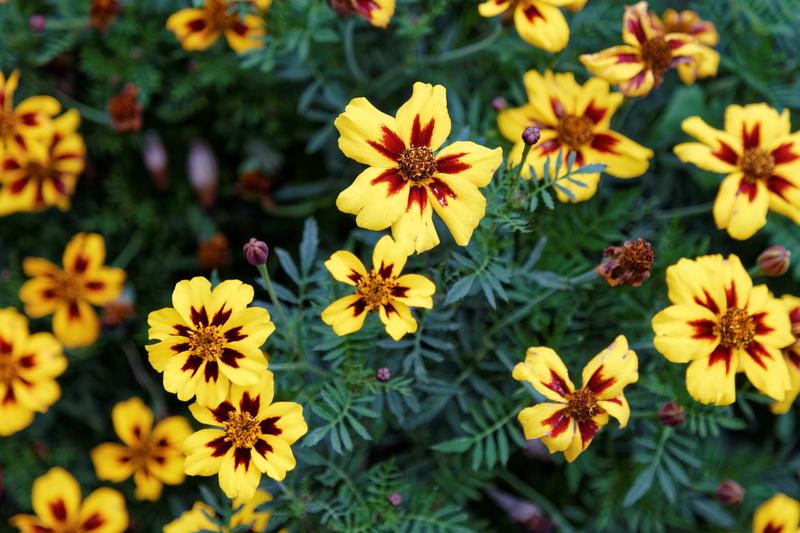
Quick facts
- Watering
- Weekly during dry spells
- Sunlight
- Full sun
- Soil
- Well-drained, moderately fertile
- Humans
- Safe
- Cats
- Safe
- Dogs
- Safe
- Height
- 15–30 cm
- Spread
- 15–25 cm
- Spacing
- 20–30 cm apart
About Marigold
French marigolds are compact, bushy annuals producing vibrant orange, yellow, and mahogany-red flowers from late spring until the first frosts. Native to Mexico and Central America, these cheerful plants have become a staple in British gardens since Victorian times. UK gardeners prize them for their long flowering season, ease of cultivation, and traditional use as companion plants in vegetable patches to deter aphids and whitefly. Their neat habit makes them ideal for bedding schemes, containers, and edging borders throughout the UK.
UK fact: Marigolds have been grown in British cottage gardens since the 16th century and were traditionally planted alongside tomatoes and brassicas in kitchen gardens, a practice still recommended by the RHS today for natural pest management.
Watering Marigold
Water marigolds at the base of the plant to avoid wetting the foliage, which can encourage fungal diseases in our humid climate. During typical British summers, rainfall is often sufficient, but container-grown plants and those in free-draining soil may need watering once or twice weekly during dry periods. Established plants are quite drought-tolerant, though flowering is best with consistent moisture. Avoid overwatering, as marigolds are susceptible to root rot in waterlogged conditions, particularly in heavy clay soils common across much of the UK.
Sunlight requirements
Position marigolds in a spot receiving at least six hours of direct sunlight daily for best flowering performance. In the UK, south-facing beds and borders are ideal, though they'll tolerate a west-facing aspect. Insufficient light causes leggy growth and reduced flowering, particularly during our often-cloudy summers.
Soil and feeding
These adaptable plants grow well in most garden soils provided drainage is adequate, making them suitable for the varied soil types found across the UK. They prefer a slightly acidic to neutral pH of 6.0-7.0 but tolerate a range of conditions. Avoid overly rich soil, which promotes lush foliage at the expense of flowers. In heavy clay soils common in many British gardens, incorporate grit or sharp sand to improve drainage, or grow marigolds in raised beds and containers filled with multipurpose compost.
These undemanding plants rarely need supplementary feeding in garden borders, as overly rich conditions reduce flowering. For container-grown marigolds, apply a balanced liquid fertiliser such as tomato feed at half strength every three to four weeks during the flowering season. Avoid high-nitrogen feeds, which encourage leafy growth rather than blooms.
Pruning Marigold
Remove faded flowers every few days by pinching them off just above the next set of leaves to encourage continuous flowering from June until the first autumn frosts. This simple task significantly extends the display and prevents plants from setting seed prematurely. Pinch out the growing tips of young plants in late May to encourage bushier growth. At the end of the season, after the first hard frost blackens the foliage, pull up and compost the entire plant, as marigolds are true annuals that complete their lifecycle in one growing season.
Propagating Marigold
Seed is the only practical method of propagation for these annuals, and germination is quick and reliable. Sow indoors six to eight weeks before the last expected frost (typically March to early April across most of the UK) for earlier flowering, or sow directly outdoors in late April or May once soil has warmed. Seeds germinate in five to seven days at 21-24°C. Marigolds self-seed readily in favourable conditions, though volunteers may not come true to type if you're growing hybrid varieties.
Common problems
Marigolds are generally trouble-free, but slugs and snails can devastate young plants in spring, particularly during wet weather common across the UK. Aphids occasionally colonise shoot tips and flower buds in summer; spray with organic insecticidal soap or encourage natural predators. Grey mould (botrytis) may affect flowers and foliage during prolonged damp periods—improve air circulation and remove affected material promptly. Root rot can occur in poorly drained soils or overwatered containers, causing plants to wilt and collapse despite adequate moisture.
Spot a problem with your plant? Photograph the affected area using the Loam app and it will suggest the most likely cause and treatment.
Safety
- Humans
- Safe
- Cats
- Safe
- Dogs
- Safe
Toxicity information is for general guidance only.
Seasonal care calendar
Monthly care guide for Marigold in the UK, based on average conditions.
| Month | Care tasks |
|---|---|
| January | No action needed. Plan where to plant marigolds in this year's bedding scheme. |
| February | Order seeds from catalogues if not already purchased. Prepare seed trays and compost for sowing next month. |
| March | Sow seeds indoors in modules or small pots from mid-March onwards. Provide warmth and good light for germination. |
| April | Continue sowing indoors until mid-April. Begin hardening off early-sown seedlings towards month end. Prepare planting sites outdoors. |
| May | Harden off and plant out after the last frost, typically late May. Sow seeds directly outdoors in prepared beds. Pinch out growing tips to encourage bushiness. |
| June | Complete planting out. Begin regular deadheading as first flowers appear. Water during dry spells, especially container plants. |
| July | Deadhead regularly to maintain continuous flowering. Water containers and newly planted specimens during dry weather. Monitor for aphids. |
| August | Continue deadheading and watering as needed. Feed container plants fortnightly. Enjoy peak flowering display. |
| September | Maintain deadheading regime. Allow a few flowers to set seed if you wish to save seed for next year. Flowering continues strongly. |
| October | Flowering continues until first frosts. Collect ripe seed heads for storage. Remove plants once blackened by frost and add to compost. |
| November | Clear away any remaining frosted plants. Clean and store seed in paper envelopes in a cool, dry place for next spring. |
| December | No action needed. Review this year's performance and plan next year's colour schemes. |
Frequently asked questions
- How do I deadhead marigolds properly?
- Deadhead marigolds by pinching or cutting off faded flowers just above the next set of leaves or buds, using your fingers or clean secateurs. Remove the entire flower head including the swelling seed pod behind it. Deadhead every few days throughout summer to prevent seed formation, which redirects the plant's energy into producing more blooms rather than setting seed, extending flowering from June until the first frosts.
- Why are my marigold leaves turning yellow?
- Yellowing marigold leaves can indicate several issues: overwatering and waterlogged soil (most common), nutrient deficiency in containers, spider mite infestation, or natural ageing of lower leaves. Check soil moisture before watering, ensure good drainage, and examine leaf undersides for tiny pests or webbing. If you're unsure what's affecting your plants, the Loam app can help diagnose the problem from a photo and provide personalised care recommendations based on your growing conditions.
- When should I plant marigolds outside in the UK?
- Plant marigolds outdoors after all risk of frost has passed, typically from late May onwards across most of the UK. In milder southern and coastal areas, you may plant from mid-May, but wait until early June in northern regions and Scotland.
Got a question about growing Marigold that isn't covered here? Ask the Garden Advisor in the Loam app. It knows your saved plants and local conditions.
Related plants
This page was compiled with AI assistance and reviewed by our team. .