Borage
Borago officinalis
Herbs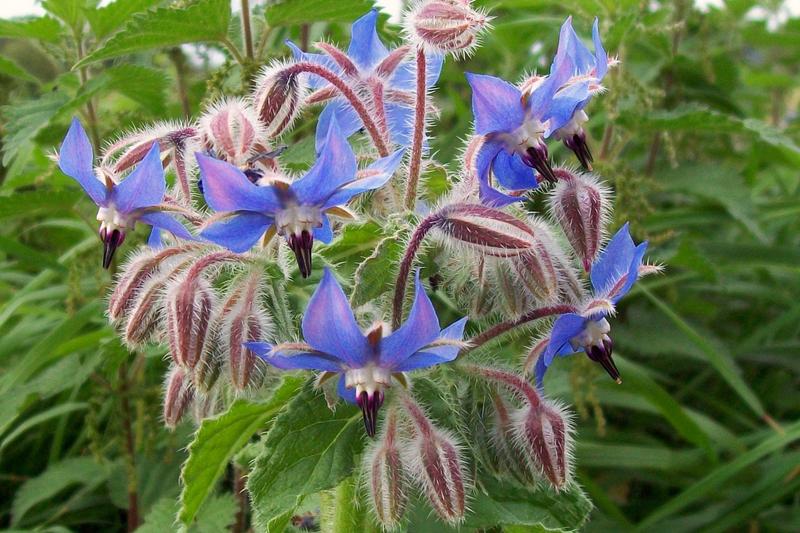
Quick facts
- Watering
- Weekly when establishing, then minimal
- Sunlight
- Full sun to partial shade
- Soil
- Well-drained, moderately fertile, any pH
- Humans
- Unknown
- Cats
- Unknown
- Dogs
- Unknown
- Height
- 45–90 cm
- Spread
- 30–45 cm
- Spacing
- 30–45 cm apart
About Borage
Borage is a vigorous annual herb native to the Mediterranean, prized by UK gardeners for its striking star-shaped blue flowers and cucumber-flavoured leaves. Growing 45–90 cm tall with bristly foliage, it's a magnet for bees and other pollinators throughout summer. British gardeners have cultivated borage since medieval times for culinary use, medicinal purposes, and as a companion plant that enriches soil and supports beneficial insects.
UK fact: Borage has been grown in British cottage gardens since the Middle Ages and was traditionally added to Pimm's and summer cups, a practice that continues in many UK pubs and gardens today.
Watering Borage
Water newly sown or transplanted borage weekly until roots establish, usually 4–6 weeks after planting. Mature plants develop deep taproots that access moisture lower in the soil profile, making them highly drought-resistant. During typical British summers, rainfall is usually sufficient, but water weekly during extended dry periods exceeding two weeks. Avoid overwatering, as borage tolerates dry conditions far better than waterlogged soil.
Sunlight requirements
Position borage in full sun for the most prolific flowering and strongest growth, ideal for south or west-facing borders. In warmer UK regions, light afternoon shade helps prevent stress during hot spells. North-facing positions produce acceptable growth but fewer flowers, making them less attractive to pollinators.
Soil and feeding
Borage tolerates a wide range of soil conditions, from sandy to clay, provided drainage is adequate. It thrives in moderately fertile soil with a pH between 6.0 and 7.5, though it adapts to slightly alkaline conditions common in chalky southern England. Avoid overly rich soil, which encourages lush foliage at the expense of flowers and makes plants prone to flopping. Heavy clay soils benefit from organic matter incorporation to improve drainage and prevent winter waterlogging.
Avoid feeding established borage plants, as excessive nutrients produce weak, floppy growth prone to lodging and reduce flowering. If growing in very poor soil, a single application of general-purpose fertiliser at half strength when plants reach 15 cm tall is sufficient. Borage is often grown as a green manure precisely because it enriches soil rather than depleting it.
Pruning Borage
Remove faded flowers every few days during the main flowering period from June to September to encourage continuous blooming and control self-seeding. Borage self-sows prolifically, which can be desirable for informal gardens but problematic in formal borders. Cut back entire plants to ground level after flowering finishes if you want to prevent any seed dispersal. Allow some flowers to set seed if you want volunteers next year, though be prepared to thin seedlings in spring.
Propagating Borage
Sow borage seeds directly where they are to grow, as plants develop a taproot that resents disturbance. Successive sowings from March through July ensure continuous flowering and fresh leaves from June to October. Seeds can also be sown in autumn for earlier flowering the following year. Borage self-seeds freely once established, providing volunteer plants that can be transplanted when small or thinned to appropriate spacing.
Common problems
Borage is remarkably trouble-free, with few serious pests or diseases affecting UK plants. Aphids occasionally colonise young growth in spring but rarely cause significant damage and attract beneficial predators. Powdery mildew can appear on foliage during dry summers, particularly on plants in poor soil or shade, but this is usually cosmetic and doesn't affect flowering. The main issue is excessive self-seeding, which requires vigilant deadheading to prevent borage appearing throughout the garden.
Spot a problem with your plant? Photograph the affected area using the Loam app and it will suggest the most likely cause and treatment.
Safety
- Humans
-
Unknown
Borage leaves and flowers are traditionally used in cooking, but the plant contains small amounts of pyrrolizidine alkaloids. Occasional culinary use is considered safe, but regular consumption in large quantities is not recommended.
- Cats
-
Unknown
No specific toxicity data available for cats. The plant contains pyrrolizidine alkaloids, so prevent cats from consuming large amounts.
- Dogs
-
Unknown
No specific toxicity data available for dogs. The plant contains pyrrolizidine alkaloids, so prevent dogs from consuming large amounts.
Toxicity information is for general guidance only. If a person or pet has been exposed to this plant and you are concerned, seek advice from a medical professional or vet.
Seasonal care calendar
Monthly care guide for Borage in the UK, based on average conditions.
| Month | Care tasks |
|---|---|
| January | No action needed. Plan where to sow borage in spring borders or vegetable gardens. |
| February | Prepare planting sites by weeding and raking to a fine tilth. Order seeds if not already in stock. |
| March | Sow seeds directly outdoors from mid-March onwards in milder regions. Thin any self-sown seedlings to 30 cm spacing. |
| April | Continue sowing seeds for succession. Thin March-sown seedlings to final spacing. Water during dry spells. |
| May | Make final sowings for late summer flowers. Early sowings begin flowering. Start deadheading to prolong blooming. |
| June | Harvest young leaves for salads and flowers for garnishing. Deadhead regularly to encourage continuous flowering and control self-seeding. |
| July | Peak flowering period. Continue deadheading and harvesting. Water only during prolonged drought. Make late sowings for autumn flowers. |
| August | Maintain deadheading regime. Harvest flowers and leaves. Allow some plants to set seed if you want volunteers next year. |
| September | Flowering continues into early autumn. Sow seeds for overwintering plants that will flower early next year. Collect ripe seed for storage. |
| October | Cut back finished plants to ground level and compost. Autumn-sown seedlings emerge and establish before winter. |
| November | Clear away dead plant material. Autumn-sown plants form small rosettes that will overwinter. |
| December | No action needed. Overwintering plants remain dormant until spring. |
Frequently asked questions
- When should I sow borage seeds in the UK?
- Sow borage seeds directly outdoors from April to July for continuous flowering through summer and autumn. For earlier flowers, sow under cover in March. Borage dislikes root disturbance, so sow in modules or biodegradable pots if starting indoors. Seeds germinate in 7–14 days at 15–20°C. Successive sowings every 3–4 weeks ensure a longer harvest period.
- Why are my borage leaves turning yellow?
- Yellowing borage leaves usually indicate overwatering, poor drainage, or occasionally nutrient deficiency in container-grown plants. Check soil moisture and ensure adequate drainage. If you're struggling to diagnose the exact cause, the Loam app can analyse photos of your plant and provide personalised care recommendations based on your growing conditions.
- Is borage safe to eat and how do I use it?
- Yes, borage is edible and has been used in British cuisine for centuries. Young leaves taste cucumber-like and can be added to salads or cooked like spinach (older leaves are too hairy). The star-shaped blue flowers make beautiful garnishes for drinks, salads, and desserts, and can be candied. However, consume in moderation as borage contains small amounts of pyrrolizidine alkaloids.
Got a question about growing Borage that isn't covered here? Ask the Garden Advisor in the Loam app. It knows your saved plants and local conditions.
Related plants
This page was compiled with AI assistance and reviewed by our team. .