Viburnum
Viburnum opulus
Shrubs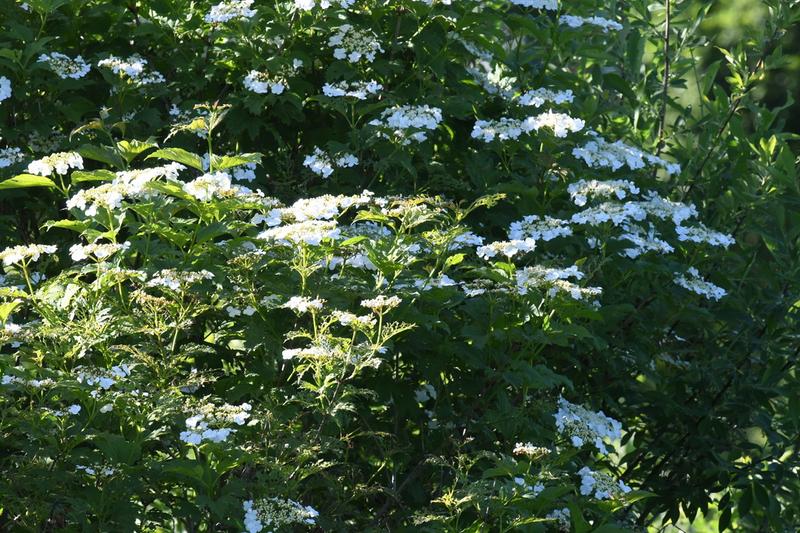
Quick facts
- Watering
- Weekly when young, fortnightly established
- Sunlight
- Full sun to partial shade
- Soil
- Moist, well-drained, moderately fertile
- Humans
- Toxic
- Cats
- Toxic
- Dogs
- Toxic
- Height
- 250–400 cm
- Spread
- 250–400 cm
- Spacing
- 200–300 cm apart
- RHS recognition
- Award of Garden Merit
About Viburnum
Viburnum opulus, commonly known as Guelder Rose, is a deciduous shrub native to Britain and Europe, prized for its lacecap-like white flowers in late spring and vibrant red berries in autumn. This versatile shrub offers multi-season interest with attractive maple-like foliage that turns rich burgundy in autumn, making it a favourite in British cottage gardens and wildlife-friendly borders. Growing 2.5–4 metres tall, it thrives in most UK conditions and provides valuable food for birds and pollinators. Its adaptability to both sun and partial shade makes it an excellent choice for mixed hedging and woodland-edge planting schemes.
UK fact: Viburnum opulus is one of Britain's native shrubs and has been used in traditional May Day celebrations, with its snowball-like flower clusters (in the cultivar 'Roseum') historically known as 'Snowball Tree' and featured in Victorian cottage gardens across the UK.
Watering Viburnum
Young plants require consistent moisture, particularly from April to September, with weekly watering during dry periods. Once established after two years, viburnum is reasonably drought-tolerant but benefits from fortnightly watering during extended summer droughts typical of southern England. Water deeply at the base rather than overhead to reduce fungal disease risk. In heavy clay soils common across much of the UK, reduce watering frequency to prevent waterlogging, whilst sandy soils may require more frequent irrigation.
Sunlight requirements
Plant in full sun for the best flowering and autumn colour, though it will perform well in partial shade, particularly in southern UK gardens where some afternoon shade prevents leaf scorch. In northern aspects or woodland gardens, it tolerates shadier conditions but may produce fewer flowers. Avoid deep shade beneath large trees where competition for moisture and light will reduce vigour.
Soil and feeding
Viburnum opulus is remarkably unfussy about soil, growing well in the heavy clay found across much of lowland Britain as well as lighter loams. It prefers moist but well-drained conditions with a pH range of 5.5–8.0, making it suitable for both acidic and chalky soils. Improve very heavy clay with organic matter at planting to aid drainage, and mulch annually with well-rotted compost or leaf mould to retain moisture and suppress weeds. Avoid extremely dry, sandy soils unless you can commit to regular watering during establishment.
Feed established plants each March with a general-purpose shrub fertiliser such as blood, fish and bone or a balanced granular feed (Growmore) scattered around the root zone. A 5–7 cm layer of well-rotted manure or garden compost applied as a mulch in late winter provides both nutrients and moisture retention. Avoid high-nitrogen feeds after June as these promote soft growth vulnerable to frost damage.
Pruning Viburnum
Viburnum opulus requires minimal pruning but benefits from light shaping immediately after flowering in June or early July, before next year's flower buds form. Remove any dead, damaged, or crossing branches to maintain an open structure and good air circulation. On mature specimens over five years old, cut one in three of the oldest stems down to ground level each year to encourage vigorous new growth. Avoid autumn or winter pruning as this removes the decorative berries and reduces next season's flowers.
Propagating Viburnum
The most reliable method for home gardeners is semi-ripe cuttings taken in mid to late summer when new growth has begun to firm up. Cuttings root readily in a cold frame or unheated greenhouse, typically within 6–8 weeks. Layering is an even easier method requiring minimal equipment: simply peg a low branch to the ground in autumn and it will root by the following autumn, ready to sever and transplant. Hardwood cuttings taken in November can also succeed but are slower to establish.
Common problems
Viburnum beetle is the most serious pest in the UK, with both larvae (April–June) and adults (July–September) causing extensive leaf damage that can severely weaken plants; inspect regularly and remove affected leaves or treat with appropriate insecticides. Aphids may colonise new growth in spring, causing distorted leaves and sticky honeydew, whilst viburnum whitefly can be problematic in southern England. Fungal leaf spots occasionally occur in wet summers but rarely require treatment. Powdery mildew may affect plants in dry conditions with poor air circulation, particularly those against walls.
Spot a problem with your plant? Photograph the affected area using the Loam app and it will suggest the most likely cause and treatment.
Safety
- Humans
-
Toxic
The raw berries are mildly toxic if consumed in quantity, causing stomach upset, nausea and vomiting. Cooked berries are sometimes used in preserves but raw consumption should be avoided.
- Cats
-
Toxic
All parts of the plant, particularly the berries, contain compounds that can cause vomiting, diarrhoea and abdominal pain if ingested by cats.
- Dogs
-
Toxic
Berries and other plant parts can cause gastrointestinal upset including vomiting and diarrhoea if consumed by dogs. Keep pets away from fallen berries.
Toxicity information is for general guidance only. If a person or pet has been exposed to this plant and you are concerned, seek advice from a medical professional or vet.
Seasonal care calendar
Monthly care guide for Viburnum in the UK, based on average conditions.
| Month | Care tasks |
|---|---|
| January | Plant bare-root specimens during mild spells. Check established plants for storm damage and remove any broken branches. |
| February | Apply well-rotted manure or compost as a mulch around the base. Continue planting bare-root plants until late in the month. |
| March | Feed with a balanced fertiliser such as blood, fish and bone. Plant container-grown specimens. Watch for emerging viburnum beetle larvae. |
| April | Inspect leaves for viburnum beetle larvae damage and remove affected foliage. Water newly planted specimens during dry spells. Buds begin to open. |
| May | Enjoy the lacecap white flowers. Continue monitoring for viburnum beetle larvae. Water young plants weekly if dry. Flowers attract pollinators. |
| June | Prune lightly after flowering if needed to shape the plant. Remove spent flowers if desired, though this reduces berry production. Water during dry periods. |
| July | Take semi-ripe cuttings for propagation. Watch for adult viburnum beetles emerging. Green berries begin to develop. Water young plants regularly. |
| August | Continue taking semi-ripe cuttings. Monitor for aphids and viburnum beetle adults. Berries begin to ripen to red. Water during prolonged dry spells. |
| September | Enjoy the bright red berries and early autumn colour. Birds begin feeding on berries. Reduce watering as temperatures cool. |
| October | Foliage turns burgundy and red before falling. Layer low-growing stems for propagation. Plant new container-grown specimens. Collect berries for wildlife. |
| November | Take hardwood cuttings if desired. Continue planting during mild weather. Clear fallen leaves from around the base to reduce fungal disease. |
| December | Plant bare-root specimens in frost-free conditions. Minimal maintenance required. Plan pruning for after flowering next year. |
Frequently asked questions
- When should I prune viburnum?
- Prune Viburnum opulus immediately after flowering in June or early July. This timing is crucial because the plant forms flower buds on the previous year's growth—pruning in autumn or winter removes these buds and prevents flowering the following spring. Only remove dead, damaged, or crossing branches, as viburnum generally needs minimal pruning. Light shaping can be done at the same time to maintain a balanced form.
- Why are the leaves on my viburnum turning yellow?
- Yellowing leaves can indicate several issues: waterlogging in heavy clay soil (improve drainage), nutrient deficiency particularly nitrogen or iron (feed and mulch with compost), or drought stress during establishment (water more regularly). Check soil moisture levels and adjust watering accordingly. Yellowing in autumn is normal as the plant prepares for dormancy. If you're unsure what's causing the problem, the Loam app can help diagnose the issue through photos and provide personalised care advice based on your specific growing conditions.
- How do I propagate viburnum from cuttings?
- Take semi-ripe cuttings in July or August from healthy, non-flowering shoots. Cut 10-15 cm lengths just below a leaf node, remove the lower leaves, and dip the cut end in hormone rooting powder. Insert into pots filled with a mix of equal parts peat-free compost and perlite or sharp sand. Cover with a plastic bag or place in a propagator to maintain humidity, and keep in a shaded cold frame. Cuttings should root within 8-12 weeks. Pot on individually once rooted and grow on for a full season before planting out.
Got a question about growing Viburnum that isn't covered here? Ask the Garden Advisor in the Loam app. It knows your saved plants and local conditions.
Related plants
This page was compiled with AI assistance and reviewed by our team. .