Toad Lily
Tricyrtis formosana
Perennials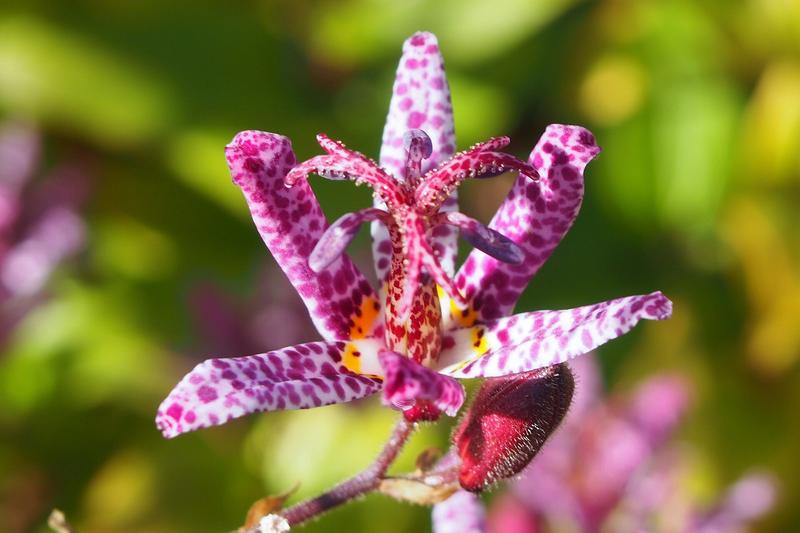
Quick facts
- Watering
- Weekly during growing season
- Sunlight
- Partial shade
- Soil
- Rich, moisture-retentive, well-drained
- Humans
- Safe
- Cats
- Safe
- Dogs
- Safe
- Height
- 60–90 cm
- Spread
- 30–45 cm
- Spacing
- 40–50 cm apart
- RHS recognition
- Award of Garden Merit
About Toad Lily
Toad Lily is an elegant late-flowering perennial native to Taiwan, prized for its exotic orchid-like blooms that appear from late summer into autumn. The arching stems carry glossy green leaves and clusters of white flowers heavily spotted with purple, resembling intricate jewels. UK gardeners value this shade-tolerant plant for bringing colour to woodland gardens and shady borders when most other perennials have finished flowering. Its architectural form and unusual blooms make it a conversation piece in any garden.
UK fact: Tricyrtis formosana has been awarded the RHS Award of Garden Merit, recognising its excellent performance in British gardens and its reliability in our climate, particularly thriving in the damp, shaded conditions common in many UK woodland gardens.
Watering Toad Lily
Keep the soil consistently moist throughout the growing season, particularly from spring to autumn when the plant is actively growing and flowering. Water weekly during dry spells, as Toad Lily dislikes drought and may suffer leaf scorch if allowed to dry out. In typical UK summers, established plants in moisture-retentive soil may need little supplementary watering except during prolonged dry periods. Reduce watering in winter when the plant is dormant.
Sunlight requirements
Toad Lily thrives in partial shade, making it ideal for north-facing borders or beneath deciduous trees. In the UK, it tolerates more sun in northern regions where light intensity is lower, but in southern counties it performs best with protection from hot afternoon sun. Avoid deep shade, which can reduce flowering and cause leggy growth.
Soil and feeding
Toad Lily requires fertile, humus-rich soil that retains moisture but doesn't become waterlogged. Incorporate plenty of organic matter such as leaf mould or well-rotted compost before planting to improve both moisture retention and drainage. The ideal pH is slightly acidic to neutral (pH 5.5-7.0). Heavy clay soils benefit from added grit and organic matter to prevent winter waterlogging, which can cause root rot.
Apply a balanced slow-release fertiliser in early spring as new growth emerges. Mulch annually with well-rotted compost or leaf mould to maintain soil fertility and moisture levels. Avoid high-nitrogen feeds which promote foliage at the expense of flowers.
Pruning Toad Lily
Cut back all stems to ground level in late autumn after flowering has finished and foliage has died back, or leave until early spring to provide winter interest and protection for the crown. Remove any damaged or diseased stems during the growing season. Toad Lily requires minimal pruning otherwise, as it naturally maintains a tidy clump-forming habit. Deadheading is unnecessary as the seed heads provide winter interest.
Propagating Toad Lily
Toad Lily is easily propagated by division in early spring as new shoots emerge, carefully separating the rhizomes and replanting immediately. Each division should have at least three shoots and a good root system. Seed can be sown in autumn in a cold frame, though plants may take three years to reach flowering size and may not come true to type. Stem cuttings taken in early summer can also root successfully in a propagator with bottom heat.
Common problems
Slugs and snails are the primary pests, particularly damaging emerging shoots in spring and young foliage throughout the growing season. Vine weevil larvae can attack the roots, causing plants to wilt and collapse, so check for these if plants show unexplained decline. Toad Lily is generally disease-free but may suffer from leaf spot in very wet conditions or if overhead watering is used. Late frosts can damage emerging growth in spring, so protect with fleece if frost is forecast after shoots appear.
Spot a problem with your plant? Photograph the affected area using the Loam app and it will suggest the most likely cause and treatment.
Safety
- Humans
- Safe
- Cats
- Safe
- Dogs
- Safe
Toxicity information is for general guidance only.
Seasonal care calendar
Monthly care guide for Toad Lily in the UK, based on average conditions.
| Month | Care tasks |
|---|---|
| January | No action needed, plant is dormant. |
| February | Check mulch is in place to protect crown from frost. |
| March | Cut back old stems if not done in autumn. Apply slow-release fertiliser as new shoots emerge. Watch for slug damage. |
| April | Divide established clumps if needed. Protect emerging shoots from late frosts with fleece. Continue slug control. |
| May | Water during dry spells. Apply organic mulch around plants to retain moisture. |
| June | Maintain consistent moisture. Remove any damaged foliage. |
| July | Water regularly during dry weather. Watch for signs of vine weevil damage. |
| August | Flowering begins. Maintain watering to support blooms. |
| September | Peak flowering period. Enjoy the display and continue watering if dry. |
| October | Flowering continues into early autumn. Reduce watering as growth slows. |
| November | Cut back faded stems to ground level or leave for winter interest. |
| December | No action needed, plant is dormant. |
Frequently asked questions
- Why is my Toad Lily not flowering?
- Insufficient light is the most common cause, as Toad Lily needs bright indirect light to flower well. Deep shade, excessive nitrogen fertiliser, or a young plant that hasn't matured can also prevent flowering. Ensure the plant receives partial shade rather than full shade, and avoid high-nitrogen feeds. Plants may take two to three years after planting to flower reliably.
- When should I divide my Toad Lily?
- Divide Toad Lily in early spring as new shoots emerge, typically in March or April. The Loam app can send you a reminder at the optimal time based on your location and track your plant's growth cycle to help you identify when division is needed to maintain vigour.
- Can Toad Lily grow in full shade?
- Toad Lily tolerates shade but performs best in partial shade with some dappled light. Full shade often results in reduced flowering, leggy growth, and fewer blooms. For best results, plant in a spot that receives morning sun or bright filtered light through tree canopy, avoiding deep shade under dense evergreens.
Got a question about growing Toad Lily that isn't covered here? Ask the Garden Advisor in the Loam app. It knows your saved plants and local conditions.
Related plants
This page was compiled with AI assistance and reviewed by our team. .