Hellebore
Helleborus orientalis
Perennials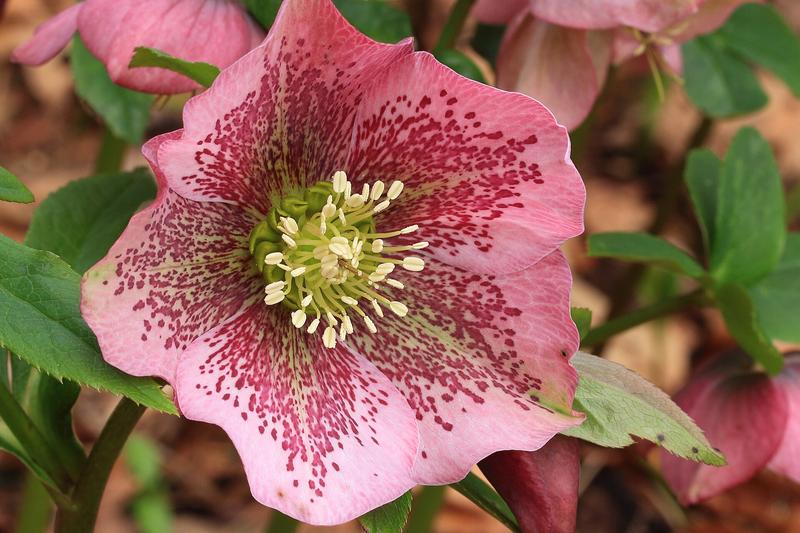
Quick facts
- Watering
- Weekly during dry spells
- Sunlight
- Partial shade
- Soil
- Moist, well-drained, alkaline
- Humans
- Toxic
- Cats
- Toxic
- Dogs
- Toxic
- Height
- 30–45 cm
- Spread
- 45–60 cm
- Spacing
- 45–60 cm apart
- RHS recognition
- Award of Garden Merit
About Hellebore
Helleborus orientalis, commonly known as the Lenten rose or hellebore, is a hardy evergreen perennial native to Greece and Turkey that has become a cottage garden favourite across the UK. Producing nodding, saucer-shaped flowers in shades of white, pink, purple, and near-black from late winter through early spring, hellebores provide invaluable colour when little else is in bloom. Their leathery, deeply divided foliage remains attractive year-round, making them excellent ground cover for shady borders. British gardeners prize hellebores for their reliability, longevity, and ability to naturalise in woodland settings.
UK fact: Helleborus orientalis has received the RHS Award of Garden Merit and thrives particularly well in the mild, moist conditions of western Britain, where established clumps can self-seed freely to create drifts of winter colour beneath deciduous trees.
Watering Hellebore
Newly planted hellebores require consistent moisture for their first growing season to establish a robust root system. Water weekly during dry spells in spring and summer, applying approximately 10 litres per square metre. Established plants are surprisingly drought-tolerant due to their deep taproots, though they appreciate supplementary watering during extended dry periods, particularly in late summer when they're forming next year's flower buds. Avoid overhead watering during the flowering period to prevent spotting the blooms, and ensure soil never becomes waterlogged as hellebores are susceptible to root rot in poorly drained conditions.
Sunlight requirements
In the UK, hellebores perform best in partial shade, particularly beneath deciduous trees where they receive winter and early spring sun before the canopy leafs out. They tolerate deeper shade but may produce fewer flowers, whilst in full sun they require consistently moist soil and can suffer leaf scorch during hot summers. East-facing borders offer ideal conditions, providing morning light whilst protecting plants from intense afternoon sun.
Soil and feeding
The ideal soil for hellebores is a rich, moisture-retentive loam that drains freely, enriched with plenty of organic matter such as garden compost or well-rotted manure. They perform particularly well on chalky or limestone soils with a pH of 7.0-8.0, though they tolerate slightly acidic conditions down to pH 6.5. Heavy clay soils should be improved with horticultural grit and organic matter to prevent waterlogging, whilst sandy soils benefit from generous additions of compost to improve moisture retention. A 5-8 cm mulch of leaf mould or composted bark applied annually helps maintain soil structure and provides slow-release nutrients.
Feed hellebores in late winter as new growth emerges, using a balanced granular fertiliser such as blood, fish and bone at 70g per square metre, or a general-purpose slow-release fertiliser. A second light application in early summer supports the development of next year's flower buds. Annual mulching with 5 cm of well-rotted compost or leaf mould in autumn provides additional nutrients and improves soil structure, which is particularly beneficial for long-established clumps.
Pruning Hellebore
The main pruning task for hellebores is removing the previous year's foliage in January or early February, just as flower buds begin to emerge. Cut back all old leaves to ground level using clean, sharp secateurs to prevent the spread of leaf spot diseases to new growth and to allow the flowers to be fully appreciated. Deadhead spent flowers in late spring if you wish to prevent self-seeding, though many gardeners leave them to develop attractive seedheads and allow natural propagation. Remove any diseased or damaged leaves throughout the growing season as soon as they're spotted to maintain plant health.
Propagating Hellebore
Division is the most reliable method for propagating named varieties, carried out in September or early October when plants are semi-dormant. Carefully lift established clumps (at least 3-4 years old) with a garden fork, wash the roots, and divide into sections with at least three growth buds each using a sharp knife. Seed propagation is straightforward but slow; sow fresh seed in summer into pots of gritty compost, leaving them outdoors to experience winter cold which breaks dormancy. Seedlings will appear the following spring and can be potted on, but won't flower for 2-3 years and will show variation from the parent plant, often producing exciting new colour combinations.
Common problems
Hellebores are generally trouble-free but can suffer from hellebore leaf spot (Microsphaeropsis hellebori), which causes dark blotches on foliage; remove affected leaves promptly and clear away debris to reduce spread. Hellebore black death, a viral disease transmitted by aphids, causes stunted, distorted growth and blackened streaks; affected plants must be destroyed immediately as there is no cure. Vine weevil larvae occasionally attack the roots, causing plants to wilt and collapse, whilst slugs and snails may damage emerging flowers and young foliage in mild, damp winters. Aphid infestations on flower buds and young growth should be controlled promptly to prevent virus transmission.
Spot a problem with your plant? Photograph the affected area using the Loam app and it will suggest the most likely cause and treatment.
Safety
- Humans
-
Toxic
All parts of hellebores are toxic if ingested, containing cardiac glycosides and saponins that can cause nausea, vomiting, and abdominal pain. The sap can also cause skin irritation in sensitive individuals, so wear gloves when handling.
- Cats
-
Toxic
Hellebores are toxic to cats if ingested, causing drooling, vomiting, diarrhoea, and abdominal pain. Severe cases may result in cardiac effects, though cats rarely consume significant quantities due to the bitter taste.
- Dogs
-
Toxic
All parts of hellebores are toxic to dogs, causing excessive drooling, vomiting, diarrhoea, and abdominal pain if ingested. In severe cases, cardiac and neurological symptoms may occur, requiring immediate veterinary attention.
Toxicity information is for general guidance only. If a person or pet has been exposed to this plant and you are concerned, seek advice from a medical professional or vet.
Seasonal care calendar
Monthly care guide for Hellebore in the UK, based on average conditions.
| Month | Care tasks |
|---|---|
| January | Cut back old, tatty foliage to ground level as flower buds emerge. Clear away debris around plants to reduce disease risk. |
| February | Enjoy the main flowering display. Apply blood, fish and bone fertiliser around established clumps. Mulch with compost. |
| March | Continue to enjoy flowers. Plant new hellebores from containers. Water if conditions are dry during establishment. |
| April | Deadhead fading flowers if you wish to prevent self-seeding. Watch for aphids on new growth and treat if necessary. |
| May | Remove any remaining spent flowers. Monitor for leaf spot and remove affected foliage promptly. Water during dry spells. |
| June | Collect ripe seed if desired and sow immediately. Apply a light feed to support next year's flower bud development. |
| July | Water during prolonged dry periods. Remove any diseased or damaged leaves. Pot on spring-sown seedlings. |
| August | Continue watering during dry weather as plants are forming next year's flower buds. Watch for vine weevil damage. |
| September | Ideal time to divide established clumps. Plant new divisions or container-grown plants. Water in well. |
| October | Complete any division work early in the month. Apply autumn mulch of leaf mould or compost around crowns. |
| November | Clear fallen leaves from around plants to reduce slug and snail habitat. Check for early flower buds forming. |
| December | Early varieties may begin flowering. Protect blooms from slug damage with organic pellets or barriers if necessary. |
Frequently asked questions
- When should I cut back hellebore foliage?
- Cut back old hellebore foliage in late January or early February, just as the new flower buds begin to emerge from the crown. This timing allows you to remove tatty, disease-prone old leaves whilst showcasing the flowers to best effect. Use clean, sharp secateurs and cut right down to ground level, disposing of the foliage rather than composting it to prevent disease spread.
- Why are my hellebore leaves turning black and spotty?
- Black or brown spots on hellebore foliage are typically caused by hellebore leaf spot (Microsphaeropsis hellebori), a fungal disease that thrives in damp conditions. Remove and destroy all affected leaves immediately, clear away plant debris, and improve air circulation. If you're unsure whether it's leaf spot or the more serious hellebore black death virus, the Loam app can help you diagnose the problem through photo identification and provide personalised treatment advice for your specific conditions.
- What soil conditions do hellebores prefer?
- Hellebores thrive in moisture-retentive but well-drained soil with plenty of organic matter, ideally neutral to alkaline (pH 7.0-8.0), though they tolerate slightly acidic conditions. Heavy clay soils suit them well provided drainage is adequate; improve waterlogged areas by incorporating grit and compost. Mulch annually with leaf mould or well-rotted compost in autumn to maintain soil structure and moisture levels. Avoid very dry, sandy soils unless you can commit to regular watering, particularly during summer when flower buds form.
Got a question about growing Hellebore that isn't covered here? Ask the Garden Advisor in the Loam app. It knows your saved plants and local conditions.
Related plants
This page was compiled with AI assistance and reviewed by our team. .