Bergenia
Bergenia cordifolia
Perennials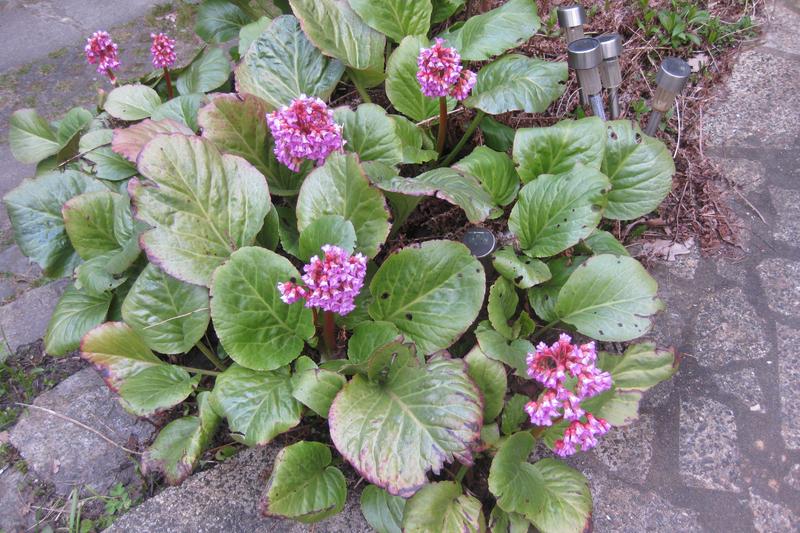
Quick facts
- Watering
- Fortnightly once established
- Sunlight
- Full sun to partial shade
- Soil
- Well-drained, moderately fertile
- Humans
- Safe
- Cats
- Safe
- Dogs
- Safe
- Height
- 30–50 cm
- Spread
- 45–60 cm
- Spacing
- 45–60 cm apart
- RHS recognition
- Award of Garden Merit
About Bergenia
Bergenia is a robust evergreen perennial prized for its large, glossy, heart-shaped leaves and clusters of pink or white flowers that appear in early spring. Native to Siberia and the Altai Mountains, this hardy plant has become a stalwart of British gardens since Victorian times. UK gardeners value bergenia for its year-round foliage interest, reliable flowering, and exceptional tolerance of difficult conditions including dry shade and exposed sites. The leathery leaves often develop attractive bronze or purple tints in winter, providing valuable colour when little else is performing.
UK fact: Bergenia cordifolia holds the RHS Award of Garden Merit and is affectionately known as 'elephant's ears' in British gardens due to its large, rounded leaves that can reach 30cm across.
Watering Bergenia
Water newly planted bergenia regularly during the first growing season to establish a strong root system. Once established, these tough perennials are remarkably drought-tolerant and typically need watering only during extended dry periods in summer. In typical UK conditions, natural rainfall is usually sufficient, though plants in containers or very dry shade benefit from fortnightly watering during hot weather. Avoid waterlogging, as bergenia prefers soil that drains freely.
Sunlight requirements
This adaptable perennial performs well in full sun, partial shade, or even full shade, though flowering is most prolific with some direct sunlight. In British gardens, plants in south or west-facing positions develop the best winter leaf colour, whilst those in shadier north-facing spots retain greener foliage year-round. Bergenia is particularly valuable for dry shade beneath trees where few other plants will grow.
Soil and feeding
This unfussy perennial adapts to a wide range of soil conditions, from clay to sandy loam, provided drainage is reasonable. Bergenia prefers a slightly acidic to neutral pH (6.0-7.0) but tolerates mildly alkaline conditions. Improve heavy clay soils with organic matter or grit to prevent winter waterlogging, which can cause root rot. In very poor, dry soils, incorporate compost or well-rotted manure at planting time to give plants the best start.
Feed bergenia with a general-purpose granular fertiliser such as blood, fish and bone in March, scattering a handful around each clump. Alternatively, apply a liquid seaweed feed monthly from April to June to boost flowering and foliage quality. Avoid high-nitrogen feeds which promote soft growth at the expense of flowers and winter colour.
Pruning Bergenia
Tidy bergenia in March or early April by cutting away any winter-damaged or unsightly leaves at the base, taking care not to damage emerging flower stems. Deadhead faded flower clusters after blooming to prevent seed formation and maintain a neat appearance. Every three to four years, lift and divide congested clumps in spring or autumn, discarding woody central sections and replanting vigorous outer portions. This rejuvenates plants and encourages better flowering.
Propagating Bergenia
Division is the simplest and most reliable method for propagating bergenia, ideally carried out in March or September. Lift established clumps with a garden fork, then use a sharp spade or knife to separate the rhizomes into sections, each with several leaves and healthy roots. Rhizome cuttings can also be taken in late spring by cutting 10-15cm sections of thick rhizome, each with at least one growth bud, and planting them horizontally just below the soil surface. Both methods establish quickly in UK conditions.
Common problems
Bergenia is generally trouble-free but can suffer from vine weevil, whose larvae feed on roots and can severely weaken or kill plants; check for notched leaf edges and drench with biological controls in late summer. Leaf spot diseases occasionally cause brown or black blotches on foliage, particularly in damp conditions; remove affected leaves and improve air circulation. Slugs and snails may damage young spring growth and flower buds, especially in mild, wet weather. In waterlogged soils, rhizome rot can occur, causing plants to collapse; ensure good drainage and avoid planting in heavy, poorly-drained clay.
Spot a problem with your plant? Photograph the affected area using the Loam app and it will suggest the most likely cause and treatment.
Safety
- Humans
- Safe
- Cats
- Safe
- Dogs
- Safe
Toxicity information is for general guidance only.
Seasonal care calendar
Monthly care guide for Bergenia in the UK, based on average conditions.
| Month | Care tasks |
|---|---|
| January | Enjoy winter foliage colour; no action needed unless snow-damaged leaves require removal. |
| February | Early flowers may appear in mild areas; protect emerging blooms from severe frost with fleece if necessary. |
| March | Main flowering period begins. Remove tatty winter leaves and apply balanced fertiliser around clumps. |
| April | Peak flowering continues. Deadhead spent blooms and divide congested clumps if needed. |
| May | Flowering finishes. Complete deadheading and take rhizome cuttings if propagating. |
| June | Fresh foliage develops. Water during dry spells and mulch around plants to retain moisture. |
| July | Monitor for vine weevil damage. Water containers regularly during hot weather. |
| August | Apply biological vine weevil control if larvae are present. Continue watering in prolonged dry periods. |
| September | Good time to divide and replant established clumps. Water new divisions until established. |
| October | Foliage begins developing autumn tints. Clear fallen leaves from around plants to prevent fungal issues. |
| November | Winter colour intensifies in sunny positions. No action needed; plants are fully dormant. |
| December | Enjoy evergreen foliage and bronze winter tones. Plants require no maintenance during winter months. |
Frequently asked questions
- When should I cut back bergenia leaves?
- Cut back damaged, tatty or diseased leaves in early spring (March) before new growth emerges. Remove old flower stems after blooming finishes. Bergenia is evergreen, so avoid cutting back all foliage—only remove unsightly leaves to keep plants looking tidy whilst maintaining their winter structure.
- How do I know if my bergenia has a disease or pest problem?
- Common issues include brown leaf spots (fungal disease), vine weevil notches on leaf edges, and slug damage to flowers. The Loam app can help you identify specific problems through photo diagnosis and provides personalised treatment advice based on your garden conditions and the severity of the issue.
- What soil does bergenia need?
- Bergenia is unfussy and tolerates most soil types, including heavy clay, provided drainage isn't extremely poor. It performs best in moisture-retentive but well-drained soil. Avoid very dry, sandy soils unless you can water regularly during summer, as bergenia prefers consistent moisture despite being drought-tolerant once established.
Got a question about growing Bergenia that isn't covered here? Ask the Garden Advisor in the Loam app. It knows your saved plants and local conditions.
Related plants
This page was compiled with AI assistance and reviewed by our team. .