Rodgersia
Rodgersia aesculifolia
Perennials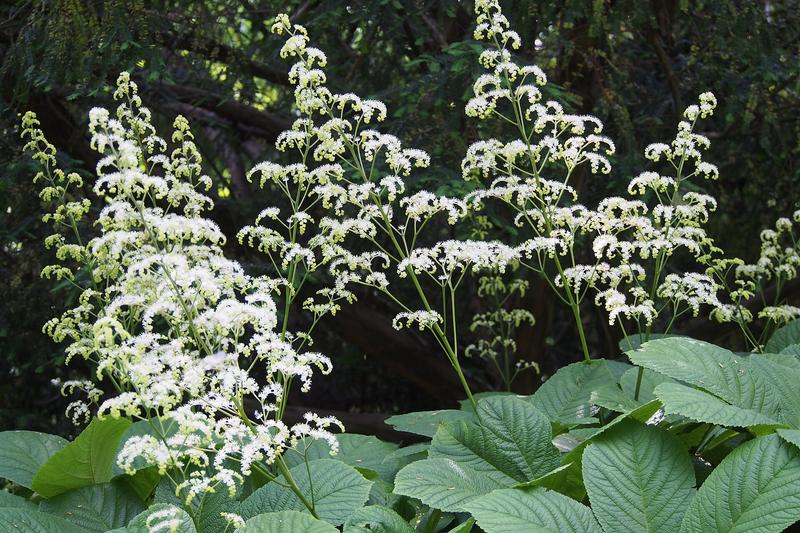
Quick facts
- Watering
- Weekly, more in dry spells
- Sunlight
- Partial shade
- Soil
- Rich, moisture-retentive, humus-rich
- Humans
- Unknown
- Cats
- Unknown
- Dogs
- Unknown
- Height
- 100–150 cm
- Spread
- 75–100 cm
- Spacing
- 90–120 cm apart
- RHS recognition
- Award of Garden Merit
About Rodgersia
Rodgersia is a striking architectural perennial native to China, prized for its large, horse-chestnut-like leaves and plumes of creamy-white flowers in early summer. This moisture-loving plant thrives in the cool, damp conditions common to many British gardens, making it an ideal choice for bog gardens, pond margins, and shaded borders. The bold foliage emerges bronze-tinted in spring, matures to deep green, then often takes on coppery autumn tones. UK gardeners value Rodgersia for adding dramatic texture and height to woodland-style plantings where few other perennials perform so reliably.
UK fact: Rodgersia aesculifolia holds the RHS Award of Garden Merit and performs exceptionally well in Scotland and northern England, where cool summers and reliable rainfall suit its moisture requirements perfectly.
Watering Rodgersia
Rodgersia demands reliable moisture and suffers quickly in drought, making it unsuitable for dry gardens without irrigation. Water deeply once or twice weekly during spring and summer, increasing frequency during hot spells or if planted in sunnier positions. Established plants near ponds or streams require minimal intervention, but those in borders benefit from mulching to retain moisture. Reduce watering in autumn as growth slows, but never let the soil become bone-dry even in winter.
Sunlight requirements
Plant in partial shade, ideally beneath deciduous trees or on north- and east-facing borders where it receives gentle morning light. In cooler northern regions and Scotland, Rodgersia tolerates more sun provided soil remains consistently moist. Avoid hot, south-facing positions where scorching winds and intense afternoon sun can damage the large leaves, causing browning at the edges.
Soil and feeding
Plant in deep, humus-rich soil that retains moisture without becoming waterlogged, ideally enriched with well-rotted compost or leaf mould. A slightly acidic to neutral pH (5.5–7.0) is ideal, though Rodgersia tolerates mildly alkaline conditions if moisture is adequate. Heavy clay soils suit this plant well provided drainage prevents winter waterlogging, whilst sandy soils require substantial organic amendment and regular watering. Incorporate a 7–10 cm mulch of organic matter annually to maintain soil structure and moisture retention.
Feed established clumps in March with a general-purpose granular fertiliser such as blood, fish and bone or Growmore, scattering around the base and watering in. A generous spring mulch of well-rotted manure or garden compost provides slow-release nutrients throughout the growing season and improves soil structure, reducing the need for additional feeding.
Pruning Rodgersia
Deadhead faded flower plumes in August to maintain a tidy appearance, cutting stems back to the base. Leave the attractive foliage intact through autumn to enjoy the bronze and copper tones before it dies back naturally. In November or early March, cut all dead leaves down to ground level before new growth emerges, adding the material to the compost heap. Divide congested clumps every four to five years in spring to maintain vigour, replanting divisions immediately into prepared soil.
Propagating Rodgersia
Division is the easiest and most reliable method, undertaken in March or early April when shoots are just visible. Lift established clumps with a fork, wash soil from the rhizomes, and use a sharp spade or knife to separate sections, ensuring each has several buds and healthy roots. Seed-raised plants take three to four years to reach flowering size; sow fresh seed in pots of loam-based compost in autumn, overwinter in a cold frame, and prick out seedlings the following spring.
Common problems
Rodgersia is largely trouble-free but can suffer from vine weevil larvae attacking the rhizomes, particularly in container-grown specimens; apply biological controls in late summer if damage is noticed. Slugs and snails may damage emerging foliage in spring, so use organic pellets or barriers around new growth. Leaf scorch occurs in exposed, sunny positions or during dry spells, causing brown edges and tips; ensure adequate moisture and shade to prevent this cultural problem. Powdery mildew occasionally affects foliage in late summer during dry conditions, though it rarely causes serious harm.
Spot a problem with your plant? Photograph the affected area using the Loam app and it will suggest the most likely cause and treatment.
Safety
- Humans
-
Unknown
No confirmed toxicity data available; avoid ingestion and handle with care as a precaution.
- Cats
-
Unknown
No specific toxicity information recorded; monitor pets and contact a vet if ingestion occurs.
- Dogs
-
Unknown
No specific toxicity information recorded; monitor pets and contact a vet if ingestion occurs.
Toxicity information is for general guidance only. If a person or pet has been exposed to this plant and you are concerned, seek advice from a medical professional or vet.
Seasonal care calendar
Monthly care guide for Rodgersia in the UK, based on average conditions.
| Month | Care tasks |
|---|---|
| January | No action needed; plants fully dormant. |
| February | Check mulch depth and top up if necessary before new growth emerges. |
| March | Cut back dead foliage, apply balanced fertiliser, and divide congested clumps if needed. |
| April | Watch for emerging bronze-tinted foliage and protect from slugs; water if dry. |
| May | Ensure consistent moisture as leaves expand rapidly; apply organic mulch around the base. |
| June | Enjoy the creamy-white flower plumes; water regularly during dry spells. |
| July | Maintain consistent watering and monitor for leaf scorch in sunny positions. |
| August | Deadhead spent flower stems and continue watering during warm, dry weather. |
| September | Reduce watering slightly as growth slows; enjoy developing autumn foliage colour. |
| October | Allow foliage to die back naturally; collect and sow fresh seed if desired. |
| November | Cut back dead foliage to ground level or leave until early spring for wildlife habitat. |
| December | No action needed; plants dormant and fully hardy. |
Frequently asked questions
- When should I plant Rodgersia in the UK?
- Plant Rodgersia in spring (March to May) or autumn (September to October) when soil is workable and moist. Spring planting allows establishment before summer, whilst autumn planting lets roots develop over winter. Choose a sheltered spot in partial shade with moisture-retentive soil enriched with organic matter. Water thoroughly after planting and maintain consistent moisture during the first growing season.
- Why are my Rodgersia leaves turning brown at the edges?
- Leaf scorch is usually caused by insufficient moisture, too much direct sun, or exposure to drying winds. Move plants to shadier positions, improve soil moisture retention with organic mulch, and water more frequently during dry spells. The Loam app can help you diagnose leaf problems with photos, set watering reminders based on weather conditions, and provide personalised care advice for your specific garden conditions.
- What soil does Rodgersia need?
- Rodgersia thrives in moisture-retentive, humus-rich soil that never dries out completely. Heavy clay or loamy soils are ideal, whilst sandy soils require significant improvement with organic matter such as well-rotted compost or leaf mould. The soil should be neutral to slightly acidic (pH 6.0-7.0). Avoid dry, chalky, or poorly draining soils. Apply a thick mulch annually to retain moisture and suppress weeds.
Got a question about growing Rodgersia that isn't covered here? Ask the Garden Advisor in the Loam app. It knows your saved plants and local conditions.
Related plants
This page was compiled with AI assistance and reviewed by our team. .