Astilbe
Astilbe x arendsii
Perennials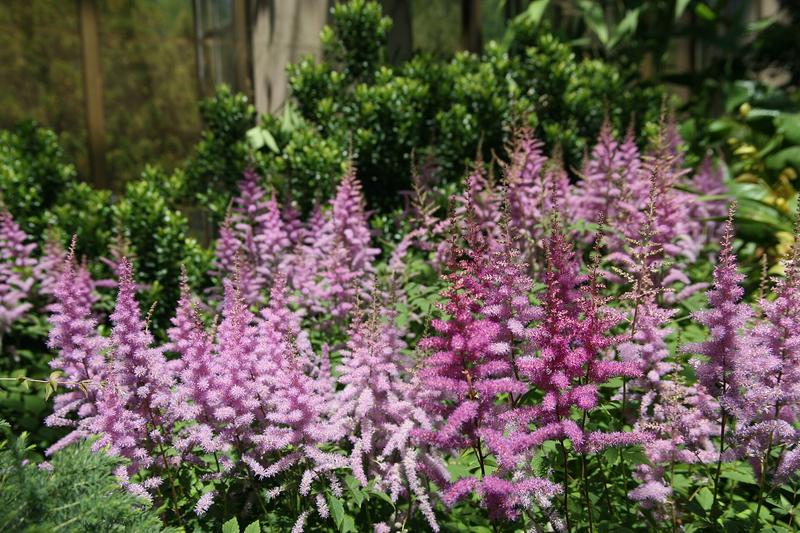
Quick facts
- Watering
- Twice weekly during dry spells
- Sunlight
- Partial shade
- Soil
- Rich, moisture-retentive, humus-rich
- Humans
- Safe
- Cats
- Safe
- Dogs
- Safe
- Height
- 40–90 cm
- Spread
- 30–60 cm
- Spacing
- 30–45 cm apart
- RHS recognition
- Award of Garden Merit
About Astilbe
Astilbe is a graceful herbaceous perennial prized for its feathery plume-like flowers in shades of pink, red, white, and purple, held above fern-like foliage from late spring through summer. Native to Asia and North America, these hybrids were developed in Germany and have become a mainstay of British gardens since the early 20th century. UK gardeners value astilbes for their ability to thrive in shady, moist borders where many other flowering perennials struggle, bringing colour and texture to woodland gardens and damp spots. The flowers dry beautifully on the plant, providing winter interest and structure in the border.
UK fact: Many Astilbe x arendsii cultivars hold the RHS Award of Garden Merit, including 'Fanal' (deep red), 'Brautschleier' (white), and 'Bressingham Beauty' (pink), reflecting their exceptional performance in British gardens and their popularity at RHS shows throughout the summer months.
Watering Astilbe
Astilbes are moisture-loving plants that require consistently damp soil, especially during the growing season from April to September. Water deeply twice weekly during dry periods, and more frequently in hot weather or if planted in sunnier positions. Mulch around the base each spring to help retain moisture and keep roots cool. Plants allowed to dry out will develop brown, crispy leaf edges and may fail to flower well the following year.
Sunlight requirements
Astilbes perform best in partial shade, particularly in dappled woodland conditions or borders that receive morning sun and afternoon shade. In cooler, northern parts of the UK, they will tolerate more sun provided the soil remains consistently moist. Avoid hot, south-facing positions in southern England, as the foliage can scorch and flowering may be reduced.
Soil and feeding
Astilbes thrive in fertile, humus-rich soil that retains moisture without becoming waterlogged. Incorporate plenty of well-rotted compost or leaf mould before planting to improve moisture retention and soil structure. They prefer slightly acidic to neutral soil (pH 6.0-7.0) but will tolerate slightly alkaline conditions. Avoid dry, sandy soils unless you can commit to regular watering and heavy mulching, as astilbes will struggle in these conditions.
Apply a balanced slow-release fertiliser such as blood, fish and bone in early spring as new growth emerges. A second feed with a liquid fertiliser high in potassium in early summer will encourage stronger flowering. Mulch annually with well-rotted compost or leaf mould to maintain soil fertility and moisture levels.
Pruning Astilbe
Deadhead spent flower plumes in late summer if you prefer a tidier appearance, though many gardeners leave the dried flowers standing for winter interest as they look attractive when frosted. Cut back all dead foliage to ground level in late winter or early spring (February to March) before new growth appears. Divide congested clumps every three to four years in early spring to maintain vigour and flowering performance.
Propagating Astilbe
Astilbes are easily propagated by division in early spring (March to April) just as new shoots emerge. Lift established clumps with a garden fork and divide into sections, ensuring each piece has several healthy shoots and a good root system. Replant divisions immediately at the same depth, spacing them 30-45 cm apart, and water thoroughly. Division not only creates new plants but rejuvenates older clumps that may have become woody and less floriferous.
Common problems
Astilbes are generally trouble-free but can suffer from powdery mildew on foliage during dry spells, particularly if planted in too much sun or allowed to dry out. Vine weevil larvae occasionally attack the roots, causing plants to wilt and collapse; check for C-shaped white grubs in the soil if plants decline unexpectedly. Leaf scorch, characterised by brown, crispy leaf margins, is a cultural problem caused by insufficient watering or too much direct sun rather than disease. Slugs may damage emerging shoots in spring, so protect young growth with organic slug pellets or barriers.
Spot a problem with your plant? Photograph the affected area using the Loam app and it will suggest the most likely cause and treatment.
Safety
- Humans
- Safe
- Cats
- Safe
- Dogs
- Safe
Toxicity information is for general guidance only.
Seasonal care calendar
Monthly care guide for Astilbe in the UK, based on average conditions.
| Month | Care tasks |
|---|---|
| January | No action needed; plants fully dormant. |
| February | Cut back dead foliage to ground level before new growth emerges. |
| March | Apply slow-release fertiliser and mulch with compost. Divide congested clumps if needed. |
| April | Water regularly as new growth develops. Protect emerging shoots from slugs. |
| May | Maintain consistent moisture. Early varieties begin flowering towards month end. |
| June | Peak flowering period. Water deeply twice weekly during dry spells. Apply liquid feed. |
| July | Continue watering regularly. Mid-season varieties in full bloom. |
| August | Late varieties flowering. Deadhead if desired or leave for winter interest. |
| September | Reduce watering as growth slows. Flowers begin to dry on stems. |
| October | Foliage begins to die back. Leave dried flower heads for winter structure. |
| November | No action needed; allow foliage to die back naturally. |
| December | No action needed; dried flower heads provide winter interest. |
Frequently asked questions
- Why are my astilbe leaves turning brown at the edges?
- Brown, crispy leaf edges on astilbes are almost always caused by insufficient watering or too much direct sun. Astilbes need consistently moist soil, especially during dry spells. Water deeply twice weekly, mulch to retain moisture, and consider moving plants to a shadier spot if the problem persists.
- When should I divide astilbes and how often?
- Divide astilbes every three to four years in early spring (March to April) as new shoots emerge. The Loam app can send you timely reminders based on when you planted yours, and help you track which clumps need dividing to maintain vigorous flowering.
- Will astilbes grow in full shade?
- Astilbes will tolerate full shade but flowering may be reduced compared to plants in partial shade. They perform best in dappled shade or positions receiving morning sun and afternoon shade. In deep shade, focus on varieties with attractive foliage and accept fewer flower plumes.
Got a question about growing Astilbe that isn't covered here? Ask the Garden Advisor in the Loam app. It knows your saved plants and local conditions.
Related plants
This page was compiled with AI assistance and reviewed by our team. .