Brunnera
Brunnera macrophylla
Perennials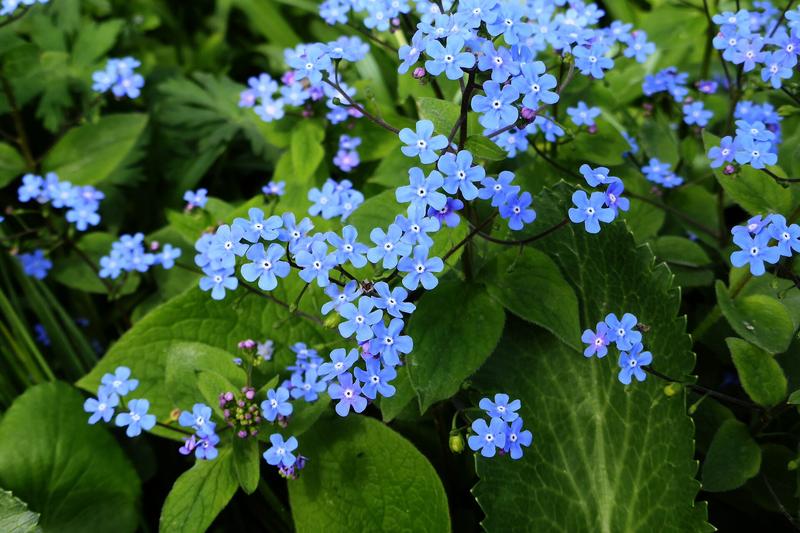
Quick facts
- Watering
- Weekly during dry spells
- Sunlight
- Partial shade
- Soil
- Moist, humus-rich, well-drained
- Humans
- Safe
- Cats
- Safe
- Dogs
- Safe
- Height
- 30–45 cm
- Spread
- 45–60 cm
- Spacing
- 45–60 cm apart
- RHS recognition
- Award of Garden Merit
About Brunnera
Brunnera is a charming spring-flowering perennial native to the Caucasus, prized for its delicate sprays of forget-me-not-like blue flowers and bold, heart-shaped foliage. Variegated cultivars such as 'Jack Frost' and 'Looking Glass' have become hugely popular in British gardens for their silvery leaves that brighten shady borders throughout the growing season. This low-maintenance ground cover thrives in the cool, moist conditions typical of UK gardens, making it an ideal choice for woodland-style plantings and north-facing borders. Its long season of interest, from April blooms through to autumn foliage, has made it a staple in contemporary British garden design.
UK fact: Several Brunnera macrophylla cultivars hold the RHS Award of Garden Merit, with 'Jack Frost' being particularly celebrated for its performance in British gardens since receiving the award in 2012, thriving in our cool, damp climate better than in many other regions.
Watering Brunnera
Water regularly during the first growing season to establish a deep root system. Once established, Brunnera is relatively drought-tolerant but performs best with consistent moisture, particularly during hot, dry spells in May through August. In typical British summers, rainfall is usually sufficient, but water weekly during prolonged dry periods to prevent leaf scorch and maintain foliage quality. Variegated forms are more susceptible to drought stress and benefit from mulching to retain soil moisture.
Sunlight requirements
Plant in dappled shade or areas receiving morning sun and afternoon shade, particularly in southern England. North-facing borders are ideal, as are positions beneath deciduous trees where spring flowers receive light before the canopy fills in. Variegated cultivars can tolerate more sun in northern regions if soil moisture is consistent, but leaves may scorch in full sun, especially during dry spells.
Soil and feeding
Plant in humus-rich soil that retains moisture without becoming waterlogged, ideally amended with well-rotted compost or leaf mould. Brunnera tolerates a wide pH range from slightly acidic to slightly alkaline (pH 6.0-7.5), making it suitable for most British garden soils. Heavy clay soils are acceptable provided they don't become waterlogged in winter, whilst sandy soils will require additional organic matter and more frequent watering. A 5-8cm mulch of compost or bark applied in spring helps retain moisture and suppress weeds.
Feed with a general-purpose granular fertiliser such as blood, fish and bone in March as new growth emerges, or top-dress with a 5cm layer of well-rotted compost or manure. Avoid high-nitrogen feeds which can promote lush foliage at the expense of flowers and may make variegated forms revert to plain green. Established plants in fertile soil require minimal feeding beyond annual mulching.
Pruning Brunnera
Cut back faded flower stems in late May or June after blooming finishes to maintain a tidy appearance and direct energy into foliage. If leaves become scorched, mildewed, or tatty by mid to late summer, cut the entire plant back to ground level; fresh foliage will quickly emerge and remain attractive through autumn. Remove any all-green shoots from variegated cultivars as soon as they appear to prevent reversion. In late autumn or early spring, clear away old foliage to prevent slugs and snails from sheltering over winter.
Propagating Brunnera
Division is the easiest and most reliable method, undertaken in September or October, or in March before flowering. Lift established clumps carefully with a fork, divide into sections ensuring each has roots and growth buds, and replant immediately at the same depth. Root cuttings taken in December or January also work well: take 5-8cm sections of thick root, plant vertically in pots of gritty compost with the top just below the surface, and keep in a cold frame until growth appears in spring.
Common problems
Slugs and snails are the primary pests, particularly damaging to emerging spring foliage and young plants; use organic controls such as beer traps, copper tape, or wildlife-friendly pellets. Powdery mildew can affect leaves during dry summers, especially on plants in full sun or dry soil; improve air circulation and maintain soil moisture to reduce incidence. Variegated cultivars occasionally produce all-green reversions which should be removed promptly. In very wet, poorly drained soils, crown rot may occur over winter.
Spot a problem with your plant? Photograph the affected area using the Loam app and it will suggest the most likely cause and treatment.
Safety
- Humans
- Safe
- Cats
- Safe
- Dogs
- Safe
Toxicity information is for general guidance only.
Seasonal care calendar
Monthly care guide for Brunnera in the UK, based on average conditions.
| Month | Care tasks |
|---|---|
| January | Take root cuttings from dormant plants if propagating. Clear away any remaining dead foliage if not done in autumn. |
| February | Apply a mulch of well-rotted compost around established plants. Watch for early shoots emerging in mild spells. |
| March | Feed with blood, fish and bone as new growth appears. Divide established clumps if needed. Protect emerging foliage from slugs. |
| April | Enjoy the sprays of blue flowers appearing above fresh foliage. Continue slug and snail control around young growth. |
| May | Flowering continues into early May. Deadhead spent blooms as they fade to maintain appearance and direct energy to foliage. |
| June | Remove all spent flower stems. Water during dry spells to prevent leaf scorch. Watch for and remove any all-green reversions on variegated forms. |
| July | Maintain consistent moisture during hot, dry weather. If foliage becomes scorched or mildewed, cut back to ground level for fresh growth. |
| August | Continue watering during dry periods. Monitor for powdery mildew and remove affected leaves if necessary. |
| September | Ideal time to divide overcrowded clumps. Plant new divisions and keep well watered until established. |
| October | Continue division if needed. Foliage remains attractive through autumn. Begin tidying away tatty leaves as they decline. |
| November | Cut back remaining foliage to ground level to prevent slugs overwintering. Apply a fresh layer of mulch if needed. |
| December | Plant is fully dormant. Take root cuttings for propagation. Plan new planting positions for spring. |
Frequently asked questions
- Why are the leaves on my Brunnera turning brown and crispy?
- Brown, crispy leaves usually indicate drought stress or too much sun. Brunnera needs consistent moisture and prefers partial shade, especially in southern England. Water regularly during dry spells and consider moving the plant to a shadier spot if leaf scorch persists.
- How can I tell if my Brunnera is getting the right care?
- Healthy Brunnera should have lush, heart-shaped leaves and delicate blue flowers in spring. If you're unsure whether your plant is thriving or struggling, the Loam app can help diagnose problems from photos, provide personalised care reminders based on your location and conditions, and offer tailored advice to keep your Brunnera looking its best throughout the season.
- When is the best time to divide Brunnera?
- Early autumn (September-October) is ideal as the soil is still warm and plants have time to establish before winter. Alternatively, divide in early spring (March) before flowering, though autumn division generally results in better establishment.
Got a question about growing Brunnera that isn't covered here? Ask the Garden Advisor in the Loam app. It knows your saved plants and local conditions.
Related plants
This page was compiled with AI assistance and reviewed by our team. .