Ligularia
Ligularia dentata
Perennials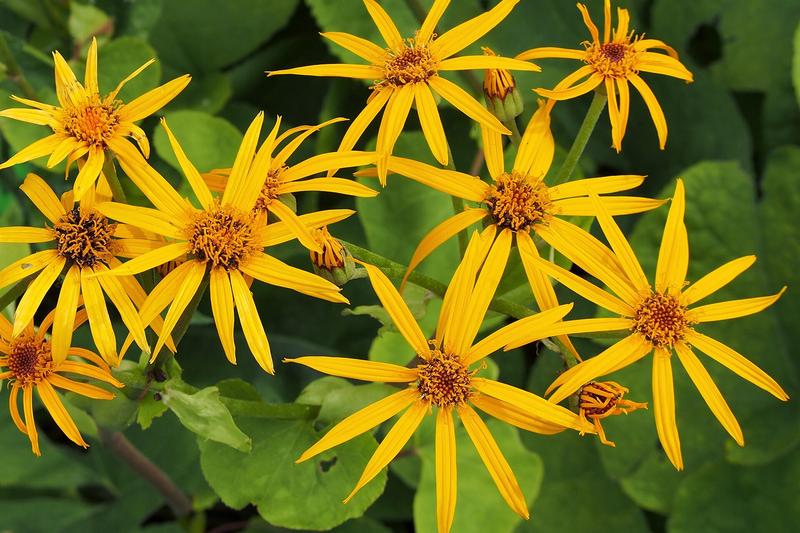
Quick facts
- Watering
- Twice weekly in dry spells
- Sunlight
- Partial shade
- Soil
- Rich, moisture-retentive, humus-rich
- Humans
- Unknown
- Cats
- Unknown
- Dogs
- Unknown
- Height
- 90–120 cm
- Spread
- 60–90 cm
- Spacing
- 60–75 cm apart
- RHS recognition
- Award of Garden Merit
About Ligularia
Ligularia is a bold, architectural perennial prized for its large, kidney-shaped leaves and vibrant orange-yellow daisy flowers that appear on tall stems in mid to late summer. Native to China and Japan, this moisture-loving plant thrives in the cooler, damper conditions found across much of the UK. British gardeners value it for adding dramatic foliage interest to shady borders, bog gardens, and waterside plantings. The dark-leaved cultivars, particularly 'Desdemona' and 'Othello', provide striking contrast in woodland gardens.
UK fact: Ligularia 'Desdemona' holds the RHS Award of Garden Merit and has been a favourite in British cottage gardens since its introduction in the early 20th century, particularly thriving in Scotland and northern England where cooler summers prevent leaf scorch.
Watering Ligularia
Water deeply twice weekly during dry periods, increasing to daily watering during hot summer spells. Ligularia's large leaves lose moisture rapidly, and whilst wilting is often temporary, repeated stress weakens plants. Mulch around the base with organic matter to retain moisture. Plants growing beside ponds or in bog gardens require minimal supplementary watering. In typical British summers with regular rainfall, established plants in moisture-retentive soil may need little additional watering except during prolonged dry periods.
Sunlight requirements
In the UK, grow ligularia in dappled shade or morning sun with afternoon shade, especially in southern regions. North-facing borders or east-facing positions are ideal. In Scotland and northern England, plants tolerate more sun if soil remains consistently moist, but leaves may still wilt temporarily on hot days before recovering overnight.
Soil and feeding
Plant in deep, humus-rich soil that retains moisture without becoming waterlogged. Incorporate generous amounts of well-rotted manure or garden compost before planting. Ligularia tolerates heavy clay soils well, making it ideal for many British gardens, and thrives in the moist conditions found in bog gardens or beside water features. Soil pH should be neutral to slightly acidic (pH 6.0-7.0). Avoid planting in sandy or chalky soils unless you can commit to intensive watering and soil improvement.
Feed established plants in early spring with a general-purpose granular fertiliser such as blood, fish and bone or Growmore. Apply a 5-8cm layer of well-rotted manure or garden compost as a mulch in March, which feeds the soil whilst suppressing weeds and retaining moisture. A second light feed in early summer supports flowering, though plants in naturally rich soil may not require this.
Pruning Ligularia
Deadhead faded flowers to maintain a tidy appearance, though this won't encourage further blooms. In October or November, once foliage has been blackened by frost, cut all growth back to ground level. Alternatively, leave the architectural seed heads for winter interest and cut back in February before new growth emerges. Remove any damaged or tatty leaves throughout the growing season. Divide congested clumps every 3-4 years in spring to maintain vigour.
Propagating Ligularia
Division is the easiest and most reliable method for ligularia, carried out in March or early April. Lift established clumps with a fork, ensuring you retain as much root as possible, then divide into sections with at least three shoots each using a sharp spade or two forks back-to-back. Replant immediately into prepared soil and water thoroughly. Seed-raised plants are variable and slow to reach flowering size, but fresh seed sown in autumn and overwintered in a cold frame will germinate the following spring.
Common problems
Slugs and snails are the primary pests, causing significant damage to emerging foliage in spring and can decimate young plants. Powdery mildew may appear on leaves in late summer, particularly if plants become stressed through drought. Leaf wilt during hot days is a common cultural issue but usually temporary, with plants recovering overnight if soil moisture is adequate. In very wet winters, crown rot can occur in poorly drained soils, though this is rare in properly sited plants.
Spot a problem with your plant? Photograph the affected area using the Loam app and it will suggest the most likely cause and treatment.
Safety
- Humans
-
Unknown
Ligularia species have not been widely studied for human toxicity, though some members of the Asteraceae family can cause skin irritation in sensitive individuals. Handle with care.
- Cats
-
Unknown
No specific toxicity data available for cats. Monitor pets and consult a vet if ingestion occurs.
- Dogs
-
Unknown
No specific toxicity data available for dogs. Monitor pets and consult a vet if ingestion occurs.
Toxicity information is for general guidance only. If a person or pet has been exposed to this plant and you are concerned, seek advice from a medical professional or vet.
Seasonal care calendar
Monthly care guide for Ligularia in the UK, based on average conditions.
| Month | Care tasks |
|---|---|
| January | No action needed. Plants are fully dormant with no visible growth above ground. |
| February | Cut back any remaining dead foliage if not done in autumn. Apply a mulch of well-rotted manure around the crown. |
| March | New shoots emerge. Divide congested clumps. Apply blood, fish and bone fertiliser. Begin slug and snail patrols. |
| April | Continue protecting emerging foliage from slugs and snails. Water if conditions are dry. Foliage expands rapidly. |
| May | Maintain consistent soil moisture as temperatures rise. Ensure plants in sunnier positions receive adequate water to prevent wilting. |
| June | Flower stems begin to develop. Water deeply during dry spells. Apply a light liquid feed to support flowering. |
| July | Main flowering period. Deadhead spent blooms for tidiness. Water daily during hot, dry weather to prevent stress wilting. |
| August | Flowering continues into early August. Maintain watering regime. Watch for powdery mildew on stressed plants. |
| September | Flowering finishes. Deadhead or leave seed heads for autumn interest. Reduce watering as temperatures cool. |
| October | Foliage begins to decline after first frosts. Cut back to ground level or leave for winter structure. |
| November | Complete cutting back if not already done. Clear away debris to reduce slug and snail overwintering sites. |
| December | No action needed. Plants are dormant. Plan any new plantings or divisions for spring. |
Frequently asked questions
- Why are my ligularia leaves turning yellow?
- Yellowing ligularia leaves usually indicate waterlogged soil, nutrient deficiency, or occasionally drought stress. Check soil drainage—whilst ligularia needs consistent moisture, it won't tolerate standing water. If drainage is adequate, feed with a balanced liquid fertiliser in spring and midsummer. Yellow lower leaves on otherwise healthy plants are normal aging. If you're unsure of the cause, the Loam app can help diagnose the problem through photo analysis and provide personalised care recommendations.
- How do I protect ligularia from slugs?
- Slugs and snails adore ligularia's lush foliage. Use a combination of methods: apply organic slug pellets, create beer traps, encourage natural predators like frogs and hedgehogs, and hand-pick pests during evening patrols. Copper tape around pots can help. Protection is most critical in spring as new shoots emerge. The Loam app can send you timely reminders for slug patrols and preventative treatments during peak damage periods.
- When should I divide ligularia?
- Divide ligularia in March or early April as new growth emerges. This timing allows divisions to establish before summer heat. Divide every 3-4 years to maintain vigour, or when clumps become congested and flowering diminishes. Autumn division is possible but spring is more reliable.
Got a question about growing Ligularia that isn't covered here? Ask the Garden Advisor in the Loam app. It knows your saved plants and local conditions.
Related plants
This page was compiled with AI assistance and reviewed by our team. .