Japanese Painted Fern
Athyrium niponicum var. pictum
Grasses and Ferns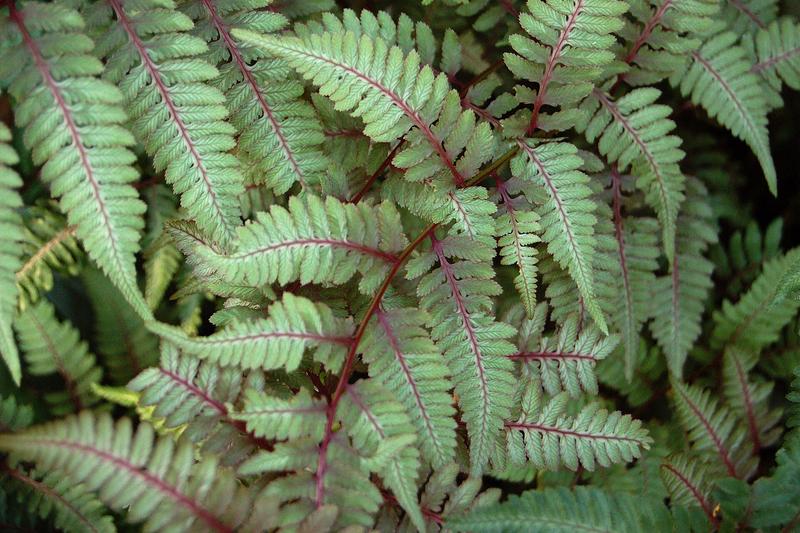
Quick facts
- Watering
- Weekly during dry spells
- Sunlight
- Partial to full shade
- Soil
- Rich, moist, well-drained
- Humans
- Safe
- Cats
- Safe
- Dogs
- Safe
- Height
- 30–45 cm
- Spread
- 30–45 cm
- Spacing
- 40–50 cm apart
- RHS recognition
- Award of Garden Merit
About Japanese Painted Fern
Japanese Painted Fern is a deciduous fern prized for its stunning silvery-grey fronds with burgundy midribs, creating an elegant tapestry effect in shaded areas. Native to Japan, this compact fern has become a favourite amongst UK gardeners for brightening woodland gardens and shady borders where few other plants offer such striking foliage colour. Growing to around 30–45 cm tall, it forms neat clumps that contrast beautifully with hostas, heucheras, and other shade-loving perennials. Its delicate appearance belies a hardy constitution, thriving in the cool, moist conditions typical of British gardens.
UK fact: Japanese Painted Fern received the RHS Award of Garden Merit in 1993, recognising its exceptional performance in British gardens and its reliability in our climate.
Watering Japanese Painted Fern
Keep the soil consistently moist but not waterlogged, particularly during the growing season from spring to early autumn. In typical UK summers, established plants may need watering weekly during dry spells, though our natural rainfall often suffices. Newly planted ferns require more frequent watering until their roots establish. Reduce watering in autumn as the fronds die back, and avoid winter waterlogging which can cause crown rot.
Sunlight requirements
Japanese Painted Fern performs best in partial to full shade, making it ideal for north-facing borders or beneath tree canopies. In the UK, it can tolerate morning sun in cooler northern regions, but avoid hot afternoon sun which can scorch the delicate fronds. The silvery colouration is most pronounced in bright shade rather than deep darkness.
Soil and feeding
Japanese Painted Fern thrives in humus-rich, moisture-retentive soil that drains well, similar to woodland floor conditions. Incorporate plenty of leaf mould, well-rotted compost, or composted bark before planting to improve both moisture retention and drainage. The ideal pH is slightly acidic to neutral (5.5–7.0), though the fern tolerates a range of soil types. Heavy clay soils benefit from added grit and organic matter to prevent waterlogging.
Apply a balanced slow-release fertiliser in early spring as new fronds emerge, or mulch annually with a 5 cm layer of leaf mould or well-rotted compost. Avoid high-nitrogen feeds which can produce lush but less colourful foliage. Established plants in humus-rich soil rarely need additional feeding beyond annual mulching.
Pruning Japanese Painted Fern
Cut back dead or damaged fronds in late winter or early spring before new growth emerges, typically in February or March. Remove old fronds at the base to keep the plant tidy and prevent fungal diseases from overwintering on dead foliage. During the growing season, remove any damaged or tatty fronds to maintain appearance. Japanese Painted Fern is deciduous, so all fronds will naturally die back in autumn and can be left as winter protection or removed for neatness.
Propagating Japanese Painted Fern
Divide established clumps in early spring just as new fronds begin to unfurl, typically in March or April. Lift the entire plant carefully with a fork, then tease or cut the crown into sections, ensuring each division has several growing points and a good root system. Replant divisions immediately at the same depth, water well, and keep moist until established. Spore propagation is possible but slow and requires patience; collect spores from mature fronds in late summer and sow on sterile compost in a covered tray.
Common problems
Japanese Painted Fern is relatively trouble-free but can suffer from vine weevil, particularly in container-grown specimens; check for notched leaf edges and treat with biological controls in spring and autumn. Slugs and snails may damage emerging fronds in spring, so use organic pellets or barriers to protect new growth. Crown rot can occur in poorly drained or waterlogged soil, particularly over winter, causing the plant to collapse; ensure good drainage and avoid planting too deeply. Fronds may scorch in too much sun or dry out if the soil becomes too dry during summer.
Spot a problem with your plant? Photograph the affected area using the Loam app and it will suggest the most likely cause and treatment.
Safety
- Humans
- Safe
- Cats
- Safe
- Dogs
- Safe
Toxicity information is for general guidance only.
Seasonal care calendar
Monthly care guide for Japanese Painted Fern in the UK, based on average conditions.
| Month | Care tasks |
|---|---|
| January | No action needed; plant is dormant. |
| February | Cut back old fronds before new growth emerges. |
| March | Apply slow-release fertiliser and mulch. Divide established clumps if needed. |
| April | Watch for emerging fronds and protect from slugs and snails. |
| May | Water during dry spells as fronds unfurl and expand. |
| June | Maintain consistent moisture and remove any damaged fronds. |
| July | Water regularly during dry weather to prevent frond scorch. |
| August | Continue watering in dry spells and enjoy the foliage display. |
| September | Reduce watering as growth slows. Collect spores if propagating. |
| October | Fronds begin to die back naturally; leave for winter protection or tidy. |
| November | No action needed; allow plant to enter dormancy. |
| December | No action needed; plant is dormant. |
Frequently asked questions
- Why are my Japanese Painted Fern fronds turning brown?
- Brown fronds are usually caused by insufficient moisture, too much direct sun, or natural autumn dieback. Check the soil is consistently moist, ensure the fern is in shade, and water regularly during dry spells. If browning occurs in autumn, this is normal as the fern is deciduous and dies back for winter.
- When should I divide my Japanese Painted Fern?
- Divide in early spring (March–April) just as new fronds emerge. The Loam app can send you a reminder at the optimal time based on your location and track your plant's growth to determine when division is needed.
- Can Japanese Painted Fern grow in full shade?
- Yes, Japanese Painted Fern tolerates full shade well, though the silvery colouration is most vibrant in bright, dappled shade rather than deep darkness. It's an excellent choice for difficult shady spots where many other plants struggle.
Got a question about growing Japanese Painted Fern that isn't covered here? Ask the Garden Advisor in the Loam app. It knows your saved plants and local conditions.
Related plants
This page was compiled with AI assistance and reviewed by our team. .