Teasel
Dipsacus fullonum
Wildflowers and Natives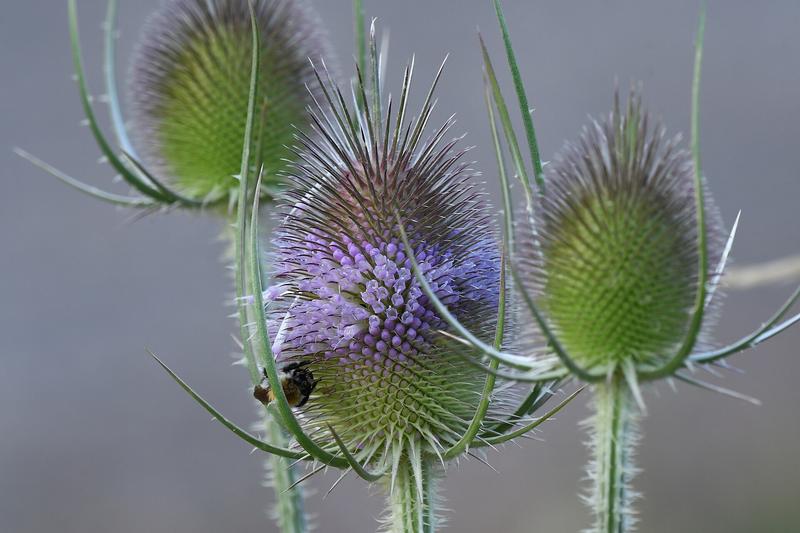
Quick facts
- Watering
- Minimal once established
- Sunlight
- Full sun to partial shade
- Soil
- Well-drained, moderately fertile
- Humans
- Safe
- Cats
- Safe
- Dogs
- Safe
- Height
- 100–200 cm
- Spread
- 30–60 cm
- Spacing
- 45–60 cm apart
About Teasel
Teasel is a striking biennial wildflower native to the UK, producing tall stems topped with distinctive egg-shaped flower heads surrounded by spiny bracts. In its first year it forms a rosette of prickly leaves, then in the second year sends up flowering stems that can reach 2 metres tall, bearing lilac-purple flowers from July to August. UK gardeners value teasel for its architectural presence, wildlife benefits—particularly for goldfinches that feed on the seeds—and its dried seed heads which provide winter interest. It thrives in wild gardens, meadows, and naturalistic borders where its bold structure creates vertical drama.
UK fact: Teasel seed heads were historically used in the British textile industry to raise the nap on woollen cloth, a practice that continued in some West Country mills until the mid-20th century, and the dried heads are still prized for traditional crafts and flower arrangements.
Watering Teasel
Teasel is remarkably drought-tolerant once established and rarely requires watering in the UK climate, relying on natural rainfall. First-year rosettes benefit from occasional watering during prolonged dry spells in summer to help establish a strong root system. In the second year, flowering stems are deep-rooted and self-sufficient even during typical British droughts. Avoid overwatering as teasel naturally thrives in free-draining conditions and can develop root issues in waterlogged soil.
Sunlight requirements
Teasel performs best in full sun where it develops the strongest stems and most prolific flowering, though it tolerates partial shade particularly in southern England. In shadier positions growth may be less vigorous and stems can become lax, requiring support. A south or west-facing position in an open border or meadow is ideal for maximum flower and seed production.
Soil and feeding
Teasel is adaptable to most soil types but performs best in moderately fertile, well-drained soil with a neutral to slightly alkaline pH of 6.5-8.0. It tolerates poor, stony soils and even heavy clay provided drainage is adequate, making it ideal for challenging sites. Avoid overly rich soils which can produce lush foliage at the expense of flowers and make stems prone to lodging. The plant naturally colonises disturbed ground, roadside verges, and waste ground throughout the UK, demonstrating its unfussy nature.
Teasel requires no supplementary feeding and actually performs better in lean to moderately fertile conditions. Excessive nutrients produce soft, floppy growth that is prone to collapse and reduces the plant's characteristic sturdy, architectural form. If growing in very poor soil, a single light application of general-purpose fertiliser in early spring of the flowering year is sufficient.
Pruning Teasel
Pruning is generally unnecessary and often undesirable as the dried seed heads provide valuable winter food for goldfinches and other birds, as well as structural interest in the garden. If self-seeding is a concern, cut flower heads after seeds have been taken by birds but before they fully disperse, typically in late winter. Remove the entire flowering stem at the base once it has died back completely. Be aware that teasel is biennial and dies after flowering, so 'pruning' effectively means removing spent plants and managing volunteers.
Propagating Teasel
Teasel propagates readily from seed sown in situ in spring or autumn, with autumn sowings often producing stronger plants. Scatter seed on prepared soil and lightly rake in, as seeds need some light to germinate; germination typically occurs within 2-3 weeks in suitable conditions. The plant self-seeds prolifically, and in wild gardens this natural regeneration is often sufficient, though seedlings can be thinned or transplanted when small if they appear in unwanted locations. First-year rosettes can be moved in autumn or early spring, but established plants resent disturbance due to their deep taproots.
Common problems
Teasel is largely trouble-free and resistant to most pests and diseases, making it an excellent low-maintenance choice for UK gardens. Aphids occasionally colonise young growth and flower heads but rarely cause significant damage and provide food for beneficial insects. In very wet conditions or poorly drained soil, crown rot can occur, though this is uncommon in established plants. The main 'problem' is vigorous self-seeding which can result in teasel becoming invasive in favourable conditions; deadhead before seeds fully ripen if spread is a concern, though this reduces wildlife value.
Spot a problem with your plant? Photograph the affected area using the Loam app and it will suggest the most likely cause and treatment.
Safety
- Humans
- Safe
- Cats
- Safe
- Dogs
- Safe
Toxicity information is for general guidance only.
Seasonal care calendar
Monthly care guide for Teasel in the UK, based on average conditions.
| Month | Care tasks |
|---|---|
| January | Dried seed heads provide winter structure and bird food; leave standing for wildlife. |
| February | Cut back old flowering stems if desired, though many leave until early spring for continued wildlife benefit. |
| March | Sow seeds directly outdoors in prepared soil; first-year rosettes begin active growth. |
| April | Thin seedlings to 45-60cm spacing; transplant volunteers to desired positions while still small. |
| May | Second-year plants send up flowering stems rapidly; ensure adequate spacing for air circulation. |
| June | Flowering stems reach full height; flower buds begin to form at stem tips. |
| July | Peak flowering begins with lilac-purple blooms attracting bees and butterflies. |
| August | Flowering continues; deadhead selectively if controlling spread, or leave for seed development. |
| September | Seeds ripen and begin to disperse; sow fresh seed for autumn germination if desired. |
| October | Goldfinches and other birds feed on ripening seeds; stems begin to dry and turn brown. |
| November | Leave dried seed heads standing for winter interest and continued bird feeding. |
| December | Architectural dried stems provide structure in winter borders; first-year rosettes remain evergreen. |
Frequently asked questions
- Is teasel invasive in UK gardens?
- Teasel can self-seed prolifically in favourable conditions but is not classified as invasive in the UK. It's a native wildflower that's easy to control by deadheading before seeds fully ripen or pulling unwanted seedlings. In wild gardens and meadows, natural regeneration is often welcomed for its wildlife value, whilst in formal borders it requires more management to prevent spread.
- Why are my teasel stems falling over?
- Teasel stems typically lodge due to overly rich soil, excessive shade, or overcrowding which produces weak, etiolated growth. The Loam app can help you assess your soil conditions and light levels, providing personalised advice on improving growing conditions. Ensure plants are spaced 45-60cm apart in full sun with lean to moderately fertile soil for the sturdiest, self-supporting stems.
- When do goldfinches feed on teasel seeds?
- Goldfinches typically begin feeding on teasel seeds from late autumn through winter, from October to March, when the seeds have fully ripened and other food sources are scarce. Leave dried seed heads standing throughout winter to provide this valuable food source. The birds' specialised beaks are perfectly adapted to extract seeds from the spiny heads, making teasel one of their preferred natural food plants in British gardens.
Got a question about growing Teasel that isn't covered here? Ask the Garden Advisor in the Loam app. It knows your saved plants and local conditions.
Related plants
This page was compiled with AI assistance and reviewed by our team. .