Eryngium
Eryngium planum
Perennials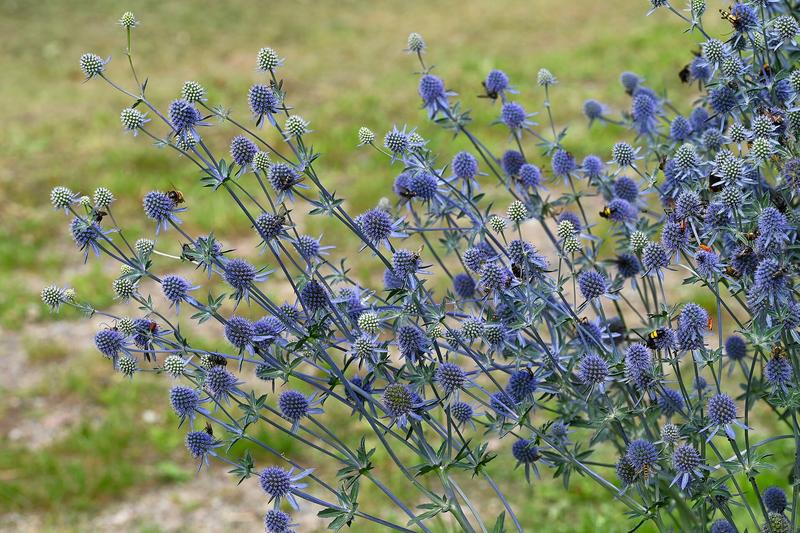
Quick facts
- Watering
- Fortnightly once established
- Sunlight
- Full sun
- Soil
- Well-drained, poor to moderately fertile
- Humans
- Safe
- Cats
- Safe
- Dogs
- Safe
- Height
- 60–90 cm
- Spread
- 40–50 cm
- Spacing
- 40–45 cm apart
- RHS recognition
- Award of Garden Merit
About Eryngium
Eryngium planum, commonly known as Eryngium or flat sea holly, is a striking herbaceous perennial prized for its metallic blue thistle-like flowers and silvery bracts that appear from mid to late summer. Native to central and eastern Europe, this architectural plant has become a favourite in British cottage gardens and contemporary prairie-style plantings. UK gardeners value it for its drought tolerance, long flowering season, and exceptional performance in hot, dry borders where many perennials struggle. The steely blue flowers are also superb for cutting and drying, retaining their colour beautifully for winter arrangements.
UK fact: Eryngium planum has been awarded the RHS Award of Garden Merit, recognising its outstanding performance in British gardens and its reliability across diverse UK growing conditions from Cornwall to the Scottish Lowlands.
Watering Eryngium
Water newly planted eryngiums weekly during their first growing season to establish a deep root system. Once established, typically after one full year, plants require watering only during extended dry periods of three weeks or more without rain. Overwatering is the most common cause of failure, leading to root rot and fungal issues. In typical UK summers with regular rainfall, established plants rarely need supplementary watering.
Sunlight requirements
Plant in a position receiving at least six hours of direct sunlight daily, ideally in a south or west-facing border. In shadier spots, stems become lax and the distinctive metallic blue colour fades to greenish-grey. Eryngium tolerates exposed, windy sites exceptionally well, making it ideal for coastal gardens and open prairie-style plantings.
Soil and feeding
Plant in well-drained soil with a sandy or gravelly texture; heavy clay must be improved with horticultural grit or sharp sand. Eryngium tolerates a wide pH range from slightly acidic to alkaline (pH 6.0-8.0) and actually develops stronger stems and better colour in leaner soils. Avoid rich, moisture-retentive ground which causes lax growth and increases susceptibility to winter rot. On heavy soils, consider planting on a slight mound or raised bed to improve drainage.
Avoid feeding established eryngiums, as excess nutrients produce soft, floppy growth that requires staking and dilutes the intense blue colouration. If growing in extremely poor soil, a single light application of general-purpose fertiliser in early spring is sufficient. Container-grown specimens may benefit from a weak liquid feed once in late spring.
Pruning Eryngium
Leave the dried flower stems standing through autumn and winter, as they provide valuable structure and food for seed-eating birds. The silvery seedheads remain attractive well into winter, often persisting until February. Cut back all dead growth to ground level in late February or early March, just as new basal growth emerges. Deadheading during the flowering season is unnecessary and reduces the ornamental seedheads.
Propagating Eryngium
Seed is the most reliable propagation method, as eryngiums develop deep taproots that resent disturbance. Sow fresh seed in autumn in pots placed in a cold frame, or sow in spring after stratifying seed in the refrigerator for four weeks. Division is possible on young plants (under three years old) in early spring, but older specimens rarely survive root disturbance. Root cuttings taken in late winter offer another option for named varieties.
Common problems
Eryngium is remarkably pest and disease-free when grown in suitable conditions. The main issue is root rot caused by poor drainage or winter waterlogging, which manifests as blackened crown tissue and plant collapse. Slugs and snails occasionally damage emerging spring growth but rarely cause serious harm. Powdery mildew can appear on foliage in late summer during humid weather, but this is largely cosmetic and doesn't affect plant health or the following year's performance.
Spot a problem with your plant? Photograph the affected area using the Loam app and it will suggest the most likely cause and treatment.
Safety
- Humans
- Safe
- Cats
- Safe
- Dogs
- Safe
Toxicity information is for general guidance only.
Seasonal care calendar
Monthly care guide for Eryngium in the UK, based on average conditions.
| Month | Care tasks |
|---|---|
| January | Leave dried seedheads standing for winter structure and wildlife value. No action needed. |
| February | Cut back all dead growth to ground level towards month end as new basal leaves begin to emerge. |
| March | Plant new specimens or divide young plants early in the month. Apply mulch of gravel around the crown to suppress weeds. |
| April | Watch for slug damage on emerging foliage. Water newly planted specimens weekly if weather is dry. |
| May | Basal rosettes expand rapidly. Ensure good air circulation around plants to prevent fungal issues. |
| June | Flower stems begin to develop. Stake only if growing in overly rich soil or shade. |
| July | Main flowering period begins. Flowers are excellent for cutting and drying at this stage. |
| August | Peak flowering continues. Cut stems for drying before seedheads fully mature for best colour retention. |
| September | Flowering finishes and attractive seedheads develop. Collect seed if propagating. Reduce watering. |
| October | Leave seedheads standing for autumn and winter interest. Sow collected seed in pots in cold frame. |
| November | Foliage dies back naturally. Leave all top growth in place for winter protection and structure. |
| December | Silvery seedheads provide architectural winter interest. No action needed. |
Frequently asked questions
- When should I cut back eryngium after flowering?
- Leave the attractive dried seedheads standing through winter for structure and wildlife value. Cut back all dead growth to ground level in late February or early March, just before new growth emerges.
- Why has my eryngium turned green instead of blue?
- Insufficient sunlight is the most common cause. Eryngium needs full sun to develop its metallic blue colour. Plants in shade or overfed specimens also produce greenish flowers with poor colouration. If you're unsure about your plant's light levels or feeding regime, the Loam app can help diagnose colour problems and provide personalised care advice based on your garden conditions.
- How do I propagate eryngium from seed?
- Sow fresh seed in autumn in pots of gritty compost and leave outdoors over winter, as eryngium seed needs cold stratification to germinate. Alternatively, sow in spring after mixing seed with damp sand and refrigerating for four to six weeks. Seedlings appear in spring and can be potted on individually. Plants typically flower in their second or third year.
Got a question about growing Eryngium that isn't covered here? Ask the Garden Advisor in the Loam app. It knows your saved plants and local conditions.
Related plants
This page was compiled with AI assistance and reviewed by our team. .