Knautia
Knautia macedonica
Perennials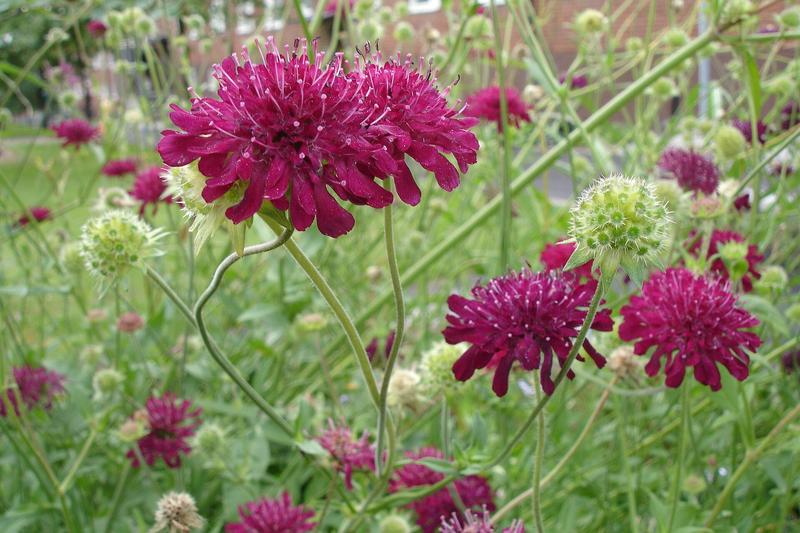
Quick facts
- Watering
- Weekly when establishing, then occasional
- Sunlight
- Full sun to partial shade
- Soil
- Well-drained, moderately fertile
- Humans
- Safe
- Cats
- Safe
- Dogs
- Safe
- Height
- 60–80 cm
- Spread
- 45–60 cm
- Spacing
- 40–50 cm apart
- RHS recognition
- Award of Garden Merit
About Knautia
Knautia macedonica is a charming perennial producing deep crimson, pincushion-like flowers from early summer through to autumn. Native to the Balkans and Romania, this cottage garden favourite has naturalised beautifully in British borders, where its airy stems and long flowering season make it invaluable for pollinator-friendly planting. The flowers are held on wiry stems above clumps of dark green foliage, creating a relaxed, meadow-like effect that suits both traditional and contemporary garden styles. UK gardeners prize it for its drought tolerance once established and its ability to attract bees and butterflies throughout the summer months.
UK fact: Knautia macedonica received the RHS Award of Garden Merit in 1993, recognising its exceptional performance in British gardens and its reliability across diverse UK growing conditions from Cornwall to the Scottish Lowlands.
Watering Knautia
Water newly planted knautia weekly during the first growing season to establish a deep root system. Once established, typically after the first year, plants are remarkably drought-tolerant and require watering only during prolonged dry spells of more than two weeks without rain. In heavy clay soils common across much of the UK, avoid overwatering as this can lead to root rot, particularly during wet winters. Container-grown specimens require more frequent watering, approximately twice weekly during summer.
Sunlight requirements
Knautia performs best in full sun, which encourages the most prolific flowering and strongest stems. In the warmer southern counties, it tolerates partial shade, particularly during the hottest part of the afternoon. North-facing borders or positions shaded for more than half the day will result in leggy growth and reduced flowering.
Soil and feeding
Knautia thrives in well-drained soil of average fertility, tolerating a wide pH range from slightly acidic to alkaline (pH 6.0-8.0), making it well-suited to chalky soils found across southern England. Heavy clay soils should be improved with grit or horticultural sand to enhance drainage, as waterlogged conditions in winter can prove fatal. Avoid overly rich soils, which promote lush foliage at the expense of flowers and can cause plants to become floppy. Sandy or gravelly soils are ideal, mimicking the plant's natural habitat in rocky meadows.
Knautia requires minimal feeding and performs best in moderately fertile conditions. A single application of general-purpose fertiliser or well-rotted compost in early spring is sufficient for most garden situations. Avoid high-nitrogen feeds, which encourage soft growth prone to flopping and reduce flowering.
Pruning Knautia
Deadhead spent flowers regularly throughout summer to prolong the flowering season and maintain a tidy appearance, though leaving some seedheads provides winter interest and food for finches. Cut back the entire plant to ground level in late autumn once flowering has finished, or leave until early spring if you prefer the structural interest of dried stems through winter. Plants may self-seed freely if not deadheaded; remove unwanted seedlings in spring to prevent overcrowding.
Propagating Knautia
Knautia is easily propagated by division in early spring as new growth emerges, or in autumn after flowering ceases. Lift established clumps and tease apart into sections, ensuring each division has healthy roots and several growing points, then replant immediately at the same depth. Seed can be sown in autumn in a cold frame or in spring under glass at 15-18°C, though plants may not come true to type and often produce paler flowers. Self-sown seedlings can be transplanted when large enough to handle, typically in their second spring.
Common problems
Knautia is generally trouble-free and resistant to most pests and diseases common in UK gardens. Powdery mildew may occasionally affect foliage during dry summers, particularly on plants in partial shade or those stressed by drought; improve air circulation and water at the base rather than overhead. Aphids can cluster on young growth in spring but are rarely serious and attract beneficial insects. In very wet winters or poorly drained soils, crown rot can occur; ensure good drainage and avoid planting in heavy, waterlogged ground.
Spot a problem with your plant? Photograph the affected area using the Loam app and it will suggest the most likely cause and treatment.
Safety
- Humans
- Safe
- Cats
- Safe
- Dogs
- Safe
Toxicity information is for general guidance only.
Seasonal care calendar
Monthly care guide for Knautia in the UK, based on average conditions.
| Month | Care tasks |
|---|---|
| January | No action needed; plants are fully dormant. |
| February | Check for signs of new growth emerging in mild spells. |
| March | Cut back old stems if not done in autumn. Apply general-purpose fertiliser or compost. Divide established clumps. |
| April | New foliage develops rapidly. Water if conditions are dry. Transplant self-sown seedlings. |
| May | First flower buds appear. Stake plants in exposed positions if needed. |
| June | Peak flowering begins. Deadhead regularly to prolong display. Water during dry spells. |
| July | Continue deadheading. Water established plants only during prolonged drought. |
| August | Flowering continues. Deadhead to encourage further blooms into autumn. |
| September | Late flowers appear. Allow some seedheads to develop for winter interest. Divide plants if needed. |
| October | Flowering finishes. Cut back stems or leave for winter structure. Collect seed if desired. |
| November | Cut back remaining stems if not already done. Tidy around the crown. |
| December | No action needed; plants are dormant. |
Frequently asked questions
- How do I stop knautia from flopping over in my border?
- Plant knautia in full sun and avoid overly rich soil or high-nitrogen fertilisers, which cause weak, floppy growth. Ensure good drainage and space plants adequately for air circulation. In exposed gardens, provide light support with pea sticks or linking stakes in late spring before flowering stems elongate. Cutting back by one-third in late May can also encourage sturdier, bushier growth.
- Why isn't my knautia flowering as much as it should?
- Reduced flowering is usually caused by insufficient sunlight, overly rich soil, or lack of deadheading. Knautia needs at least six hours of direct sun daily for prolific blooms. The Loam app can help you track your plant's light exposure and set deadheading reminders to maximise flowering throughout summer.
- Can knautia survive in clay soil?
- Yes, but only if drainage is improved first. Dig in plenty of horticultural grit or sharp sand to a depth of 30cm before planting, and consider planting on a slight mound to prevent winter waterlogging. Once established with good drainage, knautia tolerates clay reasonably well and benefits from the moisture retention during dry summers.
Got a question about growing Knautia that isn't covered here? Ask the Garden Advisor in the Loam app. It knows your saved plants and local conditions.
Related plants
This page was compiled with AI assistance and reviewed by our team. .