Echinacea
Echinacea purpurea
Perennials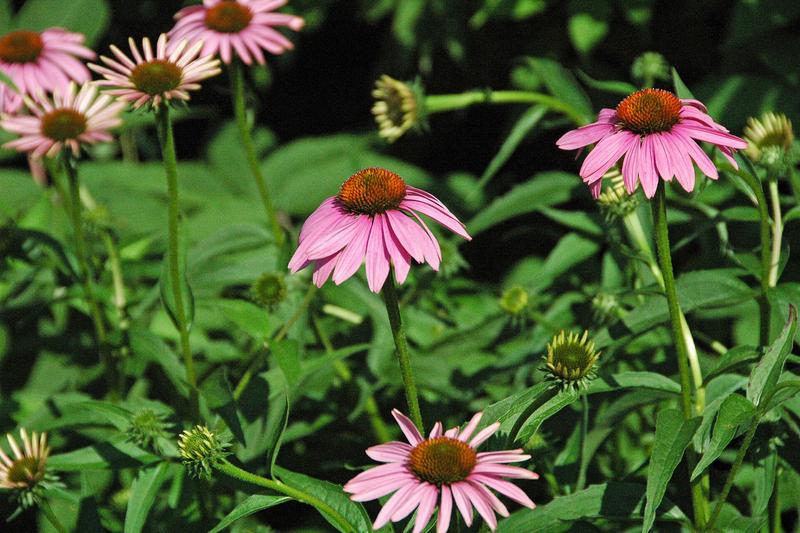
Quick facts
- Watering
- Fortnightly once established
- Sunlight
- Full sun
- Soil
- Well-drained, moderately fertile
- Humans
- Safe
- Cats
- Safe
- Dogs
- Safe
- Height
- 60–120 cm
- Spread
- 45–60 cm
- Spacing
- 45–60 cm apart
- RHS recognition
- Award of Garden Merit
About Echinacea
Echinacea purpurea is a robust herbaceous perennial native to North America, prized for its striking daisy-like flowers with prominent central cones and reflexed petals in shades of pink, purple, and white. UK gardeners value this prairie plant for its long flowering season from midsummer to early autumn, its exceptional drought tolerance once established, and its ability to attract bees, butterflies, and goldfinches to the seed heads. The sturdy stems and architectural form make it an excellent choice for naturalistic planting schemes and cottage garden borders throughout Britain. Its low-maintenance nature and RHS Award of Garden Merit status have made it a staple in UK gardens.
UK fact: Echinacea purpurea holds an RHS Award of Garden Merit and thrives particularly well in the drier eastern counties of England, where its prairie origins suit the lower rainfall and free-draining soils better than the wetter western regions.
Watering Echinacea
Newly planted echinacea needs consistent moisture for the first 12 months, requiring weekly watering during dry periods. Once established, the deep taproot makes it remarkably drought-tolerant, and plants typically need watering only during extended summer droughts lasting more than three weeks. Overwatering, particularly in heavy soils or during wet British winters, can lead to root rot. Water at the base of the plant rather than overhead to reduce the risk of powdery mildew.
Sunlight requirements
Plant in a south or west-facing position where it will receive maximum sunlight throughout the day. In shadier spots, stems become leggy and flowering is significantly reduced. Echinacea tolerates the intense sun of British summers without scorching and actually performs better in hot, dry conditions than many other perennials.
Soil and feeding
The key requirement is excellent drainage; echinacea will not tolerate waterlogged conditions, particularly in winter. It performs well in sandy, loamy, or chalky soils with a pH range of 6.0 to 7.5, showing good tolerance of alkaline conditions. On heavy clay soils common in many UK gardens, improve drainage by incorporating horticultural grit and planting on a slight mound or raised bed. Avoid overly rich soils, which promote lush foliage at the expense of flowers and can reduce winter hardiness.
Apply a light dressing of general-purpose fertiliser or well-rotted compost in early spring as new growth emerges. Avoid high-nitrogen feeds, which encourage soft, leafy growth prone to disease and reduce flowering. Established plants in average garden soil typically need no additional feeding beyond an annual spring mulch of garden compost.
Pruning Echinacea
Remove spent flowers throughout July and August to encourage further blooms into autumn. From September onwards, many gardeners leave the distinctive seed heads intact, as they provide valuable food for goldfinches and other seed-eating birds whilst adding architectural interest to winter borders. Cut back all dead stems to ground level in late February or early March before new growth begins. Divide congested clumps every three to four years in spring to maintain vigour.
Propagating Echinacea
Division is the most reliable method for named cultivars, carried out in March or April as new shoots emerge. Root cuttings taken in November or December also work well and produce plants identical to the parent. Seed can be sown in spring after a period of cold stratification, but seedlings from cultivars often revert to the species type with variable flower colour. Echinacea develops a deep taproot, so propagate young plants rather than attempting to move mature specimens.
Common problems
Echinacea is generally trouble-free but can suffer from powdery mildew in dry conditions with poor air circulation, appearing as white powdery patches on leaves. Vine weevil larvae occasionally attack the roots, causing plants to wilt and collapse, particularly in container-grown specimens. Slugs and snails may damage emerging shoots in spring. A more serious issue is echinacea yellows, a phytoplasma disease spread by leafhoppers that causes distorted growth, yellowing, and excessive branching; affected plants should be removed and destroyed immediately to prevent spread.
Spot a problem with your plant? Photograph the affected area using the Loam app and it will suggest the most likely cause and treatment.
Safety
- Humans
- Safe
- Cats
- Safe
- Dogs
- Safe
Toxicity information is for general guidance only.
Seasonal care calendar
Monthly care guide for Echinacea in the UK, based on average conditions.
| Month | Care tasks |
|---|---|
| January | No action needed. Leave seed heads standing for wildlife and winter interest. |
| February | Cut back dead stems to ground level towards the end of the month before new growth emerges. |
| March | Apply a light dressing of general-purpose fertiliser or compost as new shoots appear. Divide congested clumps. Plant new specimens. |
| April | Continue planting. Water newly planted echinacea regularly. Watch for slug and snail damage on emerging foliage. |
| May | Water during dry spells. Apply mulch around plants to suppress weeds and retain moisture. |
| June | First flowers begin to appear late in the month. Water young plants weekly during dry weather. |
| July | Peak flowering period. Deadhead regularly to prolong blooming. Water established plants only during prolonged drought. |
| August | Continue deadheading for more flowers. Monitor for powdery mildew and improve air circulation if needed. |
| September | Stop deadheading to allow seed heads to develop for birds. Flowering continues into early autumn. |
| October | Leave seed heads standing for wildlife. Collect seed if desired, though cultivars may not come true. |
| November | Take root cuttings if propagating. Leave stems standing to protect the crown over winter. |
| December | No action needed. Enjoy the architectural seed heads and watch for feeding goldfinches. |
Frequently asked questions
- When should I cut back echinacea?
- Cut back echinacea in late winter or early spring (February to March) before new growth emerges. Remove all dead stems to ground level, clearing away old foliage that may harbour pests or diseases. Avoid autumn cutting as the seed heads provide winter food for birds and structural interest in the border.
- Why are my echinacea leaves turning yellow with distorted growth?
- This is likely echinacea yellows, a serious phytoplasma disease with no cure. Affected plants develop excessive branching, yellowing leaves, and stunted, distorted growth. Remove and destroy infected plants immediately to prevent the disease spreading to healthy specimens. The Loam app can help you diagnose plant diseases through photos and provide personalised advice on keeping your remaining plants healthy.
- Can echinacea grow in clay soil?
- Yes, but only if drainage is improved first. Incorporate plenty of horticultural grit and organic matter, and consider planting on a slight mound or raised bed. Waterlogged clay, particularly in winter, will cause root rot and kill the plant.
Got a question about growing Echinacea that isn't covered here? Ask the Garden Advisor in the Loam app. It knows your saved plants and local conditions.
Related plants
This page was compiled with AI assistance and reviewed by our team. .