Liatris
Liatris spicata
Perennials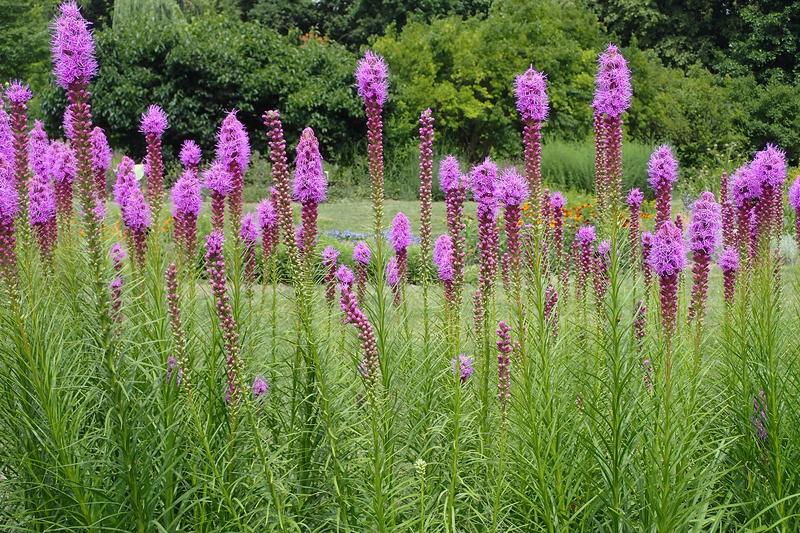
Quick facts
- Watering
- Weekly when establishing
- Sunlight
- Full sun
- Soil
- Well-drained, moderately fertile
- Humans
- Safe
- Cats
- Safe
- Dogs
- Safe
- Height
- 60–90 cm
- Spread
- 30–45 cm
- Spacing
- 30–40 cm apart
- RHS recognition
- Award of Garden Merit
About Liatris
Liatris is a striking North American prairie perennial renowned for its unusual bottlebrush flower spikes that bloom from the top downwards in vibrant purple-pink shades. Growing from corms, it produces slender grass-like foliage and reaches 60–90 cm tall, making it an excellent vertical accent in borders. UK gardeners prize it for its long-lasting summer flowers, exceptional value to pollinators (especially butterflies and bees), and reliable performance in cottage garden and naturalistic planting schemes. Its drought tolerance once established and low-maintenance nature make it ideal for modern British gardens.
UK fact: Liatris spicata has received the RHS Award of Garden Merit, recognising its outstanding performance in British gardens, where it thrives particularly well in the drier eastern counties and proves more reliable than many other prairie perennials.
Watering Liatris
Water newly planted liatris regularly during the first growing season to establish a deep root system, typically once or twice weekly in dry spells. Once established (after the first year), it becomes remarkably drought-tolerant and requires watering only during prolonged dry periods in summer. Avoid overwatering, particularly in winter, as waterlogged soil can cause corm rot. In typical UK conditions, established plants rarely need supplementary watering except in exceptionally dry summers.
Sunlight requirements
Liatris performs best in full sun, requiring at least six hours of direct sunlight daily to produce strong stems and abundant flowers. In the UK, a south or west-facing position is ideal, though it will tolerate light shade in southern regions. Insufficient light results in weak, floppy stems that require staking and reduced flowering.
Soil and feeding
Liatris thrives in well-drained soil and will not tolerate winter waterlogging, which quickly causes corm rot. It adapts to most soil types from sandy loam to clay, provided drainage is adequate; improve heavy clay with grit or organic matter before planting. A neutral to slightly acidic pH (6.0–7.0) is ideal, though it tolerates slightly alkaline conditions. Avoid overly rich soils, which promote lush foliage at the expense of flowers and can cause floppy growth.
Liatris requires minimal feeding and performs well in moderately fertile soil without supplementary fertiliser. If desired, apply a light dressing of general-purpose fertiliser or well-rotted compost in early spring as new growth emerges. Avoid high-nitrogen feeds, which encourage soft growth prone to flopping and reduce flowering.
Pruning Liatris
Deadhead spent flower spikes promptly to encourage a potential second flush of blooms and maintain a tidy appearance, cutting back to the foliage rosette. Leave the foliage intact through autumn, as it continues to photosynthesise and feed the corms for next year's growth. Cut back all dead stems and foliage to ground level in late winter (February) before new growth emerges. Liatris does not require division for health but can be lifted and divided every 3–4 years in spring to propagate or rejuvenate congested clumps.
Propagating Liatris
Liatris is most easily propagated by division of established clumps in early spring (March–April) as new shoots emerge. Carefully lift the clump, separate individual corms with roots attached, and replant immediately at the same depth. It can also be grown from seed sown in pots in a cold frame in spring, though plants take 2–3 years to reach flowering size. Corms can be purchased and planted in spring, setting them 5–8 cm deep with the pointed end upwards.
Common problems
Liatris is generally trouble-free in UK gardens but can suffer from slug and snail damage to emerging shoots in spring; protect young growth with organic slug pellets or barriers. Powdery mildew may appear on foliage in late summer during dry spells, though it rarely affects plant health significantly; ensure good air circulation and avoid overhead watering. The main cultural problem is corm rot caused by waterlogged soil, particularly in winter; ensure excellent drainage at planting time. Rabbits occasionally browse the foliage but rarely cause serious damage.
Spot a problem with your plant? Photograph the affected area using the Loam app and it will suggest the most likely cause and treatment.
Safety
- Humans
- Safe
- Cats
- Safe
- Dogs
- Safe
Toxicity information is for general guidance only.
Seasonal care calendar
Monthly care guide for Liatris in the UK, based on average conditions.
| Month | Care tasks |
|---|---|
| January | No action needed; corms are dormant underground. |
| February | Cut back any remaining dead foliage to ground level before new growth emerges. |
| March | Apply light mulch around emerging shoots. Plant new corms 5–8 cm deep. Divide established clumps if desired. |
| April | Protect emerging shoots from slugs and snails. Water if conditions are dry. |
| May | Continue watering newly planted liatris regularly. Apply light feed if desired. |
| June | Water during dry spells. Early varieties begin flowering; deadhead as blooms fade. |
| July | Peak flowering period. Deadhead spent spikes to encourage further blooms. Water in prolonged dry weather. |
| August | Continue deadheading. Leave some late spikes for seed if desired for wildlife. |
| September | Allow foliage to remain to feed corms. Reduce watering as growth slows. |
| October | Leave dying foliage in place; it continues to nourish the corms. |
| November | No action needed; foliage dies back naturally. |
| December | No action needed; corms are dormant. |
Frequently asked questions
- Why is my liatris flopping over?
- Liatris flops when grown in shade, overly rich soil, or with insufficient sunlight. Ensure it receives full sun (at least 6 hours daily) and avoid high-nitrogen fertilisers. Staking with twiggy supports in late spring can help, or divide congested clumps to improve vigour.
- When should I cut back liatris after flowering?
- Deadhead spent flower spikes immediately after blooming, but leave the foliage intact through autumn and winter to feed the corms. Cut all dead growth to ground level in late February before new shoots emerge. The Loam app can send you timely reminders for seasonal pruning tasks.
- How long does liatris take to flower from corms?
- Liatris corms planted in spring typically flower in their first summer, usually July to August, provided they're healthy, good-sized corms (at least 2–3 cm diameter). Smaller corms or those grown from seed may take 2–3 years to reach flowering size.
Got a question about growing Liatris that isn't covered here? Ask the Garden Advisor in the Loam app. It knows your saved plants and local conditions.
Related plants
This page was compiled with AI assistance and reviewed by our team. .