Kniphofia
Kniphofia uvaria
Perennials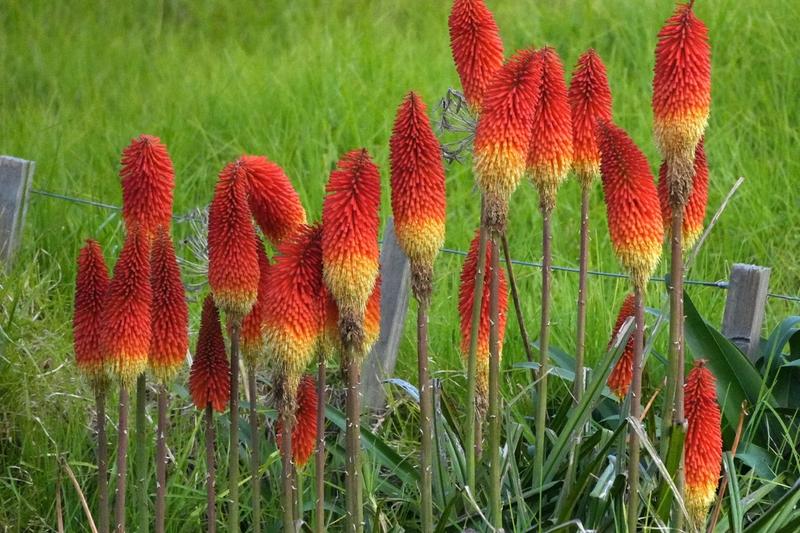
Quick facts
- Watering
- Weekly when establishing, then drought-tolerant
- Sunlight
- Full sun
- Soil
- Well-drained, moderately fertile
- Humans
- Safe
- Cats
- Safe
- Dogs
- Safe
- Height
- 90–150 cm
- Spread
- 45–75 cm
- Spacing
- 45–60 cm apart
- RHS recognition
- Award of Garden Merit
About Kniphofia
Kniphofia, commonly known as red hot poker, is a striking architectural perennial native to South Africa, prized for its dramatic torch-like flower spikes in fiery shades of red, orange, and yellow. These bold, exotic-looking plants have become a staple in British cottage gardens and prairie-style plantings, flowering from early summer through to autumn. UK gardeners value kniphofia for its drought tolerance once established, its ability to attract bees and hummingbird hawk-moths, and its dramatic vertical accent in mixed borders. The evergreen or semi-evergreen grassy foliage provides year-round structure in milder regions.
UK fact: Kniphofia uvaria has held the RHS Award of Garden Merit since 1993, recognising its outstanding performance in British gardens, and thrives particularly well in coastal gardens where the free-draining soil and milder winters suit its South African heritage.
Watering Kniphofia
During the first year after planting, water weekly during dry spells to encourage a strong root system. Once established, kniphofia is highly drought-tolerant and rarely needs supplementary watering except during prolonged summer droughts. Avoid overwatering, particularly in autumn and winter, as excessive moisture combined with cold temperatures can cause crown rot. In heavy clay soils, ensure excellent drainage to prevent waterlogging during wet British winters.
Sunlight requirements
Plant in a position receiving at least six hours of direct sunlight daily for optimal flowering. South or west-facing borders are ideal in the UK, though avoid very exposed sites in colder northern regions. In shadier conditions, plants become leggy, flower poorly, and are more susceptible to rot during wet British winters.
Soil and feeding
The key to success with kniphofia is sharp drainage, particularly during winter when wet conditions can prove fatal. Sandy, gravelly, or loamy soils are ideal, whilst heavy clay must be improved with generous amounts of horticultural grit and organic matter. Plants tolerate a wide pH range from slightly acidic to slightly alkaline (pH 6.0-7.5) but perform best in neutral soil. Avoid rich, moisture-retentive soils which encourage lush growth prone to winter rot.
Feed established plants in March or early April with a general-purpose granular fertiliser such as blood, fish and bone or Growmore. Avoid high-nitrogen feeds which promote soft, leafy growth at the expense of flowers and reduce winter hardiness. A light top-dressing of well-rotted compost in spring provides sufficient nutrients for most garden situations.
Pruning Kniphofia
Deadhead faded flower spikes by cutting back to the base to encourage further blooms and maintain a tidy appearance. In autumn, resist the temptation to cut back foliage, as the leaves provide crucial winter protection for the crown. Instead, wait until March or early April to remove any dead, damaged, or tatty leaves, cutting back to just above the crown. In colder regions, tie the foliage together loosely in autumn to create a protective thatch over the plant's centre.
Propagating Kniphofia
Division is the most reliable method for kniphofia, carried out in April or May when plants are actively growing. Lift established clumps carefully with a fork, then use two forks back-to-back or a sharp spade to divide the crown into sections, ensuring each has healthy roots and shoots. Seed-raised plants are variable and take 2-3 years to flower, but provide an economical way to raise large numbers for prairie-style plantings.
Common problems
Kniphofia is generally trouble-free but can suffer from crown rot in poorly drained soils, particularly during wet British winters, causing the centre of the plant to turn mushy and collapse. Thrips occasionally damage flowers in hot, dry summers, causing silvery streaking on petals and distorted blooms. Slugs and snails may attack young emerging shoots in spring, so apply organic slug pellets or barriers around new growth. In very cold, exposed gardens, frost damage to foliage can occur, though this is usually cosmetic and plants recover in spring.
Spot a problem with your plant? Photograph the affected area using the Loam app and it will suggest the most likely cause and treatment.
Safety
- Humans
- Safe
- Cats
- Safe
- Dogs
- Safe
Toxicity information is for general guidance only.
Seasonal care calendar
Monthly care guide for Kniphofia in the UK, based on average conditions.
| Month | Care tasks |
|---|---|
| January | No action needed. Leave foliage in place to protect the crown from frost and excessive winter wet. |
| February | Check plants after severe frost and ensure good drainage around crowns. Continue to leave protective foliage in place. |
| March | Tidy plants by removing dead and damaged foliage, cutting back to just above the crown. Apply a balanced fertiliser and refresh mulch. |
| April | Divide established clumps if needed. Plant new specimens. Watch for slug damage on emerging shoots and protect accordingly. |
| May | Water newly planted or divided kniphofia regularly. Early varieties may begin flowering towards month end in southern gardens. |
| June | Main flowering period begins. Deadhead spent blooms to encourage further flower spikes. Water during dry spells, especially young plants. |
| July | Continue deadheading regularly. Monitor for thrips damage in hot weather. Maintain watering during prolonged dry periods. |
| August | Peak flowering continues. Deadhead faded spikes promptly. Reduce watering of established plants as autumn approaches. |
| September | Late varieties still flowering. Continue deadheading. Allow some seed heads to develop if you wish to attract finches. |
| October | Remove final spent flower stems. In cold regions, tie foliage loosely together to protect the crown. Do not cut back. |
| November | Ensure drainage remains good around plants. Leave foliage intact as winter protection. Avoid disturbing the crown area. |
| December | No action needed. Plants are dormant or semi-dormant. Protective foliage shields the crown through winter. |
Frequently asked questions
- When should I cut back kniphofia after flowering?
- Deadhead spent flower spikes promptly to maintain appearance and prevent energy going into seed production. However, leave the foliage intact over winter as it protects the crown from frost and excessive wet. Tidy plants in March or April instead, removing dead leaves once the worst weather has passed.
- Why are my kniphofia leaves turning yellow?
- Yellowing leaves can indicate several issues: waterlogged soil causing root stress, natural die-back of older outer leaves, or occasionally nutrient deficiency in very poor soil. Check soil drainage first, as this is the most common culprit. If you're unsure what's affecting your plant, the Loam app can help diagnose the problem through photos and provide personalised care advice based on your specific conditions.
- Can I grow kniphofia from seed?
- Yes, kniphofia grows readily from seed sown in spring at 13-18°C. However, seed-raised plants take 2-3 years to reach flowering size, and named cultivars won't come true to type. For faster results and to preserve specific varieties, divide established clumps in April or May instead.
Got a question about growing Kniphofia that isn't covered here? Ask the Garden Advisor in the Loam app. It knows your saved plants and local conditions.
Related plants
This page was compiled with AI assistance and reviewed by our team. .