Crocosmia
Crocosmia × crocosmiiflora
Perennials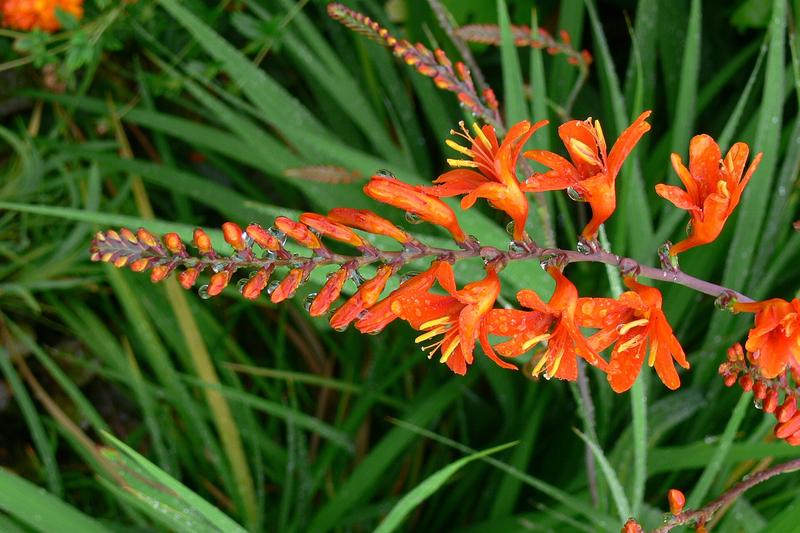
Quick facts
- Watering
- Weekly during establishment and flowering
- Sunlight
- Full sun to partial shade
- Soil
- Well-drained, moderately fertile, moisture-retentive
- Humans
- Unknown
- Cats
- Unknown
- Dogs
- Unknown
- Height
- 60–120 cm
- Spread
- 30–60 cm
- Spacing
- 20–30 cm apart
- RHS recognition
- Award of Garden Merit
About Crocosmia
Crocosmia is a vibrant summer-flowering perennial beloved in British gardens for its arching sprays of fiery orange, red, or yellow blooms that appear from July to September. Native to South Africa but naturalised across much of the UK, this hardy corm produces elegant, sword-like foliage and attracts bees, butterflies, and hummingbird hawk-moths. Its bold architectural form and reliable performance make it a cottage garden favourite, thriving in borders, gravel gardens, and naturalistic plantings. Crocosmia spreads steadily to form generous clumps that provide excellent cut flowers and late-season colour when many other perennials are fading.
UK fact: Many Crocosmia cultivars have received the RHS Award of Garden Merit, with 'Lucifer' being particularly celebrated in British gardens since the 1960s for its intense scarlet flowers and exceptional hardiness, even thriving in exposed Scottish gardens.
Watering Crocosmia
Newly planted corms require consistent moisture during spring and summer to establish strong root systems, so water weekly during dry spells. Once established, Crocosmia is reasonably drought-tolerant but flowers best with regular watering from June through August, particularly during the typically drier periods in southern and eastern England. Reduce watering significantly in autumn as foliage dies back, and avoid winter waterlogging which can rot corms. In heavy clay soils or wet western regions, ensure excellent drainage to prevent corm rot during dormancy.
Sunlight requirements
Plant in full sun for the most abundant flowering, ideally in a south or west-facing border where plants receive at least six hours of direct sunlight daily. In warmer parts of the UK, Crocosmia tolerates partial shade and may benefit from dappled afternoon shade during hot summers. North-facing positions produce more foliage than flowers, though plants will still survive and spread.
Soil and feeding
Plant in moderately fertile, humus-rich soil with good drainage, ideally with a pH between 6.0 and 7.0. Crocosmia tolerates a range of soil types including sandy loam, chalk, and even heavy clay provided drainage is improved with grit or organic matter. In wet regions or heavy soils, incorporate horticultural grit and plant corms on a slight mound to prevent winter waterlogging. Avoid excessively rich soils which produce lush foliage at the expense of flowers and can make plants floppy and prone to flopping.
Feed established clumps with a general-purpose granular fertiliser such as blood, fish and bone in March as shoots appear, working it gently into the soil surface. Apply a potassium-rich tomato feed or sulphate of potash in late May or early June to encourage abundant flowering and strong corm development. Avoid high-nitrogen feeds after midsummer as these promote soft growth vulnerable to frost damage.
Pruning Crocosmia
Remove faded flower spikes in late summer to maintain a tidy appearance, cutting stems back to the base, though leaving some seedheads provides winter interest and food for birds. Allow foliage to die back naturally in autumn as it returns nutrients to the corms for next year's growth. Cut back dead and tatty leaves to ground level in February or March before fresh shoots appear, removing all debris to reduce pest and disease carryover. Divide congested clumps every three to four years in spring to maintain vigour and flowering performance.
Propagating Crocosmia
The easiest propagation method is division of mature clumps in April or May when new growth is just emerging. Lift congested clumps carefully with a fork, shake off excess soil, and separate individual corms and the smaller cormlets that form around the base. Replant healthy corms immediately at the same depth (5-8cm) with the growing points facing upwards, spacing them 20-30cm apart. Cormlets can be grown on in pots or a nursery bed for a year before planting out, typically flowering in their second or third season.
Common problems
Crocosmia is generally trouble-free but can suffer from red spider mite in hot, dry summers, causing bronzed, stippled foliage that may require treatment with biological controls or insecticidal soap. Corms may rot in waterlogged winter soil, particularly in heavy clay or poorly drained sites, so improving drainage is essential in wet regions. Slugs and snails occasionally damage emerging shoots in spring, though established plants are rarely seriously affected. In some gardens, particularly in mild, wet areas of western Britain, Crocosmia can become invasive, spreading vigorously and requiring regular division to keep it in check.
Spot a problem with your plant? Photograph the affected area using the Loam app and it will suggest the most likely cause and treatment.
Safety
- Humans
-
Unknown
Crocosmia toxicity to humans is not well documented, though corms may cause mild stomach upset if ingested. Handle with care and keep away from children.
- Cats
-
Unknown
No specific toxicity data available for cats. Monitor pets and contact a vet if ingestion occurs and symptoms develop.
- Dogs
-
Unknown
No specific toxicity data available for dogs. Monitor pets and contact a vet if ingestion occurs and symptoms develop.
Toxicity information is for general guidance only. If a person or pet has been exposed to this plant and you are concerned, seek advice from a medical professional or vet.
Seasonal care calendar
Monthly care guide for Crocosmia in the UK, based on average conditions.
| Month | Care tasks |
|---|---|
| January | No action needed. Corms are dormant underground. |
| February | Cut back any remaining dead foliage to ground level before new shoots emerge. Clear away debris to reduce pests and diseases. |
| March | Apply a balanced granular fertiliser as new shoots appear. Plant new corms 5-8cm deep in prepared soil. Divide congested clumps if needed. |
| April | Continue planting and dividing. Water new plantings during dry spells. Apply mulch around emerging clumps to retain moisture and suppress weeds. |
| May | Water regularly during dry weather as foliage develops. Apply a potassium-rich feed to encourage flowering. Watch for slug damage on young shoots. |
| June | Maintain regular watering as flower buds form. Stake tall varieties in exposed positions if needed to prevent wind damage. |
| July | Enjoy the flowering display. Water during dry spells to prolong blooming. Cut stems for indoor arrangements, which can last up to two weeks in a vase. |
| August | Continue watering during dry weather. Deadhead spent flower stems to maintain appearance or leave seedheads for birds and winter interest. |
| September | Late-flowering varieties continue blooming. Reduce watering as flowering finishes. Allow foliage to die back naturally to feed the corms. |
| October | Leave dying foliage in place to protect corms over winter. In very cold or exposed gardens, apply a mulch of bracken or straw for extra protection. |
| November | No action needed. Allow plants to enter dormancy naturally. |
| December | No action needed. Corms are dormant and hardy in most UK regions. |
Frequently asked questions
- When should I cut back Crocosmia?
- Cut back Crocosmia in late winter or early spring (February or March) once foliage has died back completely. Avoid cutting back in autumn, as the dying leaves return nutrients to the corms for next year's growth. Remove all dead foliage before new shoots emerge to tidy the plant and reduce disease carryover.
- Why are my Crocosmia leaves turning yellow?
- Yellowing leaves can indicate several issues including overwatering, poor drainage, nutrient deficiency, or overcrowding. Check soil moisture levels and ensure good drainage, especially in heavy clay. If leaves yellow from the base upwards during the growing season, congested clumps may need dividing. The Loam app can help diagnose specific causes by analysing photos of affected foliage and provide personalised care recommendations based on your garden conditions.
- What soil does Crocosmia need?
- Crocosmia thrives in moist but well-drained soil in full sun to partial shade. It tolerates most soil types including clay, loam, and sandy soils, provided drainage is adequate. In heavy clay, improve drainage by incorporating grit or sharp sand and plant corms on a slight mound. Avoid waterlogged conditions, particularly in winter, as this can cause corm rot. A neutral to slightly acidic pH (6.0-7.0) is ideal.
Got a question about growing Crocosmia that isn't covered here? Ask the Garden Advisor in the Loam app. It knows your saved plants and local conditions.
Related plants
This page was compiled with AI assistance and reviewed by our team. .