Angel's Fishing Rod
Dierama pulcherrimum
Perennials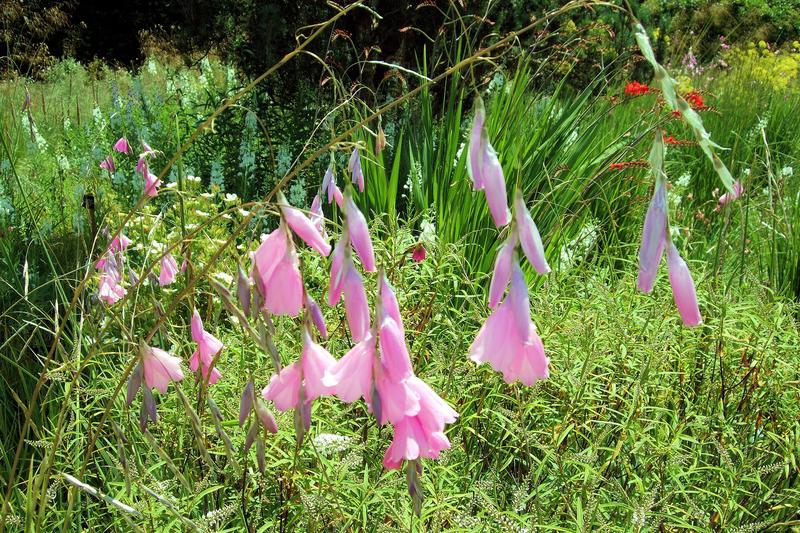
Quick facts
- Watering
- Weekly during growing season
- Sunlight
- Full sun to partial shade
- Soil
- Moist but well-drained, humus-rich
- Humans
- Unknown
- Cats
- Unknown
- Dogs
- Unknown
- Height
- 90–150 cm
- Spread
- 30–60 cm
- Spacing
- 45–60 cm apart
- RHS recognition
- Award of Garden Merit
About Angel's Fishing Rod
Angel's Fishing Rod is a graceful South African perennial renowned for its arching stems that dangle bell-shaped flowers in shades of pink, purple, and magenta from mid to late summer. Growing from corms, it produces clumps of evergreen, grass-like foliage that provide year-round structure in borders. UK gardeners prize it for its elegant, swaying habit that brings movement to cottage gardens and mixed borders, particularly when planted near water features or on slopes where its fishing-rod stems can be fully appreciated. The plant thrives in milder regions of the UK, especially in southern and western counties where winters are less severe.
UK fact: Dierama pulcherrimum received the RHS Award of Garden Merit and performs exceptionally well in coastal gardens throughout Cornwall, Devon, and the mild microclimates of western Scotland, where it often self-seeds freely in favourable conditions.
Watering Angel's Fishing Rod
Water regularly from spring through summer, particularly during the flowering period from June to August, ensuring the soil remains consistently moist but never waterlogged. Established plants have moderate drought tolerance but perform best with weekly watering during dry spells, especially in free-draining soils. Reduce watering in autumn and winter, allowing the soil to dry slightly between waterings, though evergreen foliage benefits from occasional moisture during prolonged dry winter periods. In heavy clay soils, take care not to overwater during the dormant season as this can lead to corm rot.
Sunlight requirements
Angel's Fishing Rod performs best in full sun, which encourages the most prolific flowering and strongest stems. In hotter, drier gardens, particularly in southern England, light afternoon shade can help prevent stress during peak summer. Position plants where they receive at least six hours of direct sunlight daily, ideally in a south or west-facing border that offers some shelter from cold northerly and easterly winds.
Soil and feeding
Angel's Fishing Rod thrives in fertile, humus-rich soil that retains moisture during the growing season whilst draining freely in winter to prevent corm rot. The ideal soil is slightly acidic to neutral (pH 6.0-7.0), enriched with well-rotted compost or leaf mould to improve both moisture retention and drainage. In heavy clay soils, incorporate plenty of horticultural grit and organic matter, or plant on a slight slope to ensure excess winter moisture drains away. Sandy soils benefit from generous additions of compost to boost fertility and water-holding capacity.
Apply a balanced liquid fertiliser fortnightly from late spring through the flowering period to support the long blooming season and encourage strong corm development. A spring mulch of well-rotted compost or leaf mould provides slow-release nutrients and helps retain soil moisture. Avoid high-nitrogen feeds which promote foliage at the expense of flowers.
Pruning Angel's Fishing Rod
Deadhead spent flower stems after blooming to maintain a tidy appearance, though leaving some seedheads allows for self-seeding in favourable conditions. Cut back any damaged or tatty foliage in early spring before new growth emerges, but avoid cutting back healthy evergreen leaves as these provide energy for the corms. Remove completely dead foliage at ground level to prevent fungal issues. In colder regions, leave foliage intact over winter to provide natural frost protection for the corms.
Propagating Angel's Fishing Rod
Propagate Angel's Fishing Rod by division in spring, carefully lifting established clumps and separating offsets with roots attached, replanting immediately at the same depth. Seed propagation is also successful: collect ripe seed in autumn and sow fresh in pots of gritty compost, overwintering in a cold frame. Seedlings typically take three to four years to reach flowering size. Plants often self-seed in situ in favourable conditions, and these volunteers can be carefully transplanted when small. Avoid disturbing established clumps unnecessarily as Dierama resents root disturbance and may take a season to recover.
Common problems
Angel's Fishing Rod is relatively trouble-free but can suffer from corm rot in poorly drained soils, particularly during wet winters, so ensuring excellent drainage is essential. Slugs and snails may damage emerging shoots and young foliage in spring, requiring vigilant control with organic pellets or barriers. In very cold winters, particularly in northern England and Scotland, frost damage to foliage can occur, though plants usually recover if corms are protected with a dry mulch. Aphids occasionally colonise flower stems in summer but rarely cause significant damage.
Spot a problem with your plant? Photograph the affected area using the Loam app and it will suggest the most likely cause and treatment.
Safety
- Humans
-
Unknown
No confirmed toxicity data available. As with all ornamental plants, avoid ingestion and handle with care.
- Cats
-
Unknown
No confirmed toxicity data available for cats. Monitor pets and contact a vet if ingestion occurs.
- Dogs
-
Unknown
No confirmed toxicity data available for dogs. Monitor pets and contact a vet if ingestion occurs.
Toxicity information is for general guidance only. If a person or pet has been exposed to this plant and you are concerned, seek advice from a medical professional or vet.
Seasonal care calendar
Monthly care guide for Angel's Fishing Rod in the UK, based on average conditions.
| Month | Care tasks |
|---|---|
| January | No action needed. Protect crowns with dry mulch in cold regions. |
| February | Check winter protection remains in place during cold snaps. |
| March | Remove winter protection. Tidy any damaged foliage and apply spring mulch. |
| April | Begin fortnightly feeding. Watch for slug damage on emerging growth. |
| May | Continue feeding and watering as growth accelerates. Divide established clumps if needed. |
| June | Water regularly as flower stems develop. Continue fortnightly feeding. |
| July | Enjoy peak flowering. Maintain regular watering during dry spells. |
| August | Continue watering and feeding. Deadhead spent flowers unless saving seed. |
| September | Collect ripe seed if desired. Reduce feeding as flowering finishes. |
| October | Reduce watering. Sow fresh seed in pots for cold frame overwintering. |
| November | Apply dry mulch around crowns in cold regions for winter protection. |
| December | No action needed. Ensure winter protection is secure in exposed sites. |
Frequently asked questions
- Why is my Angel's Fishing Rod not flowering?
- Lack of flowering is usually due to insufficient sunlight, poor soil fertility, or recent disturbance. Ensure plants receive at least six hours of direct sun daily and feed fortnightly during the growing season. Newly planted or recently divided specimens may take a full season to settle before flowering resumes. Overcrowding can also reduce blooms, so divide congested clumps in spring.
- How do I know when to water my Dierama?
- Check soil moisture by inserting your finger 5cm below the surface – if dry, water thoroughly. During the growing season, Angel's Fishing Rod needs consistent moisture, especially when flowering. The Loam app can send personalised watering reminders based on your local weather conditions and soil type, taking the guesswork out of care.
- Can Angel's Fishing Rod survive winter in the UK?
- Yes, Dierama pulcherrimum is hardy to around -10°C and survives winters throughout most of the UK, particularly in southern and coastal regions. In colder areas of northern England and Scotland, apply a dry mulch of bark or straw over the crown in late autumn for extra protection. Ensure excellent drainage to prevent winter corm rot, which is more damaging than cold temperatures.
Got a question about growing Angel's Fishing Rod that isn't covered here? Ask the Garden Advisor in the Loam app. It knows your saved plants and local conditions.
Related plants
This page was compiled with AI assistance and reviewed by our team. .