Galtonia
Galtonia candicans
Bulbs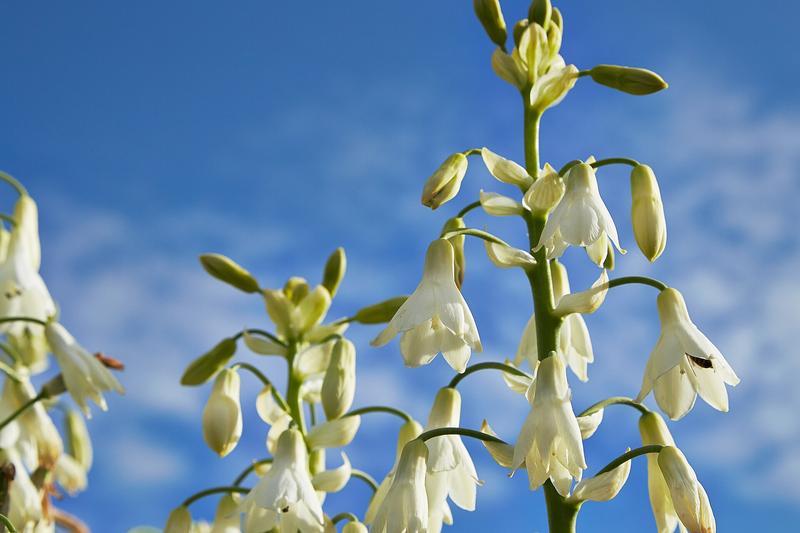
Quick facts
- Watering
- Weekly during active growth
- Sunlight
- Full sun to partial shade
- Soil
- Well-drained, fertile, moisture-retentive
- Humans
- Unknown
- Cats
- Unknown
- Dogs
- Unknown
- Height
- 90–120 cm
- Spread
- 10–15 cm
- Spacing
- 15–20 cm apart
- RHS recognition
- Award of Garden Merit
About Galtonia
Galtonia candicans, commonly known as Galtonia or summer hyacinth, is a striking South African bulb that produces tall spires of fragrant, white bell-shaped flowers in mid to late summer. Growing to over a metre tall, these elegant perennials bring architectural height to herbaceous borders when many spring bulbs have finished. UK gardeners value Galtonia for its ability to naturalise in well-drained soils and its tolerance of our climate, providing late-season interest alongside dahlias and crocosmias. The pendulous white blooms are particularly effective when planted in drifts or at the back of sunny borders.
UK fact: Galtonia candicans holds the RHS Award of Garden Merit and has been a favourite in British cottage gardens since Victorian times, when plant hunters introduced it from the Drakensberg mountains of South Africa in the 1870s.
Watering Galtonia
Water regularly during spring and summer when the bulbs are in active growth, particularly during dry spells, ensuring the soil remains moist but never waterlogged. Once flowering finishes in late summer, gradually reduce watering as the foliage begins to die back. In autumn and winter, established bulbs are largely dormant and require minimal watering, relying on natural UK rainfall. Bulbs in containers will need more frequent watering than those in the ground, especially during hot weather.
Sunlight requirements
Galtonia performs best in full sun, which encourages strong flower stems and abundant blooms. In the UK, a south or west-facing border is ideal, though plants will tolerate light shade, particularly in southern counties. Avoid deep shade, which can cause weak, floppy growth and reduced flowering.
Soil and feeding
Galtonia thrives in fertile, humus-rich soil that drains freely yet retains some moisture during the growing season. Heavy clay soils should be improved with grit and organic matter to prevent waterlogging, which can cause bulb rot over winter. A neutral to slightly acidic pH (6.0-7.0) is ideal, though plants are fairly tolerant of soil conditions. On very light, sandy soils, incorporate well-rotted compost or manure to improve moisture retention during summer.
Apply a balanced liquid fertiliser every two to three weeks during the growing season from spring until flowering finishes. Alternatively, scatter a slow-release granular fertiliser around emerging shoots in early spring. Avoid high-nitrogen feeds, which promote foliage at the expense of flowers.
Pruning Galtonia
Deadhead spent flower spikes after blooming to prevent seed formation and conserve the bulb's energy. Allow the foliage to die back naturally in autumn, as the leaves continue to photosynthesise and replenish the bulb for next year's display. Once the leaves have turned completely yellow and withered, usually by late autumn, they can be gently removed. Avoid cutting back green foliage prematurely, as this weakens the bulb.
Propagating Galtonia
Galtonia can be propagated by dividing established clumps in early spring, carefully separating offset bulbs that form around the parent bulb and replanting them immediately at the same depth. Alternatively, sow fresh seed in autumn in a cold frame, though seedlings will take three to four years to reach flowering size. Division is the quickest method for UK gardeners, and established clumps benefit from being lifted and divided every four to five years to maintain vigour. Handle bulbs carefully, as they can be brittle when dormant.
Common problems
Galtonia is generally trouble-free in UK gardens, though slugs and snails can damage emerging shoots in spring, particularly in wet seasons. Bulbs may rot in poorly drained or waterlogged soil over winter, so good drainage is essential. In very cold winters, particularly in northern or exposed gardens, bulbs may suffer frost damage if not mulched; a protective layer of compost or leaf mould in late autumn helps prevent this. Occasionally, bulbs fail to flower if planted too shallowly or if they become overcrowded and starved of nutrients.
Spot a problem with your plant? Photograph the affected area using the Loam app and it will suggest the most likely cause and treatment.
Safety
- Humans
-
Unknown
No confirmed toxicity data available, but as with all bulbs, ingestion is not recommended and may cause stomach upset.
- Cats
-
Unknown
No confirmed toxicity data available, but bulbs may cause gastrointestinal upset if ingested.
- Dogs
-
Unknown
No confirmed toxicity data available, but bulbs may cause gastrointestinal upset if ingested.
Toxicity information is for general guidance only. If a person or pet has been exposed to this plant and you are concerned, seek advice from a medical professional or vet.
Seasonal care calendar
Monthly care guide for Galtonia in the UK, based on average conditions.
| Month | Care tasks |
|---|---|
| January | No action needed; bulbs are dormant underground. |
| February | No action needed; bulbs remain dormant. |
| March | Plant new bulbs 15cm deep in prepared soil. Apply slow-release fertiliser around established clumps. |
| April | Watch for emerging shoots and protect from slugs. Water if conditions are dry. |
| May | Water regularly as foliage develops. Begin liquid feeding every two to three weeks. |
| June | Continue watering and feeding. Stake tall flower spikes if needed in exposed positions. |
| July | Enjoy the flowering display. Deadhead spent blooms and continue watering during dry spells. |
| August | Deadhead faded flowers. Continue watering but reduce feeding as flowering finishes. |
| September | Allow foliage to die back naturally. Reduce watering as growth slows. |
| October | Remove yellowed foliage once completely withered. Apply mulch in colder regions for winter protection. |
| November | Ensure mulch is in place in cold or exposed gardens. No watering needed. |
| December | No action needed; bulbs are dormant. |
Frequently asked questions
- When should I plant Galtonia bulbs in the UK?
- Plant Galtonia bulbs in March or early April, once the worst of the winter frosts have passed. Set bulbs 15cm deep and 15-20cm apart in well-drained soil in a sunny position. They can also be planted in autumn in milder regions, but spring planting is generally more successful in the UK.
- Why isn't my Galtonia flowering this year?
- Non-flowering can result from bulbs planted too shallowly, overcrowding, poor soil fertility, or excessive shade. The Loam app can help you track feeding schedules and light conditions to diagnose the issue and set reminders for dividing congested clumps.
- Do I need to lift Galtonia bulbs over winter?
- In most of the UK, Galtonia bulbs can be left in the ground year-round, as they are hardy to around -10°C. In very cold or exposed gardens, apply a protective mulch of compost or leaf mould in late autumn. Only lift bulbs if your soil is very heavy and prone to waterlogging.
Got a question about growing Galtonia that isn't covered here? Ask the Garden Advisor in the Loam app. It knows your saved plants and local conditions.
Related plants
This page was compiled with AI assistance and reviewed by our team. .