Sweet Cicely
Myrrhis odorata
Herbs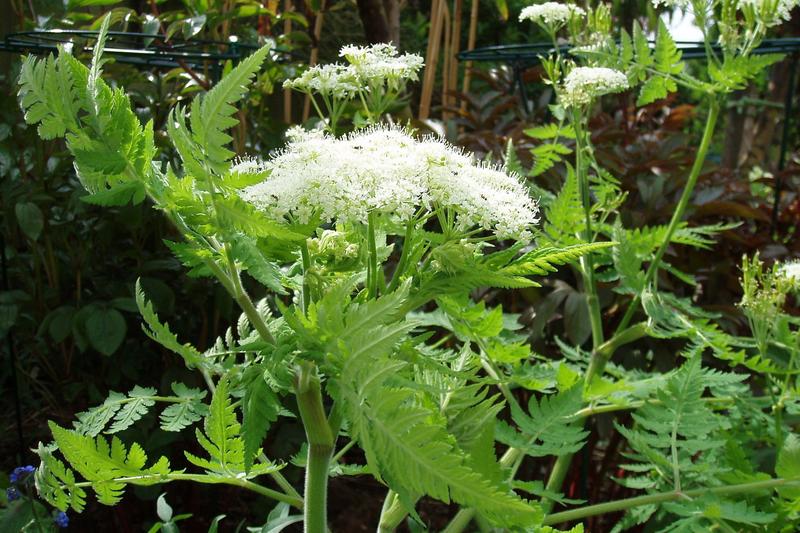
Quick facts
- Watering
- Weekly during dry spells
- Sunlight
- Partial shade to full shade
- Soil
- Moist, humus-rich, well-drained
- Humans
- Safe
- Cats
- Safe
- Dogs
- Safe
- Height
- 90–150 cm
- Spread
- 60–90 cm
- Spacing
- 60–75 cm apart
About Sweet Cicely
Sweet Cicely is a hardy perennial herb native to the mountains of central and southern Europe, naturalised in parts of northern Britain. Growing up to 150 cm tall, it produces delicate, fern-like foliage with a sweet aniseed scent and umbels of white flowers in late spring. UK gardeners value it as an early-flowering herb for shady borders, with all parts edible and useful for reducing sugar in desserts made with tart fruit.
UK fact: Sweet Cicely has been grown in British cottage gardens since medieval times and was traditionally used to sweeten stewed rhubarb, reducing the need for sugar—a valuable trait when sugar was expensive.
Watering Sweet Cicely
Water regularly during the first growing season to establish a deep root system. Once established, Sweet Cicely is relatively drought-tolerant but performs best with consistent moisture, particularly in sunnier positions. In typical UK summers, rainfall is usually sufficient, but water weekly during prolonged dry spells. Avoid waterlogging, which can lead to root rot, though this herb tolerates damper soil than Mediterranean herbs like rosemary or thyme.
Sunlight requirements
This shade-loving herb performs best in dappled shade or north-facing borders, though it will tolerate full sun in cooler, northern parts of the UK if soil remains moist. In southern England, afternoon shade is beneficial to prevent leaf scorch during hot summers. Plant beneath deciduous trees or on the shady side of buildings for optimal growth.
Soil and feeding
Plant in humus-rich soil that retains moisture without becoming waterlogged—ideal conditions include woodland-type soil amended with leaf mould or well-rotted compost. Sweet Cicely tolerates a wide pH range but performs best in neutral to slightly alkaline soil (pH 6.5-7.5). Heavy clay soils are acceptable if drainage is reasonable, whilst sandy soils should be improved with plenty of organic matter to retain moisture. The plant naturalises well in British woodland gardens where soil conditions mimic its native mountain habitat.
Mulch around plants with well-rotted compost or leaf mould in early spring to maintain soil fertility and moisture. Avoid high-nitrogen feeds, which promote excessive leafy growth at the expense of flavour. In poor soils, a light application of general-purpose organic fertiliser in April is beneficial, but established plants in good soil require little supplementary feeding.
Pruning Sweet Cicely
Deadhead spent flower umbels in June or July if you wish to prevent prolific self-seeding, though some gardeners allow seeds to develop for culinary use or naturalising. Cut the entire plant back to ground level in late autumn once foliage has died back, or leave until early spring to provide winter interest and wildlife habitat. Remove any damaged or yellowing leaves throughout the growing season to maintain appearance. Sweet Cicely benefits from being cut back hard every few years to rejuvenate growth and prevent it becoming too woody at the base.
Propagating Sweet Cicely
Sweet Cicely is most successfully grown from fresh seed sown immediately after ripening in late summer, as viability decreases rapidly with storage and seeds require a cold period to germinate. Alternatively, divide established clumps in March or October, ensuring each division has several growing points. Root cuttings can be taken in winter but are less reliable than division. Plants self-seed readily in favourable conditions, and seedlings can be transplanted when large enough to handle.
Common problems
Sweet Cicely is largely trouble-free and suffers from few serious pests or diseases in UK gardens. Aphids may occasionally colonise young shoots in spring but rarely cause significant damage. Slugs and snails can damage emerging foliage in early spring, particularly in damp conditions—use organic controls if necessary. The main issue is over-enthusiastic self-seeding, which can result in seedlings appearing throughout the garden; deadhead after flowering or hoe out unwanted seedlings to maintain control.
Spot a problem with your plant? Photograph the affected area using the Loam app and it will suggest the most likely cause and treatment.
Safety
- Humans
- Safe
- Cats
- Safe
- Dogs
- Safe
Toxicity information is for general guidance only.
Seasonal care calendar
Monthly care guide for Sweet Cicely in the UK, based on average conditions.
| Month | Care tasks |
|---|---|
| January | No action needed. Plants are fully dormant with no visible growth above ground. |
| February | Watch for first shoots emerging in mild spells. Clear away any remaining dead foliage if not done in autumn. |
| March | New ferny foliage emerges rapidly. Apply compost mulch around plants. Divide established clumps if required. |
| April | Plants grow vigorously. Harvest young leaves for culinary use. Water during dry spells to encourage lush growth. |
| May | White flower umbels begin to appear. Continue harvesting leaves. Ensure soil remains moist as flowering commences. |
| June | Peak flowering period. Deadhead spent blooms to prevent self-seeding, or leave to develop seeds for harvest or propagation. |
| July | Collect ripe seeds for immediate sowing if desired. Cut back flowering stems after seed collection to tidy plants. |
| August | Sow fresh seed outdoors for spring germination. Water during prolonged dry weather to maintain foliage quality. |
| September | Growth slows as temperatures cool. Divide overcrowded clumps if needed. Remove any self-sown seedlings from unwanted areas. |
| October | Foliage begins to yellow and die back. Cut back to ground level or leave for wildlife habitat and winter structure. |
| November | Complete autumn tidy-up if desired. Plants enter full dormancy as frost arrives. |
| December | No action needed. Plants are completely dormant and fully hardy through winter frosts. |
Frequently asked questions
- How do I stop Sweet Cicely from taking over my garden?
- Deadhead flowers immediately after blooming in June or July before seeds develop. Sweet Cicely self-seeds prolifically, and removing flower heads prevents hundreds of seedlings appearing the following spring. Hoe out any unwanted seedlings whilst small.
- Why are my Sweet Cicely leaves turning yellow?
- Yellowing leaves often indicate the plant is receiving too much direct sun or insufficient moisture. Sweet Cicely prefers shade and consistently moist soil. Check your plant's positioning and watering regime—the Loam app can help you monitor moisture levels and send personalised care reminders based on your garden's conditions to prevent stress.
- Can I divide Sweet Cicely plants?
- Yes, divide established clumps in autumn (October-November) or early spring (March) when dormant or just emerging. Dig up the entire root system and split into sections, ensuring each has several buds. Replant divisions immediately at the same depth in moisture-retentive soil. Division is more reliable than seed for maintaining specific plants.
Got a question about growing Sweet Cicely that isn't covered here? Ask the Garden Advisor in the Loam app. It knows your saved plants and local conditions.
Related plants
This page was compiled with AI assistance and reviewed by our team. .