Angelica
Angelica archangelica
Herbs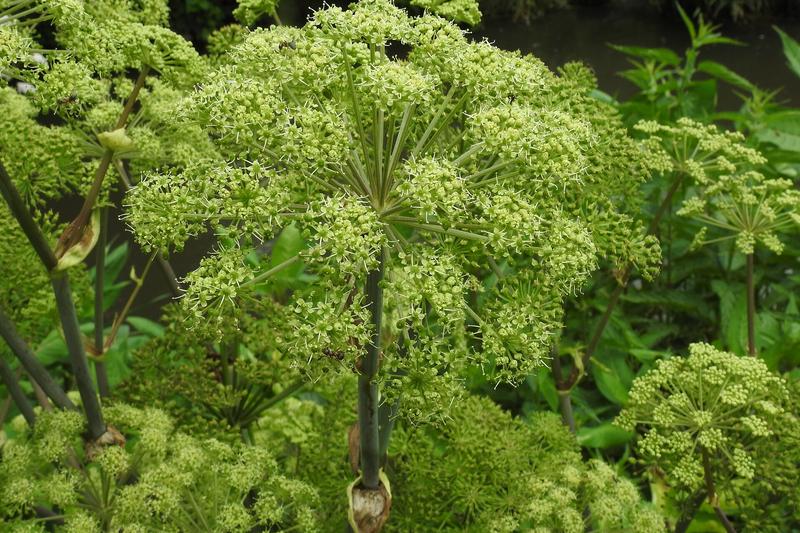
Quick facts
- Watering
- Twice weekly during dry spells
- Sunlight
- Partial shade
- Soil
- Rich, moisture-retentive, slightly acidic
- Humans
- Toxic
- Cats
- Unknown
- Dogs
- Unknown
- Height
- 150–250 cm
- Spread
- 90–120 cm
- Spacing
- 90–100 cm apart
About Angelica
Angelica is a striking biennial herb native to northern Europe, producing tall hollow stems and large umbels of greenish-white flowers in its second year. This architectural plant can reach impressive heights of up to 2.5 metres, making it a dramatic addition to herb gardens and cottage borders. UK gardeners value angelica for its culinary uses—particularly candied stems for cake decoration—as well as its ornamental presence and ability to attract beneficial insects. The entire plant is aromatic, with a distinctive musky-sweet scent reminiscent of juniper and celery.
UK fact: Angelica has been cultivated in British monastery gardens since medieval times, where monks used it to flavour liqueurs and as a medicinal herb; it remains a key ingredient in traditional British cake decoration, particularly for fruit cakes and trifles.
Watering Angelica
Angelica requires consistently moist soil and will not tolerate drought, particularly during its first year of growth. Water deeply twice weekly during dry periods, ensuring the soil never dries out completely. In typical British summers, established plants may need supplementary watering only during prolonged dry spells, but container-grown specimens require more frequent attention. Mulching around the base helps retain moisture and keeps roots cool.
Sunlight requirements
Angelica thrives in partial shade, particularly in positions that receive morning sun and afternoon shade. In the UK, it performs best when sheltered from intense midday sun, which can scorch the large leaves during hot summers. North-facing or east-facing borders are ideal, mimicking the plant's natural woodland edge habitat.
Soil and feeding
Angelica demands fertile, humus-rich soil that retains moisture without becoming waterlogged. The ideal pH range is slightly acidic to neutral (6.0-7.0), though it tolerates a range of conditions provided the soil is deep and moisture-retentive. Incorporate generous amounts of well-rotted compost or manure before planting to improve both fertility and water retention. Heavy clay soils are suitable if improved with organic matter, whilst sandy soils will require regular mulching and watering.
Apply a balanced liquid feed monthly during the growing season from April to August, or incorporate slow-release organic fertiliser in spring. Angelica is a hungry plant that benefits from rich soil, so top-dress with well-rotted compost or manure each spring to maintain vigour.
Pruning Angelica
Remove flower heads promptly after blooming if you wish to prevent self-seeding and extend the plant's life, though this may reduce its biennial nature. Cut back dead stems to ground level in late autumn or early spring before new growth emerges. If growing primarily for stem harvest, remove flower buds as they appear to encourage continued leaf and stem production. Wear gloves when handling angelica as the sap can cause photosensitivity in some individuals.
Propagating Angelica
Angelica is best propagated from fresh seed sown immediately after ripening in late summer or early autumn, as viability decreases rapidly with storage. Sow seeds in modules or directly into prepared soil, barely covering them as they need some light to germinate. Germination can be erratic and may take 3-4 weeks; stratification (chilling seeds for 2-3 weeks) can improve results if sowing stored seed. Angelica can also self-seed prolifically in favourable conditions, and these seedlings can be transplanted whilst small.
Common problems
Angelica is relatively trouble-free but can be affected by aphids on young growth and flower heads during spring and early summer. Leaf miners occasionally create pale trails through the foliage, though damage is usually cosmetic. Powdery mildew may appear on leaves in dry conditions or where air circulation is poor. The main cultural problem is the plant's tendency to die after flowering in its second year, though allowing some self-seeding ensures continuity; alternatively, removing flower heads may encourage the plant to persist as a short-lived perennial.
Spot a problem with your plant? Photograph the affected area using the Loam app and it will suggest the most likely cause and treatment.
Safety
- Humans
-
Toxic
The sap contains furanocoumarins that can cause phytophotodermatitis (skin sensitivity to sunlight), resulting in blisters and burns when skin is exposed to UV light after contact. Wear gloves when handling and avoid contact with skin on sunny days.
- Cats
-
Unknown
Toxicity data for cats is limited, but related Apiaceae family members can cause gastrointestinal upset. Keep cats away from the plant as a precaution.
- Dogs
-
Unknown
Toxicity data for dogs is limited, but related Apiaceae family members can cause gastrointestinal upset. Keep dogs away from the plant as a precaution.
Toxicity information is for general guidance only. If a person or pet has been exposed to this plant and you are concerned, seek advice from a medical professional or vet.
Seasonal care calendar
Monthly care guide for Angelica in the UK, based on average conditions.
| Month | Care tasks |
|---|---|
| January | No action needed; plants are dormant. |
| February | Prepare planting sites by incorporating well-rotted compost. |
| March | New growth emerges; apply mulch and top-dress with compost. |
| April | Begin monthly feeding; water during dry spells. |
| May | Monitor for aphids; harvest young stems for culinary use. |
| June | Second-year plants produce flower stems; remove if extending plant life. |
| July | Flowers in full bloom attract pollinators; continue watering. |
| August | Seeds ripen; collect fresh seed for immediate sowing. |
| September | Sow fresh seed; allow some self-seeding if desired. |
| October | Foliage begins to die back; transplant self-sown seedlings. |
| November | Cut back dead stems to ground level. |
| December | No action needed; plants are dormant. |
Frequently asked questions
- How do you harvest and candy angelica stems?
- Harvest young, tender stems in May or early June before flowering, cutting 20-30cm lengths from the main stem. Blanch in boiling water until tender, peel away the outer skin, then simmer in sugar syrup for several sessions over 2-3 days until translucent and bright green. Dry the candied stems on baking parchment and store in airtight containers for use in cake decoration.
- Why is my angelica dying after flowering and can I save it?
- Angelica is naturally biennial, completing its lifecycle and dying after flowering in its second year. To extend its life, remove flower heads before they fully develop, which may encourage the plant to persist for another year. The Loam app can remind you when to deadhead and help you track which plants are in their first or second year for succession planning.
- Can angelica be grown in containers?
- Yes, but choose a very large, deep container (at least 45cm diameter and depth) to accommodate angelica's extensive root system and tall growth. Use a rich, moisture-retentive compost and be prepared to water frequently, potentially daily during warm weather. Container-grown plants may not reach their full height potential and will require more intensive feeding than those grown in the ground.
Got a question about growing Angelica that isn't covered here? Ask the Garden Advisor in the Loam app. It knows your saved plants and local conditions.
Related plants
This page was compiled with AI assistance and reviewed by our team. .