Cardoon
Cynara cardunculus
Vegetables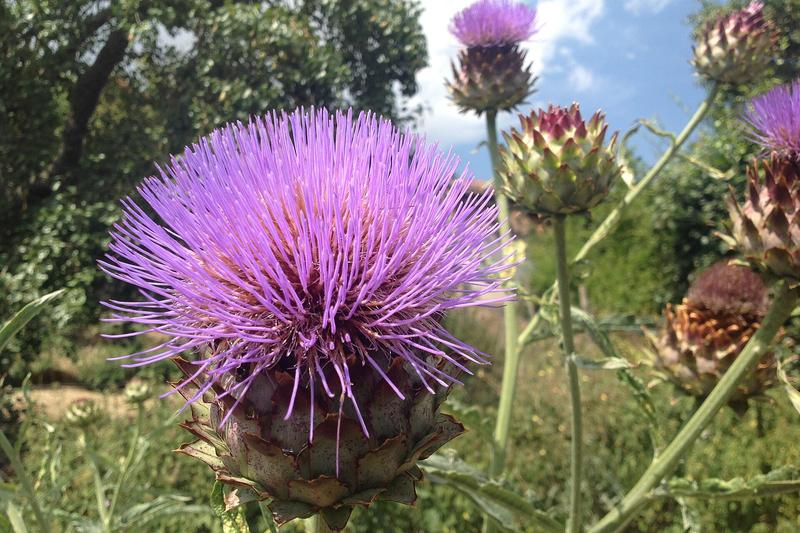
Quick facts
- Watering
- Weekly, more in dry spells
- Sunlight
- Full sun
- Soil
- Deep, rich, well-drained
- Humans
- Safe
- Cats
- Safe
- Dogs
- Safe
- Height
- 120–200 cm
- Spread
- 90–120 cm
- Spacing
- 90–120 cm apart
About Cardoon
Cardoon is a striking architectural perennial vegetable closely related to the globe artichoke, native to the Mediterranean region. Growing up to 2 metres tall, it produces dramatic silvery-grey, deeply divided leaves and thistle-like purple flowers in summer. UK gardeners grow cardoon both as an ornamental feature plant and for its edible blanched leaf stalks, which have a delicate artichoke-like flavour. The plant thrives in the milder regions of Britain, particularly in southern and coastal areas where it can overwinter successfully.
UK fact: Cardoon has been cultivated in British kitchen gardens since the 17th century and was particularly popular in Victorian walled gardens, where gardeners would blanch the stems by wrapping them in newspaper or hessian sacking during autumn.
Watering Cardoon
Water cardoon regularly during the growing season, providing approximately 20-30 litres per plant weekly during dry periods to support the large leaf canopy. The deep taproot makes established plants reasonably drought-tolerant, but consistent moisture produces the best quality stems for blanching. In typical UK summers, rainfall may be sufficient except during prolonged dry spells, but young plants require regular watering until established. Reduce watering in autumn and winter when the plant is dormant or semi-dormant.
Sunlight requirements
Cardoon requires a warm, sunny position to thrive in the UK climate, ideally in a south or west-facing spot that receives at least six hours of direct sunlight daily. In cooler northern regions, choose the warmest, most sheltered location available, such as against a sunny wall. The plant will tolerate partial shade but produces smaller, less vigorous growth and the stems may not develop their full flavour.
Soil and feeding
Cardoon thrives in deep, fertile, well-drained soil with a pH between 6.5 and 7.5, similar to its artichoke relatives. The plant develops a substantial taproot that can extend over a metre deep, so thorough soil preparation is essential before planting. Incorporate generous amounts of well-rotted manure or garden compost to a depth of at least 45cm, and ensure good drainage as cardoon will not tolerate waterlogged conditions, particularly in winter. On heavy clay soils, consider growing in raised beds or adding horticultural grit to improve drainage.
Apply a balanced general-purpose fertiliser in early spring as growth begins, then feed fortnightly with a high-nitrogen liquid feed during the main growing season from May to August to support the large leaf growth. Mulch around the base with well-rotted compost in spring to suppress weeds and provide additional nutrients throughout the season.
Pruning Cardoon
Remove any flower stems as they appear if growing cardoon primarily for edible stems, as flowering diverts energy from leaf production. In late autumn after harvesting, cut back the foliage to about 30cm above ground level and mulch the crown with straw or bracken for winter protection in colder areas. In spring, remove any dead or damaged growth and thin out weak shoots to encourage strong new stems for the coming season.
Propagating Cardoon
Cardoon is most easily grown from seed sown in spring, either indoors in March-April in 9cm pots at 15-18°C, or directly outdoors in May once the soil has warmed. Seedlings should be thinned or transplanted to their final spacing of 90-120cm apart when large enough to handle. Established plants can also be divided in spring by carefully separating rooted offsets from the parent plant, though this can be challenging due to the deep taproot. Seeds germinate in 14-21 days and plants grown from seed will produce harvestable stems in their second year.
Common problems
Cardoon is relatively trouble-free but can be affected by blackfly (black aphid) on young growth in spring, which can be controlled with insecticidal soap or by encouraging natural predators. Slugs and snails may damage young plants, particularly in wet springs, so use organic slug pellets or barriers around new plantings. In very wet winters or on poorly drained soils, crown rot can occur, which is why good drainage is essential. The plant can self-seed prolifically if flowers are allowed to set seed, potentially becoming invasive in mild areas, so deadhead spent flowers unless seed is required.
Spot a problem with your plant? Photograph the affected area using the Loam app and it will suggest the most likely cause and treatment.
Safety
- Humans
- Safe
- Cats
- Safe
- Dogs
- Safe
Toxicity information is for general guidance only.
Seasonal care calendar
Monthly care guide for Cardoon in the UK, based on average conditions.
| Month | Care tasks |
|---|---|
| January | Check winter protection on established plants; ensure mulch is in place around crowns. |
| February | Order seeds for spring sowing; prepare planting site by incorporating organic matter. |
| March | Sow seeds indoors in pots at 15-18°C; remove winter protection as weather improves. |
| April | Continue indoor sowing; apply balanced fertiliser to established plants as growth begins. |
| May | Plant out hardened-off seedlings after last frosts; sow seeds directly outdoors; begin fortnightly liquid feeding. |
| June | Water regularly during dry spells; mulch around plants; remove flower stems if growing for edible stalks. |
| July | Continue watering and feeding; monitor for aphids on young growth. |
| August | Maintain watering regime; prepare for blanching by tying up outer leaves. |
| September | Begin blanching stems by wrapping in cardboard or hessian; reduce feeding. |
| October | Harvest blanched stems after 4-6 weeks; continue blanching in batches for extended harvest. |
| November | Complete harvesting; cut back foliage to 30cm; apply winter mulch to crowns. |
| December | No action needed; plants dormant but check winter protection remains secure. |
Frequently asked questions
- How do you blanch cardoon stems in the UK?
- Begin blanching in late August or September by gathering the outer leaves together and wrapping them in corrugated cardboard, hessian, or several layers of newspaper, leaving the growing tip exposed. Secure with string and leave for 4-6 weeks before harvesting. This excludes light and produces tender, pale stems with a milder flavour. Blanch in batches for a continuous harvest through autumn.
- Why are my cardoon leaves turning yellow and when should I water?
- Yellowing leaves can indicate irregular watering, nutrient deficiency, or natural ageing of older foliage. The Loam app can send you personalised watering reminders based on your local weather conditions and help diagnose specific problems with photos of your plant, ensuring your cardoon receives optimal care throughout the growing season.
- Can cardoon survive winter in the UK?
- Cardoon is hardy to around -10°C (RHS H4) and will survive most UK winters, particularly in southern and coastal regions. In colder areas or during severe winters, protect the crown with a thick mulch of straw, bracken, or compost after cutting back the foliage in November. In very cold, exposed sites, consider growing as an annual or providing additional protection with fleece or cloches.
Got a question about growing Cardoon that isn't covered here? Ask the Garden Advisor in the Loam app. It knows your saved plants and local conditions.
Related plants
This page was compiled with AI assistance and reviewed by our team. .