Dill
Anethum graveolens
Herbs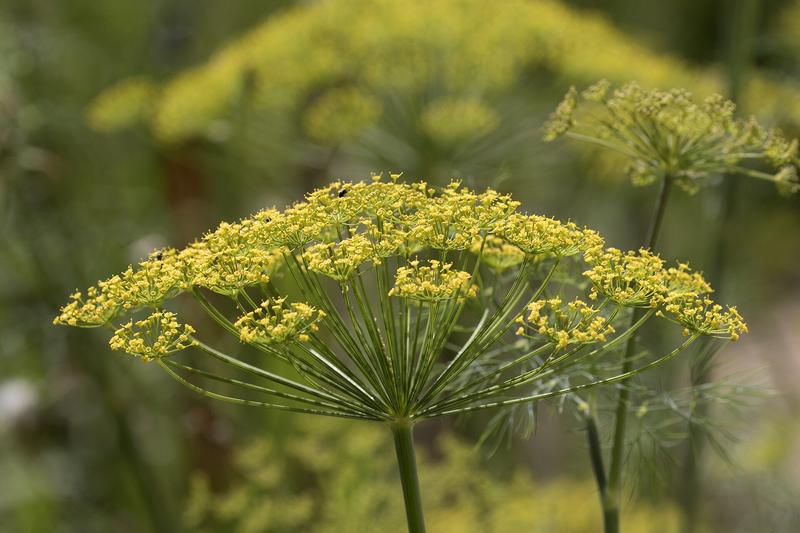
Quick facts
- Watering
- Weekly during dry spells
- Sunlight
- Full sun
- Soil
- Well-drained, fertile, neutral to alkaline
- Humans
- Safe
- Cats
- Safe
- Dogs
- Safe
- Height
- 60–90 cm
- Spread
- 20–30 cm
- Spacing
- 20–25 cm apart
About Dill
Dill is an aromatic annual herb with feathery blue-green foliage and umbrella-like clusters of yellow flowers, native to the Mediterranean and southern Russia. British gardeners prize it for its delicate anise-flavoured leaves and seeds, essential for pickling, fish dishes, and Scandinavian-inspired cuisine. The plant grows quickly from seed and self-sows readily in favourable conditions, making it a rewarding choice for herb gardens and kitchen plots. Its fine texture and airy habit also make it an attractive ornamental addition to cottage-style borders.
UK fact: Dill has been cultivated in British monastery gardens since medieval times, where it was valued both as a culinary herb and for its supposed medicinal properties, including soothing digestive complaints and hiccups.
Watering Dill
Young dill plants require consistent moisture to establish strong root systems, so water weekly during dry periods, providing approximately 2.5 cm of water per week. Once established, dill is moderately drought-tolerant but produces the best foliage with regular watering during prolonged dry spells typical of British summers. Avoid overhead watering where possible, as wet foliage can encourage fungal diseases in our humid climate. Reduce watering as plants mature and begin to set seed, as drier conditions concentrate the essential oils in both leaves and seeds.
Sunlight requirements
Position dill in a sheltered spot receiving at least six hours of direct sunlight daily, ideally with a south or west-facing aspect. In the UK's cooler northern regions, a warm, sunny wall provides extra heat and protection from wind, which can damage the delicate stems. Avoid shaded positions, as insufficient light leads to weak, spindly plants with diminished aromatic oils.
Soil and feeding
Grow dill in light, well-drained soil enriched with garden compost or well-rotted manure, ideally with a pH between 6.5 and 7.5. Heavy clay soils should be improved with horticultural grit and organic matter to prevent waterlogging, which causes root rot and yellowing foliage. Sandy soils benefit from added compost to improve moisture retention during dry periods. Dill develops a long taproot and dislikes root disturbance, so prepare the soil thoroughly before sowing rather than attempting to improve it later.
Apply a balanced liquid fertiliser at half strength once or twice during the growing season if plants show signs of nutrient deficiency, such as pale or yellowing leaves. Avoid high-nitrogen feeds, which encourage soft, sappy growth with reduced aromatic intensity and increased susceptibility to pests. In poor soils, a light dressing of general-purpose granular fertiliser at planting time provides sufficient nutrients for the season.
Pruning Dill
Pinch out the growing tips when plants reach 20–25 cm tall to promote branching and bushier growth, which increases leaf production. Harvest outer leaves regularly by cutting stems just above a leaf node, encouraging fresh growth from below. Remove flower heads promptly if you wish to prolong leaf production, though many gardeners allow some plants to flower for seed harvest and to attract beneficial insects. Dill does not respond to hard pruning and is best treated as a cut-and-come-again crop, with successive sowings ensuring continuous supply.
Propagating Dill
Sow dill seeds directly into their final growing position from mid-April onwards, once the risk of hard frost has passed and soil temperatures reach at least 10°C. Make successive sowings every three to four weeks until July to ensure a continuous harvest throughout summer and early autumn. Dill develops a long taproot and resents transplanting, so avoid starting seeds in modules or pots unless absolutely necessary. In favourable conditions, dill self-sows freely, providing volunteer seedlings the following spring that can be thinned and left to grow.
Common problems
Dill is relatively trouble-free but can suffer from aphid infestations, particularly greenfly, which cluster on young shoots and flower heads; treat by squashing by hand or using an organic soap spray. Carrot root fly occasionally attacks dill, as it belongs to the same family; protect young plants with fine mesh barriers if this pest is prevalent in your area. Powdery mildew may develop on foliage during humid conditions or when plants are stressed by drought, appearing as white powdery patches; improve air circulation and water at the base of plants to reduce risk. Bolting to seed prematurely can occur during hot, dry weather or if plants experience root disturbance, so maintain consistent moisture and avoid transplanting.
Spot a problem with your plant? Photograph the affected area using the Loam app and it will suggest the most likely cause and treatment.
Safety
- Humans
- Safe
- Cats
- Safe
- Dogs
- Safe
Toxicity information is for general guidance only.
Seasonal care calendar
Monthly care guide for Dill in the UK, based on average conditions.
| Month | Care tasks |
|---|---|
| January | No action needed. Plan crop rotations and order seeds for spring sowing. |
| February | No action needed. Prepare seedbeds in mild regions towards month end. |
| March | Prepare planting areas by incorporating compost. Sow under cloches in mild southern regions from late March. |
| April | Begin outdoor sowings from mid-month once soil warms. Make first of successive sowings for continuous harvest. |
| May | Continue successive sowings. Thin earlier sowings to final spacing. Water during dry spells and begin harvesting leaves from early sowings. |
| June | Make further sowings for late summer harvest. Harvest leaves regularly and remove flower heads to prolong leaf production, or allow some to flower for seeds. |
| July | Make final sowings early in month. Harvest leaves and immature seed heads. Water consistently during dry weather. |
| August | Continue harvesting leaves from late sowings. Collect ripe seed heads for culinary use and next year's sowing. |
| September | Harvest remaining leaves and seeds before first frosts. Allow some plants to self-seed for next year's volunteers. |
| October | Clear spent plants and add to compost. Store harvested seeds in airtight containers. |
| November | No action needed. Review season's performance and plan next year's sowings. |
| December | No action needed. Order seeds for the coming season. |
Frequently asked questions
- How do I stop my dill from bolting in hot weather?
- Dill bolts rapidly in response to stress, particularly drought, root disturbance, or hot weather. Sow directly where plants are to grow, maintain consistent soil moisture through regular watering, and make successive sowings every few weeks rather than relying on a single planting for extended harvest. Mulching around plants helps keep roots cool and retains moisture during warm spells.
- Why are my dill leaves turning yellow?
- Yellowing dill leaves can indicate several issues including overwatering, underwatering, nutrient deficiency, or pest problems such as aphids. Check soil moisture levels—dill prefers consistently moist but well-drained soil. If you're unsure what's affecting your plant, the Loam app can help diagnose the problem through photo analysis and provide personalised care recommendations based on your growing conditions.
- What type of soil does dill need to grow well?
- Dill thrives in well-drained, fertile soil with a pH between 5.5 and 7.5. It prefers a light, loamy soil enriched with organic matter such as well-rotted compost. Avoid heavy clay soils that retain too much moisture, as these can cause root rot and poor growth. Good drainage is essential—dill's taproot is susceptible to fungal problems in waterlogged conditions.
Got a question about growing Dill that isn't covered here? Ask the Garden Advisor in the Loam app. It knows your saved plants and local conditions.
Related plants
This page was compiled with AI assistance and reviewed by our team. .