Parsley
Petroselinum crispum
Herbs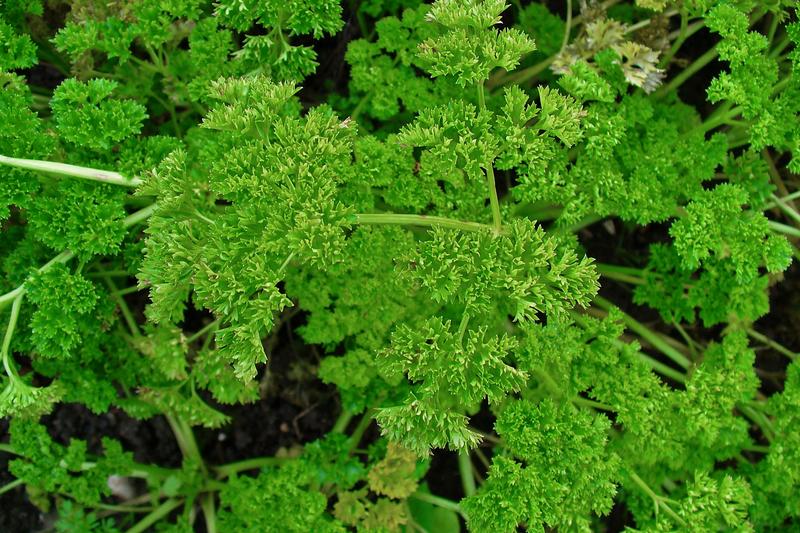
Quick facts
- Watering
- Twice weekly during dry spells
- Sunlight
- Full sun to partial shade
- Soil
- Moist, well-drained, fertile soil
- Humans
- Safe
- Cats
- Toxic
- Dogs
- Toxic
- Height
- 20–40 cm
- Spread
- 20–30 cm
- Spacing
- 15–20 cm apart
About Parsley
Parsley is a biennial herb with bright green, either curly or flat leaves, native to the Mediterranean region. British gardeners have cultivated parsley for centuries, prizing it as an essential culinary herb for flavouring soups, sauces, and garnishes. It thrives in the UK climate, producing fresh leaves from spring through to the first hard frosts. Both curly-leaved and flat-leaved (Italian) varieties are popular in British kitchen gardens and containers.
UK fact: Parsley has been grown in British gardens since Roman times and was traditionally planted on Good Friday, with folklore suggesting that only the mistress of the house should sow the seeds to ensure a good crop.
Watering Parsley
Parsley requires regular watering to maintain lush, flavourful foliage, particularly during establishment and dry summer periods. Water at the base of plants in the morning to reduce disease risk, ensuring the top 5cm of soil remains moist. Container-grown parsley dries out more quickly and may need daily watering in hot weather. Reduce watering in autumn and winter when growth slows, but don't allow the soil to dry out completely.
Sunlight requirements
In the UK, parsley grows well in full sun, especially in northern regions where summers are cooler. In southern England, light afternoon shade can prevent leaves from scorching during heatwaves. South-facing or west-facing positions are ideal, though east-facing spots also work well for this adaptable herb.
Soil and feeding
Grow parsley in fertile, humus-rich soil that retains moisture without becoming waterlogged. Incorporate well-rotted compost or manure before planting to improve soil structure and nutrient content. The ideal pH is slightly acidic to neutral, between 6.0 and 7.0. Heavy clay soils benefit from added grit or sharp sand to improve drainage, whilst sandy soils need extra organic matter to retain moisture.
Parsley grown in the ground rarely needs feeding if planted in well-prepared, fertile soil. Container plants benefit from a half-strength balanced liquid feed every 3-4 weeks from late spring to early autumn. Avoid high-nitrogen feeds which can reduce flavour intensity.
Pruning Parsley
Regular harvesting acts as pruning, promoting fresh growth and延longing the productive period. Cut outer stems at the base rather than picking individual leaves, taking no more than one-third of the plant at a time. Remove any flower stalks as soon as they appear to redirect energy into leaf production. In the second year, parsley naturally flowers and sets seed; allow this if you want to collect seed, otherwise replace with fresh plants.
Propagating Parsley
Sow parsley seeds from March to August for successive crops throughout the year. Seeds are notoriously slow to germinate, often taking 3-6 weeks, so patience is essential. Soaking seeds in warm water for 24 hours before sowing can speed germination. Parsley develops a long taproot and dislikes root disturbance, so direct sowing or using deep modules produces the strongest plants.
Common problems
Parsley is relatively trouble-free but can suffer from carrot root fly, whose larvae tunnel into roots causing plants to wilt and yellow. Aphids occasionally colonise young growth, particularly in warm weather, and can be controlled with insecticidal soap or by encouraging natural predators. Leaf spot diseases may appear in damp conditions, causing brown or yellow spots on foliage; improve air circulation and avoid overhead watering. Slugs and snails can devastate young seedlings, so protect plants with organic slug pellets or copper barriers.
Spot a problem with your plant? Photograph the affected area using the Loam app and it will suggest the most likely cause and treatment.
Safety
- Humans
- Safe
- Cats
-
Toxic
Parsley contains furanocoumarins which can cause photosensitivity and digestive upset in cats if consumed in large quantities.
- Dogs
-
Toxic
Parsley can cause photosensitivity and digestive problems in dogs when eaten in significant amounts, though small quantities are generally safe.
Toxicity information is for general guidance only. If a pet has been exposed to this plant and you are concerned, seek advice from a vet.
Seasonal care calendar
Monthly care guide for Parsley in the UK, based on average conditions.
| Month | Care tasks |
|---|---|
| January | Protect outdoor plants with cloches or fleece during severe frost. Harvest sparingly from established plants. |
| February | Sow seeds indoors in a heated propagator for early crops. Continue protecting outdoor plants in cold weather. |
| March | Begin outdoor sowing under cloches in mild regions. Sow in modules indoors for transplanting later. Remove winter protection as weather warms. |
| April | Sow directly outdoors in prepared soil. Transplant module-grown seedlings. Begin regular harvesting from overwintered plants. |
| May | Continue successive sowings every 3-4 weeks. Thin direct-sown seedlings. Water regularly during dry spells and feed container plants. |
| June | Harvest regularly to encourage fresh growth. Remove any flower stalks from first-year plants. Sow for autumn and winter crops. |
| July | Water frequently during hot weather, especially container plants. Continue harvesting and make final sowings for winter use. |
| August | Maintain watering regime. Harvest regularly. Late sowings can be made for protected winter cropping. |
| September | Reduce watering as growth slows. Pot up some plants to grow on windowsills for winter harvesting. |
| October | Protect outdoor plants with cloches or fleece to extend the harvest period. Bring containers under cover in cold regions. |
| November | Harvest sparingly from protected plants. Ensure good drainage to prevent root rot in wet weather. |
| December | Maintain protection on outdoor plants. Harvest from indoor or protected plants as needed for winter cooking. |
Frequently asked questions
- How do I harvest parsley without killing the plant?
- Cut outer stems from the base of the plant, leaving the central growing point intact. Take no more than one-third of the plant at once, using sharp scissors or secateurs. Regular harvesting every 2-3 weeks encourages bushier growth. Always cut complete stems rather than picking individual leaves for healthier regrowth.
- Why are my parsley leaves turning yellow?
- Yellowing parsley leaves usually indicate overwatering, poor drainage, nutrient deficiency (especially nitrogen), or root problems. Check soil moisture levels and ensure pots have adequate drainage holes. If the cause isn't obvious, the Loam app can help diagnose the specific issue through photo analysis and provide personalised care adjustments based on your growing conditions.
- What type of soil does parsley need?
- Parsley thrives in rich, moisture-retentive but well-drained soil with a pH of 6.0-7.0. Work in plenty of organic matter or compost before planting. The soil should be deep (at least 20-30cm) to accommodate parsley's long taproot. In heavy clay, improve drainage by adding grit or grow in raised beds.
Got a question about growing Parsley that isn't covered here? Ask the Garden Advisor in the Loam app. It knows your saved plants and local conditions.
Related plants
This page was compiled with AI assistance and reviewed by our team. .