String of Pearls
Curio rowleyanus
Houseplants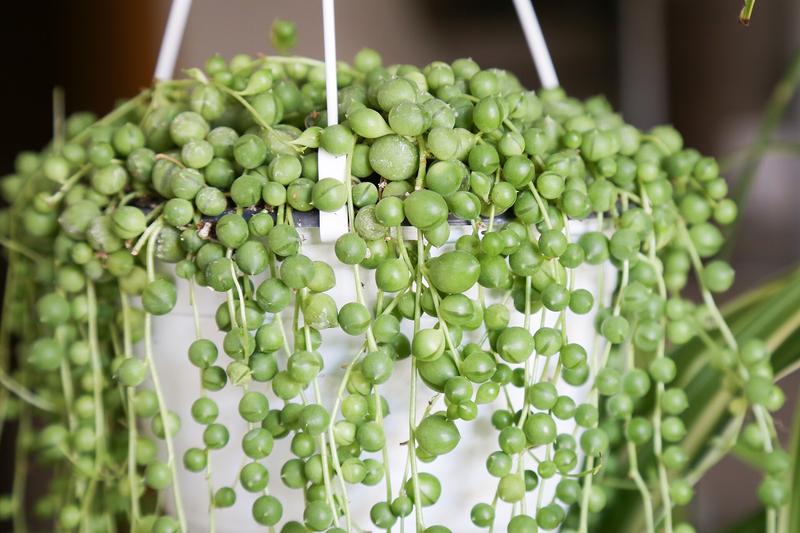
Quick facts
- Watering
- Every 2–3 weeks
- Sunlight
- Bright indirect light
- Soil
- Free-draining, gritty succulent compost
- Humans
- Toxic
- Cats
- Toxic
- Dogs
- Toxic
- Height
- 10–15 cm
- Spread
- 60–90 cm
- Spacing
- 0 cm apart
About String of Pearls
String of Pearls is a distinctive trailing succulent with spherical, pea-like leaves strung along slender stems, native to the arid regions of South Africa. This architectural houseplant has become hugely popular with UK indoor gardeners for its sculptural appearance and ease of care, thriving on bright windowsills and in hanging baskets. The cascading strands can reach impressive lengths when happy, creating a living curtain of green beads. Its drought tolerance and minimal maintenance requirements make it ideal for busy British households.
UK fact: String of Pearls has experienced a surge in popularity across the UK since 2015, frequently featured in British interior design magazines and becoming one of the most photographed houseplants on UK gardening social media, particularly prized for its performance in centrally heated homes.
Watering String of Pearls
String of Pearls requires minimal watering, particularly during the cooler, darker months of the UK calendar from October through March when growth slows considerably. Water thoroughly when the pearls begin to look slightly shrivelled or feel soft, then allow the compost to dry completely before watering again—typically every 2–3 weeks in summer and monthly or less in winter. Always water at the soil level rather than overhead to prevent rot, and ensure any excess drains away completely. In centrally heated British homes, check the plant more frequently during winter as radiators can dry the air significantly.
Sunlight requirements
Position your String of Pearls within 1–2 metres of a south or west-facing window in the UK, ideally with sheer curtains to filter intense afternoon sun during summer months. East-facing windows provide excellent conditions with gentle morning light. Avoid deep shade, which causes the pearls to elongate and lose their compact, spherical shape, and be cautious of hot south-facing windowsills in July and August which can scorch the delicate foliage.
Soil and feeding
String of Pearls demands exceptionally free-draining growing medium to prevent root rot, the primary killer of this succulent in UK homes. Use a proprietary cactus and succulent compost, or mix standard peat-free houseplant compost with horticultural grit or perlite in a 1:1 ratio. The pH should be slightly acidic to neutral (6.0–7.0). Ensure your pot has drainage holes, and consider adding a layer of grit at the base to prevent waterlogging, particularly important in the UK's humid climate.
Apply a balanced liquid fertiliser formulated for cacti and succulents at half strength once monthly from April through August when the plant is actively growing. Avoid feeding entirely from September through March when growth naturally slows in response to reduced UK daylight hours. Excessive feeding produces lush but weak growth that's prone to rot.
Pruning String of Pearls
String of Pearls requires minimal pruning but benefits from occasional trimming to maintain a full, cascading appearance. Snip off any brown, shrivelled, or excessively long strands using clean, sharp scissors, cutting just above a node. Pruning is best undertaken in spring or early summer when the plant is actively growing, though you can remove dead or damaged material at any time. Regular light pruning encourages branching and prevents the plant from becoming sparse at the crown, a common issue with mature specimens in UK homes.
Propagating String of Pearls
Propagation is straightforward and highly successful during the growing season from April through August. Take 7–10 cm stem cuttings with several pearls attached, remove the bottom few pearls to expose the stem, and either lay the cutting on moist succulent compost (securing with hairpins if needed) or place in water until roots develop. The laid-on-soil method often produces the bushiest plants as multiple nodes root along the stem. Cuttings root within 2–4 weeks in warm UK conditions.
Common problems
String of Pearls is relatively pest-free but can suffer from mealybugs and aphids in UK homes, particularly during winter when plants are stressed by low light and central heating. Check regularly between the pearls and treat infestations with insecticidal soap or by dabbing with cotton wool dipped in diluted methylated spirits. Root rot caused by overwatering is the most common problem, indicated by mushy, translucent pearls and blackened stems—prevention through careful watering is essential as affected plants rarely recover. Shrivelled, deflated pearls usually indicate underwatering or excessive heat from radiators.
Spot a problem with your plant? Photograph the affected area using the Loam app and it will suggest the most likely cause and treatment.
Safety
- Humans
-
Toxic
String of Pearls contains toxic compounds that can cause nausea, vomiting, and diarrhoea if ingested. Keep out of reach of children.
- Cats
-
Toxic
Toxic to cats, causing vomiting, diarrhoea, and lethargy if consumed. The spherical pearls may be particularly tempting to curious cats.
- Dogs
-
Toxic
Toxic to dogs, causing gastrointestinal upset including vomiting and diarrhoea. Place well out of reach of pets.
Toxicity information is for general guidance only. If a person or pet has been exposed to this plant and you are concerned, seek advice from a medical professional or vet.
Seasonal care calendar
Monthly care guide for String of Pearls in the UK, based on average conditions.
| Month | Care tasks |
|---|---|
| January | Minimal watering required—check soil is completely dry before watering, typically once monthly. Keep away from cold draughts and frosty windows. |
| February | Continue minimal watering regime. Begin checking for signs of new growth as daylight hours increase towards month end. |
| March | Gradually increase watering frequency as growth resumes. Wipe dust from pearls with a soft brush. Consider repotting if rootbound. |
| April | Resume regular watering every 2–3 weeks as needed. Begin monthly feeding with diluted succulent fertiliser. Ideal time for taking cuttings. |
| May | Active growing period—maintain regular watering and feeding schedule. Watch for small white flowers on mature plants. Propagate from cuttings. |
| June | Peak growing season—water when soil dries and feed monthly. Protect from intense midday sun through south-facing windows. Trim leggy growth. |
| July | Monitor closely during hot spells—may need more frequent watering. Ensure good air circulation. Continue feeding and propagation activities. |
| August | Maintain watering and feeding regime. Last opportunity for successful propagation before autumn. Check for pests, particularly mealybugs. |
| September | Reduce watering frequency as growth slows. Give final feed early in month, then cease feeding until spring. |
| October | Transition to winter care—water sparingly, only when pearls show signs of shrivelling. Move away from cold windows if needed. |
| November | Minimal watering required as plant enters dormancy. Ensure adequate light as days shorten. Avoid cold draughts from doors and windows. |
| December | Water very sparingly, typically once monthly or less. Keep in bright spot away from cold windows and hot radiators. Check for pests. |
Frequently asked questions
- Why are my String of Pearls shrivelling?
- Shrivelled, deflated pearls typically indicate underwatering or excessive heat from nearby radiators. Water thoroughly and ensure the plant isn't positioned directly above a heat source. In winter, central heating can dry plants quickly despite reduced watering needs.
- How do I know if my String of Pearls has root rot?
- Signs of root rot include brown, mushy, or translucent pearls, yellowing stems, and a foul smell from the soil. Check the roots—healthy ones are white or tan, whilst rotted roots appear black and slimy. If you're unsure what's affecting your plant, the Loam app can help diagnose problems through photos and provide personalised care advice to prevent future issues.
- When should I repot my String of Pearls?
- Repot String of Pearls every 2–3 years in spring, or when roots emerge from drainage holes. Choose a pot only slightly larger than the current one, as these plants prefer snug conditions. Use a well-draining succulent or cactus compost mixed with perlite or grit to prevent waterlogging, which is the most common cause of decline in UK homes.
Got a question about growing String of Pearls that isn't covered here? Ask the Garden Advisor in the Loam app. It knows your saved plants and local conditions.
Related plants
This page was compiled with AI assistance and reviewed by our team. .