Echeveria
Echeveria elegans
Houseplants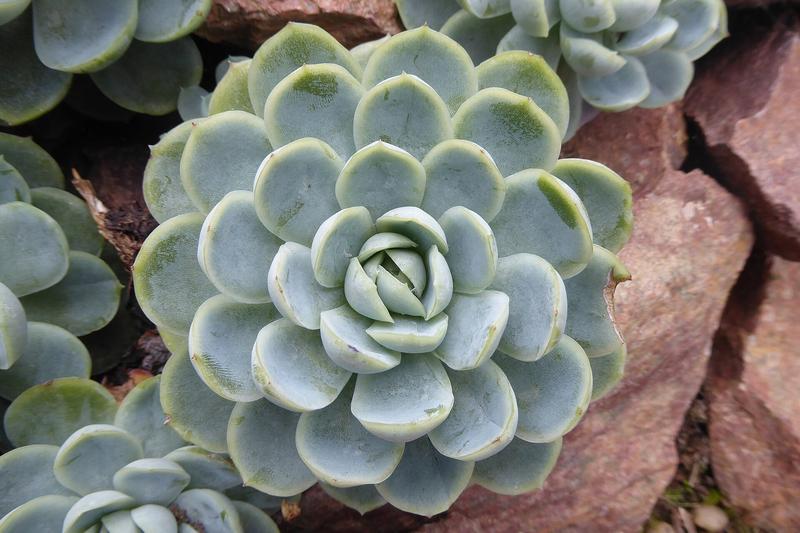
Quick facts
- Watering
- Fortnightly in growing season
- Sunlight
- Full sun to partial shade
- Soil
- Very well-drained, gritty compost
- Humans
- Safe
- Cats
- Safe
- Dogs
- Safe
- Height
- 10–15 cm
- Spread
- 15–25 cm
- Spacing
- 20–30 cm apart
- RHS recognition
- Award of Garden Merit
About Echeveria
Echeveria elegans is a stunning succulent forming perfect rosettes of pale blue-green, fleshy leaves with a powdery coating. Native to Mexico, this drought-tolerant plant has become a favourite amongst UK houseplant enthusiasts for its architectural form and minimal care requirements. It occasionally produces coral-pink flowers on arching stems during summer, adding an extra dimension to its sculptural beauty. In the UK, it thrives as an indoor plant or in containers that can be moved under cover during winter.
UK fact: Echeveria elegans received the RHS Award of Garden Merit and performs exceptionally well on sunny British windowsills, where the cooler indoor temperatures help maintain its compact rosette form better than in warmer climates.
Watering Echeveria
During the growing season (April to September), water thoroughly when the compost is completely dry, typically every 10-14 days depending on temperature and humidity. In winter, reduce watering to once monthly or less, as the plant enters dormancy and excess moisture can cause root rot. Always water the compost directly rather than the rosette, as water trapped between leaves encourages fungal problems. Use room-temperature water and ensure any excess drains away completely, never allowing the pot to sit in water.
Sunlight requirements
Position on a south-facing windowsill for best results, though east or west-facing aspects also work well in the UK. During summer, plants can be moved outdoors to a sunny patio, but must be brought inside before autumn frosts. Insufficient light causes the rosette to stretch and lose its tight, symmetrical shape, a condition known as etiolation.
Soil and feeding
Use a proprietary cactus and succulent compost, or make your own by mixing three parts multipurpose compost with two parts horticultural grit or perlite. The pH should be slightly acidic to neutral (6.0-7.0). Good drainage is absolutely critical – the compost should feel gritty and water should drain through rapidly. Always use pots with drainage holes, and consider adding a layer of grit at the base to improve drainage further.
Apply a specialist cactus and succulent fertiliser at half strength once a month from April through September. Avoid feeding during autumn and winter when the plant is dormant, as this can cause weak, leggy growth. Overfeedinng is unnecessary and can damage the plant's natural compact form.
Pruning Echeveria
Echeveria needs very little pruning beyond basic maintenance. Remove flower stems once blooms have faded by cutting at the base with clean, sharp scissors. Gently pull away any dead or damaged lower leaves, which naturally die back as the plant matures. If the rosette becomes leggy due to insufficient light, you can behead the plant and re-root the top portion. Avoid touching the powdery coating (farina) on the leaves, as this protective layer doesn't regenerate once damaged.
Propagating Echeveria
The simplest method is to remove offsets (baby rosettes) that form around the base of the mother plant, potting them up individually once they have a few roots. Leaf propagation is remarkably successful – simply remove healthy leaves and lay them on dry compost until roots and new rosettes form. Stem cuttings can be taken if the plant becomes leggy, allowing the cut end to callous for several days before potting. All propagation is best undertaken during the growing season from spring through summer.
Common problems
Echeveria is relatively trouble-free but can suffer from mealybugs, which appear as white, cottony masses in leaf axils and should be removed with a cotton bud dipped in methylated spirits. Overwatering causes root rot, indicated by soft, blackened leaves and a mushy stem base – prevention through proper watering is essential as affected plants rarely recover. Vine weevil larvae can damage roots in outdoor containers during summer, so use a biological control if plants are summered outside. Powdery mildew occasionally affects plants in poorly ventilated, humid conditions, appearing as white patches on leaves.
Spot a problem with your plant? Photograph the affected area using the Loam app and it will suggest the most likely cause and treatment.
Safety
- Humans
- Safe
- Cats
- Safe
- Dogs
- Safe
Toxicity information is for general guidance only.
Seasonal care calendar
Monthly care guide for Echeveria in the UK, based on average conditions.
| Month | Care tasks |
|---|---|
| January | Keep in a cool, bright location. Water very sparingly, only if leaves show signs of shrivelling. No feeding required. |
| February | Continue minimal watering. Check for mealybugs and remove any dead leaves. Ensure good light to prevent etiolation. |
| March | Gradually increase watering as temperatures rise and growth resumes. Begin monthly feeding with diluted cactus fertiliser. |
| April | Repot if rootbound, using fresh cactus compost. Water when compost dries out completely. Move to a sunnier position if needed. |
| May | Continue regular watering and monthly feeding. Can be moved outdoors to a sunny, sheltered spot once all frost risk has passed. |
| June | Water fortnightly and feed monthly. Watch for flower stems developing. Take leaf cuttings or separate offsets for propagation. |
| July | Maintain regular watering schedule. Remove spent flower stems. Continue propagation activities. Check for pests, especially if outdoors. |
| August | Continue summer care routine. Water thoroughly when compost is dry. Feed for the last time this month before dormancy. |
| September | Bring outdoor plants inside before night temperatures drop below 10°C. Gradually reduce watering frequency as growth slows. |
| October | Reduce watering to monthly. Stop feeding. Ensure plants are in a bright, cool position indoors for winter dormancy. |
| November | Water very sparingly, only if leaves show signs of shrivelling. Maintain in cool, bright conditions with good air circulation. |
| December | Minimal care required. Water once if needed. Keep away from cold draughts and radiators. Check occasionally for pests. |
Frequently asked questions
- How often should I water my Echeveria in winter?
- Water very sparingly in winter, approximately once every 3-4 weeks or even less. Echeveria are dormant during cold months and require minimal moisture. The compost should dry out completely between waterings. Reduce frequency further if kept in a cool room, as water uptake slows significantly in lower temperatures.
- Why is my Echeveria stretching and losing its compact shape?
- This etiolation is caused by insufficient light. Move your plant to a brighter location, ideally a south-facing windowsill with several hours of direct sunlight daily. The stretched growth won't revert, but new growth will be compact. If you're unsure about light levels or other care issues, the Loam app can provide personalised advice and help diagnose problems with your plant's appearance.
- How do I propagate Echeveria from leaf cuttings?
- Gently twist a healthy leaf from the stem, ensuring the entire base comes away cleanly. Leave it to callous over for 2-3 days, then place on dry succulent compost without burying. Roots and a small rosette will develop from the base over several weeks. Mist lightly once roots appear, then gradually increase watering as the new plant establishes.
Got a question about growing Echeveria that isn't covered here? Ask the Garden Advisor in the Loam app. It knows your saved plants and local conditions.
Related plants
This page was compiled with AI assistance and reviewed by our team. .