Haworthia
Haworthiopsis attenuata
Houseplants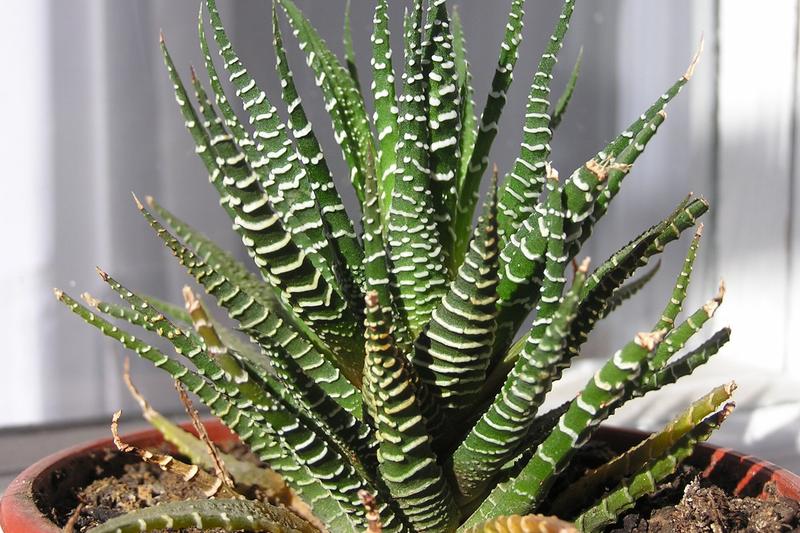
Quick facts
- Watering
- Fortnightly in growing season
- Sunlight
- Bright indirect light
- Soil
- Free-draining cactus compost
- Humans
- Safe
- Cats
- Safe
- Dogs
- Safe
- Height
- 8–15 cm
- Spread
- 10–20 cm
- Spacing
- 15–20 cm apart
About Haworthia
Haworthia is a compact succulent native to South Africa, prized for its striking white-striped rosettes of dark green leaves. Growing to just 10–15 cm tall, it makes an ideal low-maintenance houseplant for UK homes, thriving on bright windowsills and in offices. Its architectural form and tolerance of neglect have made it a favourite among British houseplant enthusiasts. The plant occasionally produces delicate tubular flowers on tall stems during summer months.
UK fact: Haworthia has become one of the most popular succulents in British homes since the 2010s houseplant boom, with the RHS reporting a 300% increase in enquiries about succulent care between 2015 and 2020.
Watering Haworthia
During the growing season (April to September), water thoroughly every 10–14 days, ensuring excess water drains freely from the pot. In winter, reduce to monthly watering or less, as the plant enters dormancy and overwatering becomes the primary risk. Always check the compost is completely dry before watering again. Use room-temperature water and avoid wetting the rosette centre, which can lead to rot in the cooler, lower-light conditions typical of British homes.
Sunlight requirements
Position on an east or west-facing windowsill in UK homes for optimal growth, where it will receive bright light without harsh midday sun. South-facing windows are suitable during autumn and winter, but may require shading with a sheer curtain during summer months. North-facing positions can work but may result in slower growth and less compact rosettes.
Soil and feeding
Haworthia requires exceptionally free-draining growing medium to prevent root rot. A 50:50 mix of peat-free multipurpose compost and horticultural grit or perlite works well, or use ready-made cactus compost. The pH should be slightly acidic to neutral (6.0–7.0). Ensure pots have drainage holes and consider adding a layer of grit at the base to prevent waterlogging, which is particularly important in the UK's humid climate.
Apply a balanced liquid cactus fertiliser at half strength once a month from April through September. Avoid feeding during autumn and winter when the plant is dormant, as this can cause weak, leggy growth. Overfed haworthias may lose their compact form and become more susceptible to rot.
Pruning Haworthia
Haworthia needs very little pruning beyond basic maintenance. Remove any dried or damaged leaves by gently pulling them away from the base of the rosette. If the plant produces flower stalks (usually in late spring or summer), allow them to bloom fully before cutting them back to the base once flowers fade. Remove offsets (pups) if you wish to propagate or prevent overcrowding, though many growers prefer the clustered appearance of mature clumps.
Propagating Haworthia
The simplest propagation method is to separate offsets that naturally develop around the parent plant, ideally in spring or early summer. These pups can be removed once they're at least one-third the size of the parent plant and have developed their own root system. Leaf propagation is possible but less reliable and much slower. Division allows you to create multiple plants whilst rejuvenating congested clumps.
Common problems
Overwatering is the most common problem, leading to root rot and mushy, translucent leaves—particularly during the UK's damp winter months. Mealybugs can infest the leaf bases and should be removed with a cotton bud dipped in methylated spirits or treated with insecticidal soap. Brown or reddish leaves indicate sunburn from excessive direct light, whilst elongated, pale growth suggests insufficient light. Ensure good air circulation to prevent fungal issues in humid British homes.
Spot a problem with your plant? Photograph the affected area using the Loam app and it will suggest the most likely cause and treatment.
Safety
- Humans
- Safe
- Cats
- Safe
- Dogs
- Safe
Toxicity information is for general guidance only.
Seasonal care calendar
Monthly care guide for Haworthia in the UK, based on average conditions.
| Month | Care tasks |
|---|---|
| January | Keep almost dry with minimal watering. Maintain in bright position away from cold draughts and windows. |
| February | Continue winter rest period with very light watering only if compost is bone dry. Check for mealybugs. |
| March | Begin increasing watering frequency as light levels improve. Remove any dead leaves from the base. |
| April | Resume regular fortnightly watering. Begin monthly feeding. Ideal time to repot if rootbound. |
| May | Water every 10–14 days and feed monthly. Propagate offsets. Watch for flower stalks developing. |
| June | Maintain regular watering and feeding schedule. Provide shading if on south-facing windowsills during hot spells. |
| July | Continue watering every 10–14 days. Remove spent flower stalks. Monitor for sunburn on very hot days. |
| August | Maintain summer care routine with regular watering and monthly feeding. Check for pests in warm conditions. |
| September | Begin reducing watering frequency as temperatures cool. Final feed of the season mid-month. |
| October | Reduce watering to every 3–4 weeks. Stop feeding. Move away from cold windows as nights cool. |
| November | Water sparingly, only when compost is completely dry. Ensure adequate light as days shorten. |
| December | Minimal watering during dormancy. Keep in bright, cool position away from radiators and draughts. |
Frequently asked questions
- How often should I water my haworthia in winter?
- During winter dormancy (November to February), water very sparingly—perhaps once a month or even less. The compost should be completely dry between waterings. Overwatering in winter is the primary cause of haworthia death in UK homes.
- How do I know if my haworthia is getting enough light?
- Healthy haworthias have compact, dark green leaves with prominent white stripes. If your plant is stretching upwards or the leaves are pale and elongated, it needs more light. If leaves turn brown or reddish, it's receiving too much direct sun. The Loam app can help you diagnose light issues and provide personalised care reminders based on your plant's location.
- How do I propagate haworthia from offsets?
- Haworthias naturally produce offsets (pups) around the base. In spring, gently remove offsets that have developed their own roots by easing them away from the mother plant. Allow the cut surface to dry for 24 hours, then pot in gritty, free-draining compost. Water sparingly until established—usually after 2–3 weeks when you see new growth.
Got a question about growing Haworthia that isn't covered here? Ask the Garden Advisor in the Loam app. It knows your saved plants and local conditions.
Related plants
This page was compiled with AI assistance and reviewed by our team. .