Autumn Daffodil
Sternbergia lutea
Bulbs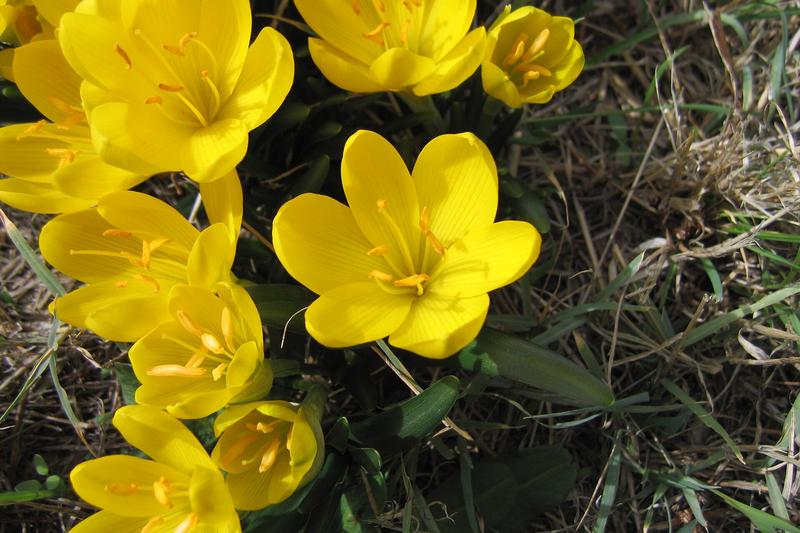
Quick facts
- Watering
- Minimal once established
- Sunlight
- Full sun
- Soil
- Very well-drained, alkaline
- Humans
- Toxic
- Cats
- Toxic
- Dogs
- Toxic
- Height
- 10–15 cm
- Spread
- 5–10 cm
- Spacing
- 8–10 cm apart
- RHS recognition
- Award of Garden Merit
About Autumn Daffodil
Autumn Daffodil is a charming bulbous perennial native to the Mediterranean region, producing bright golden-yellow, crocus-like flowers in September and October. Unlike true daffodils, this diminutive plant blooms in autumn rather than spring, offering a welcome splash of colour when most bulbs have finished flowering. UK gardeners prize it for naturalising in sunny borders, rock gardens, and at the base of warm south-facing walls where it can bake during summer. The glossy, strap-like foliage appears with or just after the flowers and persists through winter into spring.
UK fact: Sternbergia lutea holds the RHS Award of Garden Merit and thrives particularly well in southern England where hot, dry summers allow the bulbs to ripen properly, though it can be challenging in cooler, wetter regions of Scotland and northern England without excellent drainage.
Watering Autumn Daffodil
Water sparingly during the growing season from autumn through spring, allowing soil to dry out between waterings. Once foliage dies back in late spring, keep the bulbs completely dry throughout summer to mimic their natural Mediterranean habitat—this summer dormancy and baking is essential for flowering. In wet UK summers, consider planting in raised beds or very free-draining soil, or even lifting bulbs to store dry until autumn. Avoid overhead watering which can encourage fungal diseases.
Sunlight requirements
Autumn Daffodil requires a position in full sun to flower reliably, ideally against a south or southwest-facing wall where bulbs receive maximum summer heat. In the UK, choose the warmest, sunniest spot in your garden as the bulbs need a thorough summer baking to initiate flower buds for autumn. Avoid shaded positions or areas under trees, as insufficient light and summer warmth will result in foliage only with no flowers.
Soil and feeding
Sternbergia lutea demands exceptionally sharp drainage and thrives in poor to moderately fertile, gritty or sandy soil with a neutral to alkaline pH of 7.0-8.0. Heavy clay soils are unsuitable unless extensively amended with horticultural grit and sharp sand, or the bulbs are planted in raised beds. Add lime if your soil is acidic, as these bulbs naturally grow on limestone hillsides in their native habitat. The key to success in the UK is ensuring bulbs never sit in waterlogged soil, particularly during their summer dormancy.
Apply a low-nitrogen, high-potash fertiliser such as tomato feed once flowers fade in late autumn to support bulb development. A second light feed can be given in early spring as foliage is growing, but avoid overfeeding as Sternbergia prefers lean conditions and excessive nitrogen promotes foliage at the expense of flowers.
Pruning Autumn Daffodil
No pruning is required for Autumn Daffodil. Allow the foliage to die back naturally in late spring, resisting the temptation to cut it down early as the leaves are essential for replenishing the bulb's energy reserves for next autumn's flowers. Once foliage has completely yellowed and withered, usually by June, it can be gently removed. Deadhead spent flowers if desired for neatness, though this is not essential as seed production does not significantly weaken the bulbs.
Propagating Autumn Daffodil
Autumn Daffodil is best propagated by division of established clumps in late spring or early summer just as the foliage dies back, though bulbs resent disturbance and should only be divided every 4-5 years when clumps become congested. Carefully lift clumps, separate individual bulbs and offsets, and replant immediately at a depth of 10-15cm in their new positions. Growing from seed is possible but very slow, taking 4-6 years to reach flowering size, and seed-raised plants may not come true to type. In the UK, division is the most reliable method and allows you to increase your stock whilst maintaining flowering performance.
Common problems
Autumn Daffodil is relatively trouble-free but can suffer from narcissus bulb fly, whose larvae tunnel into and destroy bulbs—affected bulbs feel soft and fail to flower. Basal rot caused by Fusarium fungi can occur in poorly drained soils, causing bulbs to rot; prevention through excellent drainage is essential. Slugs and snails may damage emerging flowers and foliage in autumn. The most common problem in UK gardens is failure to flower, almost always caused by insufficient summer heat and dryness, planting in shade, or soil that is too rich, too acidic, or too moisture-retentive.
Spot a problem with your plant? Photograph the affected area using the Loam app and it will suggest the most likely cause and treatment.
Safety
- Humans
-
Toxic
All parts of Sternbergia lutea contain toxic alkaloids that can cause nausea, vomiting, and diarrhoea if ingested. Handle bulbs with care and wash hands after planting.
- Cats
-
Toxic
Toxic to cats if ingested, causing vomiting, drooling, and gastrointestinal upset. Keep bulbs and plants away from curious cats.
- Dogs
-
Toxic
Toxic to dogs if ingested, causing vomiting, diarrhoea, and abdominal pain. Plant in areas inaccessible to dogs and supervise pets around bulbs.
Toxicity information is for general guidance only. If a person or pet has been exposed to this plant and you are concerned, seek advice from a medical professional or vet.
Seasonal care calendar
Monthly care guide for Autumn Daffodil in the UK, based on average conditions.
| Month | Care tasks |
|---|---|
| January | Foliage continues to grow through winter. No action needed. |
| February | Foliage remains green. Apply a light high-potash feed if not done in autumn. |
| March | Foliage still active. Ensure good drainage as spring rains increase. |
| April | Foliage begins to yellow and die back naturally. Do not remove yet. |
| May | Foliage continues dying back. Allow to wither completely before removing. |
| June | Remove dead foliage once fully withered. Bulbs enter summer dormancy. Keep dry. |
| July | Bulbs dormant. Ensure soil remains dry—essential for flower bud formation. |
| August | Plant new bulbs 10-15cm deep in prepared, well-drained soil. Keep existing bulbs dry. |
| September | Flowers emerge and bloom. Water lightly if autumn is very dry. Enjoy the display. |
| October | Flowering continues. Foliage appears with or after flowers. Deadhead spent blooms. |
| November | Flowering finishes. Apply high-potash feed to support bulb development. Foliage grows. |
| December | Foliage remains green through winter. Protect from severe frost with mulch if needed. |
Frequently asked questions
- Why won't my Autumn Daffodil flower?
- The most common reason is insufficient summer heat and dryness. Sternbergia bulbs need a thorough baking during their summer dormancy (June-August) to form flower buds. Plant in the hottest, sunniest spot available, ideally against a south-facing wall, and ensure the soil drains perfectly so bulbs stay completely dry in summer. Shade, wet summers, overly rich soil, or acidic conditions will also prevent flowering.
- When should I plant Autumn Daffodil bulbs in the UK?
- Plant bulbs in August, just before they naturally break dormancy and begin flowering in September. This gives them time to establish roots before blooming. The Loam app can send you a timely reminder in late summer so you don't miss the narrow planting window, and track your bulbs' performance year after year.
- Can I grow Autumn Daffodil in pots?
- Yes, Sternbergia grows well in containers using a very gritty, free-draining compost mixed 50:50 with horticultural grit. Pots must have excellent drainage holes and should be placed in the sunniest spot possible. The advantage of container growing in the UK is that you can move pots under cover or onto their sides during wet summers to keep bulbs dry, then return them to position for autumn flowering.
Got a question about growing Autumn Daffodil that isn't covered here? Ask the Garden Advisor in the Loam app. It knows your saved plants and local conditions.
Related plants
This page was compiled with AI assistance and reviewed by our team. .