Cyclamen
Cyclamen persicum
Houseplants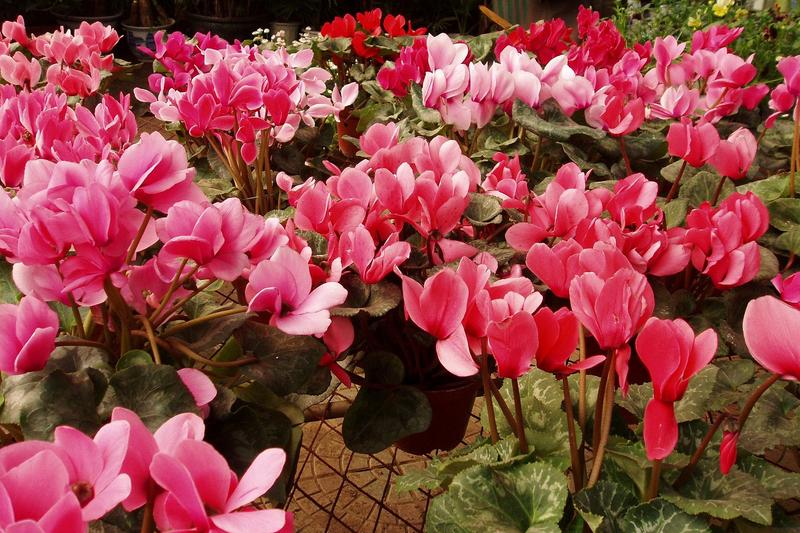
Quick facts
- Watering
- Twice weekly during flowering
- Sunlight
- Bright indirect light
- Soil
- Well-drained, peat-free multipurpose compost
- Humans
- Toxic
- Cats
- Toxic
- Dogs
- Toxic
- Height
- 15–25 cm
- Spread
- 15–20 cm
- Spacing
- 20–25 cm apart
About Cyclamen
Cyclamen persicum is a charming winter-flowering houseplant prized for its elegant swept-back petals in shades of pink, red, white, and purple, held above heart-shaped, often marbled foliage. Native to the eastern Mediterranean, it has become a staple of British homes during the colder months, providing vibrant colour when outdoor gardens are dormant. UK gardeners value cyclamen for their long flowering period from autumn through to early spring, making them ideal for brightening windowsills and conservatories. Their compact habit and cool-temperature preference suit British indoor conditions perfectly.
UK fact: Cyclamen persicum has been a popular Christmas gift plant in Britain since Victorian times, when exotic Mediterranean plants became fashionable in middle-class households, and it remains one of the UK's best-selling winter pot plants.
Watering Cyclamen
The key to cyclamen success is watering from the base by standing the pot in a saucer of water for 15-20 minutes, then draining thoroughly. Never water directly onto the corm (the bulbous base), as this causes rot. During active growth and flowering from autumn to spring, water when the top centimetre of compost feels dry, typically twice weekly in centrally heated UK homes. Reduce watering significantly if the plant enters summer dormancy, giving just enough to prevent the corm from shrivelling completely.
Sunlight requirements
Position your cyclamen on a north or east-facing windowsill where it receives plenty of bright light without harsh direct sun. In the UK's low winter light levels, a spot near a window is essential for continued flowering. Avoid south-facing windows unless shaded by net curtains, as even winter sun through glass can damage the delicate foliage.
Soil and feeding
Cyclamen require excellent drainage to prevent corm rot, so use a peat-free multipurpose compost mixed with perlite or horticultural grit in a ratio of 3:1. The compost should be moisture-retentive yet free-draining, allowing excess water to escape quickly. A slightly acidic to neutral pH of 6.0-7.0 is ideal. When potting, ensure the corm sits with its top just above or level with the compost surface, never buried deeply.
Apply a balanced liquid houseplant fertiliser at half the recommended strength every two weeks whilst the plant is actively growing and flowering. A tomato feed (high in potassium) can encourage better flowering. Cease feeding once flowering finishes in late spring, and do not feed during summer dormancy.
Pruning Cyclamen
Deadhead faded flowers regularly by grasping the stem close to the corm and giving a sharp twist and pull to remove the entire stem cleanly. Cutting with scissors or secateurs leaves stubs that can rot. Similarly, remove yellowing or damaged leaves by the same twisting method. This not only keeps the plant tidy but prevents fungal diseases from establishing in decaying plant material. After flowering ceases in spring, allow remaining foliage to die back naturally if the plant is entering dormancy.
Propagating Cyclamen
Home propagation of florist's cyclamen is challenging and time-consuming compared to purchasing new plants, but rewarding for patient gardeners. Seed is the only practical method, as division damages the corm. Sow fresh seed in August or September in a peat-free seed compost, barely covering the seeds, and maintain temperatures of 15-18°C. Germination is slow and erratic, taking 4-8 weeks in darkness. Seedlings require cool conditions (10-15°C) and careful watering to reach flowering size.
Common problems
Cyclamen are susceptible to grey mould (Botrytis) in damp, poorly ventilated conditions, particularly affecting flowers and leaves; remove affected parts immediately and improve air circulation. Vine weevil larvae can devastate the corm, causing sudden collapse; check for these white grubs if plants wilt unexpectedly. Cyclamen mite causes distorted, stunted growth and is difficult to treat, usually requiring plant disposal. Overwatering or watering onto the corm commonly causes rot, whilst too-warm conditions (above 20°C) in centrally heated UK homes lead to short-lived flowers and yellowing foliage.
Spot a problem with your plant? Photograph the affected area using the Loam app and it will suggest the most likely cause and treatment.
Safety
- Humans
-
Toxic
All parts of cyclamen are toxic if ingested, containing triterpenoid saponins that cause nausea, vomiting, and diarrhoea. The corm is particularly poisonous. Keep away from children.
- Cats
-
Toxic
Cyclamen is toxic to cats, causing drooling, vomiting, diarrhoea, and potentially abnormal heart rhythm if significant amounts are consumed. The corm poses the greatest risk.
- Dogs
-
Toxic
Toxic to dogs, with the corm being especially dangerous. Ingestion causes excessive drooling, vomiting, diarrhoea, and in severe cases, heart abnormalities and seizures. Seek veterinary attention if consumed.
Toxicity information is for general guidance only. If a person or pet has been exposed to this plant and you are concerned, seek advice from a medical professional or vet.
Seasonal care calendar
Monthly care guide for Cyclamen in the UK, based on average conditions.
| Month | Care tasks |
|---|---|
| January | Peak flowering period. Deadhead regularly, water from below twice weekly, and feed fortnightly. Keep in cool conditions (12-15°C) away from radiators. |
| February | Continue regular deadheading and feeding. Maintain cool temperatures and bright light. Check for vine weevil if plants show signs of wilting. |
| March | Flowering continues but may begin to slow. Maintain watering and feeding regime. Remove any yellowing leaves by twisting at the base. |
| April | Flowering typically finishes. Reduce feeding and gradually decrease watering as foliage begins to yellow naturally. Allow leaves to die back if plant enters dormancy. |
| May | Most plants enter dormancy. Stop feeding and water only sparingly to prevent corm shrivelling. Store pots in a cool, shaded spot outdoors or in a shed. |
| June | Dormant period. Keep corms barely moist in their pots in a cool, shaded location. No feeding required. |
| July | Corms remain dormant. Maintain minimal watering. Check occasionally that corms haven't shrivelled completely or become waterlogged. |
| August | Watch for signs of new growth emerging from corms. When shoots appear, repot in fresh compost if needed, gradually increase watering, and return to bright, cool location indoors. |
| September | New foliage develops rapidly. Resume regular watering from below and begin fortnightly feeding. Ensure good light and cool temperatures (12-15°C). |
| October | First flower buds appear. Continue feeding and watering. Position in brightest available spot as daylight decreases. Maintain cool conditions for best bud development. |
| November | Flowering begins. Deadhead spent blooms regularly by twisting off at base. Water twice weekly and feed fortnightly. Keep away from hot radiators. |
| December | Full flowering display. Maintain regular deadheading, watering from below, and fortnightly feeding. Popular gift plant season—acclimatise new purchases gradually to home conditions. |
Frequently asked questions
- How do I deadhead cyclamen properly?
- To deadhead cyclamen correctly, grasp the stem of the faded flower firmly at the base near the corm and give it a sharp twist and pull to remove the entire stem. Never cut with scissors or secateurs, as this leaves a stub that can rot and encourage grey mould (botrytis). Remove yellowing leaves the same way. Deadhead regularly throughout the flowering season to keep the plant healthy and encourage more blooms. Check the plant weekly and remove all spent flowers and foliage promptly.
- Why are my cyclamen leaves turning yellow?
- Yellowing leaves are normal as flowers fade and the plant enters dormancy in spring. However, if occurring during the flowering season, it usually indicates the plant is too warm—cyclamen prefer cool conditions of 12-15°C. Overwatering can also cause yellowing; ensure you're watering from below and allowing compost to dry slightly between waterings. If you're struggling to diagnose the exact cause, the Loam app can help identify whether it's a temperature, watering, or other environmental issue through its plant diagnosis feature and provide personalised care reminders.
- What compost should I use for repotting cyclamen?
- Use a well-draining, peat-free multipurpose compost mixed with horticultural grit or perlite (roughly 3 parts compost to 1 part grit) to ensure good drainage, as cyclamen corms are prone to rot in waterlogged conditions. When repotting in late summer or early autumn, choose a pot only slightly larger than the corm, and position the corm so the top sits at or just above the compost surface. Add a thin layer of grit around the corm to keep it dry and prevent rot.
Got a question about growing Cyclamen that isn't covered here? Ask the Garden Advisor in the Loam app. It knows your saved plants and local conditions.
Related plants
This page was compiled with AI assistance and reviewed by our team. .