Daffodil
Narcissus
Bulbs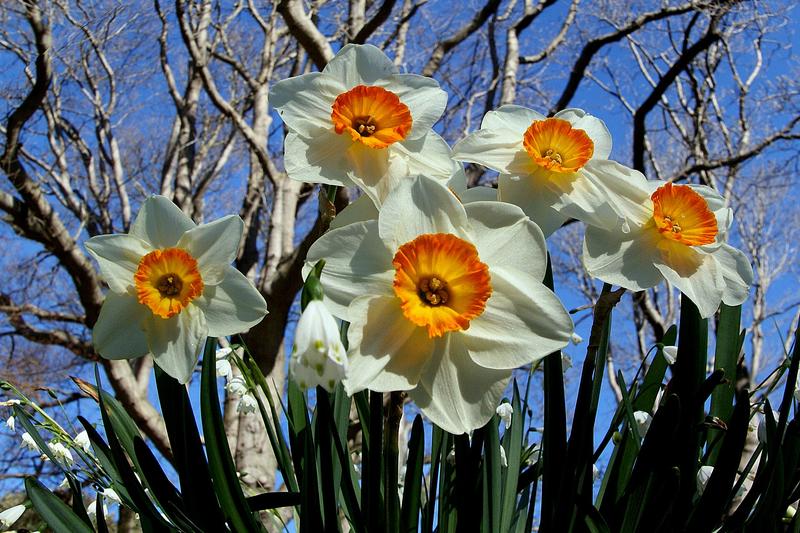
Quick facts
- Watering
- Minimal once established
- Sunlight
- Full sun to partial shade
- Soil
- Well-drained, moderately fertile
- Humans
- Toxic
- Cats
- Toxic
- Dogs
- Toxic
- Height
- 15–60 cm
- Spread
- 5–15 cm
- Spacing
- 8–15 cm apart
- RHS recognition
- Award of Garden Merit
About Daffodil
Daffodils are quintessential spring-flowering bulbs beloved across British gardens for their cheerful yellow, white, or bicoloured trumpet-shaped blooms. Native to Europe and North Africa, these hardy perennials have been cultivated in the UK for centuries and naturalise beautifully in lawns, borders, and woodland settings. They flower from late winter through to late spring depending on variety, providing vital early nectar for pollinators. Daffodils are remarkably low-maintenance and will return year after year with minimal intervention, making them ideal for both novice and experienced gardeners.
UK fact: Daffodils are strongly associated with Wales, where they are worn on St David's Day (1st March) as a national emblem, and the Wordsworth poem 'I Wandered Lonely as a Cloud' immortalised the wild daffodils of the Lake District.
Watering Daffodil
Water newly planted bulbs if autumn weather is particularly dry, ensuring the soil is moist to encourage root development. During active growth in spring, UK rainfall is typically sufficient, though container-grown daffodils may need occasional watering in dry spells. After flowering, reduce watering as the foliage dies back naturally. Avoid waterlogging, which can cause bulb rot, particularly in heavy clay soils during wet British winters.
Sunlight requirements
Plant daffodils in positions receiving at least four to six hours of sunlight daily for optimal flowering. South-facing or west-facing borders are ideal in the UK, though they'll naturalise happily under deciduous trees where they receive spring sun before the canopy fills out. Avoid deep shade beneath evergreens, as this significantly reduces flower production.
Soil and feeding
Plant in any reasonably fertile, well-drained soil with a pH between 6.0 and 7.0, though daffodils are remarkably adaptable. Heavy clay soils benefit from the addition of horticultural grit or sharp sand to improve drainage, whilst very sandy soils can be enriched with organic matter. Avoid planting in waterlogged areas or compacted ground. For container cultivation, use a loam-based compost such as John Innes No. 2 with added grit for drainage.
Feed daffodils with a high-potash fertiliser such as tomato feed immediately after flowering, whilst the foliage is still green and photosynthesising. This replenishes the bulb's energy reserves for next year's blooms. Avoid high-nitrogen feeds which promote excessive foliage at the expense of flowers.
Pruning Daffodil
Remove faded flower heads after blooming to prevent energy being wasted on seed production, but leave the stem intact. Crucially, allow the foliage to yellow and wither naturally for a minimum of six weeks after flowering – this process allows nutrients to return to the bulb. Resist the temptation to tidy away green leaves, tie them in knots, or cut them back prematurely, as this weakens the bulbs and reduces flowering the following year. Once completely brown, foliage can be removed.
Propagating Daffodil
The easiest method is division of established clumps in summer once foliage has died back completely. Lift congested clumps carefully with a fork, separate the offset bulbs from the parent, and replant immediately or store in a cool, dry place until autumn. Daffodils can also be grown from seed, though this takes five to seven years to reach flowering size and is rarely practised by home gardeners.
Common problems
Daffodils are generally trouble-free but can suffer from narcissus bulb fly, whose larvae hollow out bulbs causing them to fail. Narcissus basal rot, a fungal disease, causes bulbs to become soft and rot, particularly in poorly drained soils. Slugs and snails may damage emerging shoots in early spring. Blindness (failure to flower) is usually caused by overcrowding, premature removal of foliage the previous year, or planting too shallowly.
Spot a problem with your plant? Photograph the affected area using the Loam app and it will suggest the most likely cause and treatment.
Safety
- Humans
-
Toxic
All parts of daffodils are toxic if ingested, containing alkaloids that cause nausea, vomiting, and diarrhoea. Bulbs are particularly poisonous and have been mistaken for onions. Sap can cause skin irritation in sensitive individuals.
- Cats
-
Toxic
Daffodils are toxic to cats. Ingestion causes vomiting, salivation, diarrhoea, and in severe cases cardiac arrhythmias and respiratory depression. Seek veterinary attention immediately if ingestion is suspected.
- Dogs
-
Toxic
Daffodils are toxic to dogs. All parts are poisonous, with bulbs being most dangerous. Symptoms include vomiting, diarrhoea, abdominal pain, cardiac abnormalities, and convulsions. Contact a vet urgently if consumed.
Toxicity information is for general guidance only. If a person or pet has been exposed to this plant and you are concerned, seek advice from a medical professional or vet.
Seasonal care calendar
Monthly care guide for Daffodil in the UK, based on average conditions.
| Month | Care tasks |
|---|---|
| January | Early varieties begin to emerge. Protect shoots from slug damage if necessary. |
| February | Early daffodils flower. Remove faded blooms as they appear. |
| March | Peak flowering period. Deadhead spent flowers regularly and enjoy the display. |
| April | Late varieties finish flowering. Continue deadheading and apply high-potash feed whilst foliage is green. |
| May | Allow foliage to die back naturally. Resist cutting back green leaves. |
| June | Foliage yellows and withers. Once completely brown, remove dead leaves. Lift and divide congested clumps if needed. |
| July | Bulbs dormant. Complete any lifting and division. Store bulbs in a cool, dry place until planting time. |
| August | Bulbs dormant. Prepare planting sites for autumn planting. |
| September | Ideal time to plant new bulbs and replant divided offsets. Plant 10-15cm deep in prepared soil. |
| October | Continue planting bulbs. Ensure all bulbs are in the ground by month end for best results. |
| November | Bulbs establishing roots underground. Apply mulch to beds if desired. |
| December | Bulbs developing roots. No action needed. |
Frequently asked questions
- When should I plant daffodil bulbs in the UK?
- Plant daffodil bulbs in September or October for best results, though they can be planted until late November. Earlier planting allows better root establishment before winter. Plant bulbs at a depth of two to three times their height, typically 10-15cm deep, with the pointed end facing upwards.
- Why didn't my daffodils flower this year?
- Blindness (failure to flower) is usually caused by overcrowding, cutting back foliage too early the previous year, planting bulbs too shallowly, or excessive shade. Lift and divide congested clumps, ensure bulbs are planted at least 10cm deep, and allow foliage to die back naturally for six weeks after flowering. The Loam app can help diagnose specific flowering problems and send you timely reminders for essential care tasks like when to divide bulbs or when it's safe to cut back foliage.
- Are daffodils poisonous to pets and children?
- Yes, all parts of daffodils are toxic if ingested, containing alkaloids that can cause nausea, vomiting, and diarrhoea in humans and pets. The bulbs are particularly poisonous and can be mistaken for onions. Keep bulbs away from children and pets during planting, and position plants where curious animals are less likely to dig or chew them. If ingestion occurs, seek medical or veterinary advice immediately.
Got a question about growing Daffodil that isn't covered here? Ask the Garden Advisor in the Loam app. It knows your saved plants and local conditions.
Related plants
This page was compiled with AI assistance and reviewed by our team. .