Muscari
Muscari armeniacum
Bulbs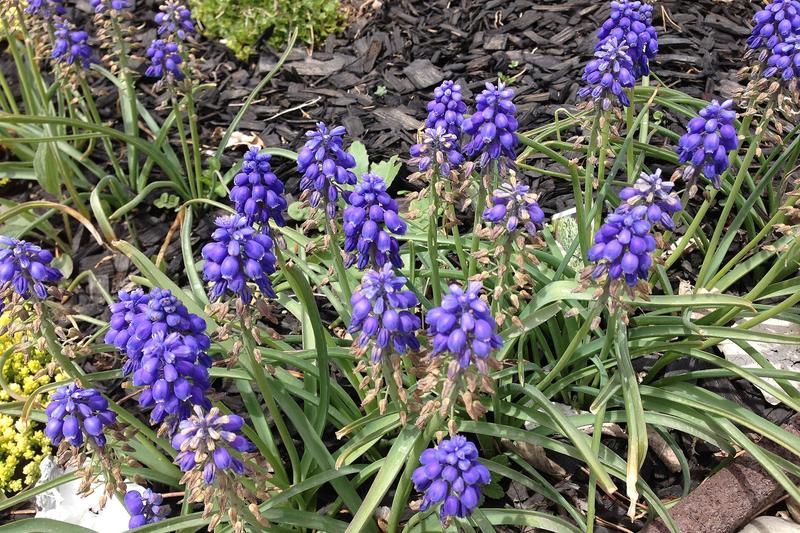
Quick facts
- Watering
- Minimal once established
- Sunlight
- Full sun to partial shade
- Soil
- Well-drained, moderately fertile
- Humans
- Toxic
- Cats
- Toxic
- Dogs
- Toxic
- Height
- 15–20 cm
- Spread
- 5–8 cm
- Spacing
- 8–10 cm apart
- RHS recognition
- Award of Garden Merit
About Muscari
Muscari armeniacum, commonly known as grape hyacinth, is a charming spring-flowering bulb producing dense spikes of tiny, bell-shaped cobalt-blue flowers resembling bunches of grapes. Native to south-eastern Europe and Turkey, these diminutive bulbs have naturalised widely across British gardens since Victorian times. UK gardeners prize them for their reliability, early colour, and ability to carpet borders, rock gardens, and lawns with vivid blue from March to May. Their compact habit and vigorous self-seeding make them ideal for naturalising beneath deciduous trees and shrubs.
UK fact: Muscari armeniacum holds the RHS Award of Garden Merit and has naturalised so successfully in parts of Britain that it can be found growing wild in churchyards, cottage gardens, and woodland edges across the country, particularly in southern England.
Watering Muscari
Water newly planted bulbs if autumn weather is particularly dry to encourage root establishment. During the growing season from late winter to early summer, muscari rarely need supplementary watering in the UK as natural rainfall is usually sufficient. If spring is exceptionally dry, water lightly to support flowering, but avoid waterlogging which can cause bulb rot. Once foliage dies back in summer, the bulbs enter dormancy and require no watering whatsoever.
Sunlight requirements
Plant muscari in full sun for the most vibrant flower colour and strongest growth, though they perform admirably in partial shade beneath deciduous trees. In the UK, south or west-facing positions are ideal, but they'll flower reliably even in east-facing borders. Avoid deep shade, which can reduce flowering and cause the foliage to become lank.
Soil and feeding
These adaptable bulbs thrive in any reasonably well-drained soil, from sandy loam to chalky conditions, and tolerate a pH range of 6.0 to 8.0. Heavy clay soils should be improved with grit or sharp sand before planting to prevent winter waterlogging, which is the main cause of bulb failure. Muscari prefer moderately fertile soil but don't require rich conditions; in fact, overly fertile soil can promote excessive foliage at the expense of flowers. Good drainage is essential, particularly during the dormant summer period.
Apply a balanced granular fertiliser such as blood, fish and bone in early spring as shoots emerge, scattering it lightly around clumps. Alternatively, use a low-nitrogen bulb fertiliser after flowering to help replenish the bulbs for the following year. Avoid high-nitrogen feeds which encourage leafy growth rather than flowers.
Pruning Muscari
Deadhead spent flower spikes if you wish to prevent self-seeding, though many gardeners allow muscari to naturalise freely. The key to healthy bulbs is leaving the foliage intact after flowering; the leaves must photosynthesize for at least six weeks to build up energy reserves for next year's display. Only remove foliage once it has turned completely yellow and pulls away easily, typically by late June or early July. If muscari are growing in lawns, delay mowing until the leaves have died back naturally.
Propagating Muscari
The easiest propagation method is division of established clumps every three to four years, which also rejuvenates flowering. Lift clumps in July or August once foliage has died back completely, separate the small offset bulbs from the parent, and replant immediately at the correct depth. Muscari also self-seed prolifically; seedlings take two to three years to reach flowering size but require no intervention.
Common problems
Muscari are largely trouble-free but can occasionally suffer from bulb rot in waterlogged soils, particularly during wet UK winters. Narcissus bulb fly larvae may occasionally tunnel into bulbs, causing them to fail; affected bulbs feel soft and should be destroyed. Slugs and snails sometimes nibble emerging shoots in early spring, though damage is rarely severe. The main cultural issue is excessive self-seeding, which some gardeners find invasive; deadhead promptly after flowering to prevent unwanted spread.
Spot a problem with your plant? Photograph the affected area using the Loam app and it will suggest the most likely cause and treatment.
Safety
- Humans
-
Toxic
All parts of muscari contain toxic compounds that can cause stomach upset if ingested; keep away from children.
- Cats
-
Toxic
Muscari bulbs and foliage are toxic to cats, causing vomiting, diarrhoea, and drooling if consumed.
- Dogs
-
Toxic
All parts are toxic to dogs and may cause gastrointestinal upset, excessive drooling, and lethargy if eaten.
Toxicity information is for general guidance only. If a person or pet has been exposed to this plant and you are concerned, seek advice from a medical professional or vet.
Seasonal care calendar
Monthly care guide for Muscari in the UK, based on average conditions.
| Month | Care tasks |
|---|---|
| January | Shoots may begin emerging in mild winters; protect from slug damage if necessary. |
| February | Foliage emerges strongly; apply balanced fertiliser around established clumps. |
| March | Flowering begins; enjoy the display and deadhead if preventing self-seeding. |
| April | Peak flowering period; continue deadheading or allow seed to set for naturalising. |
| May | Flowering finishes; leave foliage intact to die back naturally over the coming weeks. |
| June | Foliage yellows and dies back; resist the urge to tidy until completely brown. |
| July | Remove dead foliage once fully yellowed; lift and divide congested clumps if needed. |
| August | Continue dividing if necessary; bulbs are dormant and can be moved safely. |
| September | Plant new bulbs 7-8 cm deep in prepared soil; water if conditions are dry. |
| October | Continue planting bulbs until mid-month; roots are developing underground. |
| November | Bulbs are establishing root systems; no action needed above ground. |
| December | Bulbs dormant; ensure soil drainage is adequate during wet winter weather. |
Frequently asked questions
- When should I plant muscari bulbs?
- Plant muscari bulbs in September or October for flowering the following spring. They can be planted as late as November in mild areas, but earlier planting allows better root establishment before winter.
- Why are my muscari producing lots of leaves but no flowers?
- Excessive foliage with few flowers is usually caused by overcrowding, too much shade, or overly rich soil. Lift and divide congested clumps in summer, move them to a sunnier position, and avoid high-nitrogen fertilisers which promote leaf growth at the expense of blooms. The Loam app can help diagnose flowering problems and provide personalised care reminders based on your garden conditions.
- Can I grow muscari in pots and containers?
- Yes, muscari thrive in pots and containers, making excellent displays for patios and balconies. Use well-draining compost mixed with grit, plant bulbs 8cm deep in autumn, and group at least 15-20 bulbs together for impact. Water sparingly through winter and allow compost to dry out after foliage dies back in summer.
Got a question about growing Muscari that isn't covered here? Ask the Garden Advisor in the Loam app. It knows your saved plants and local conditions.
Related plants
This page was compiled with AI assistance and reviewed by our team. .