Scilla
Scilla siberica
Bulbs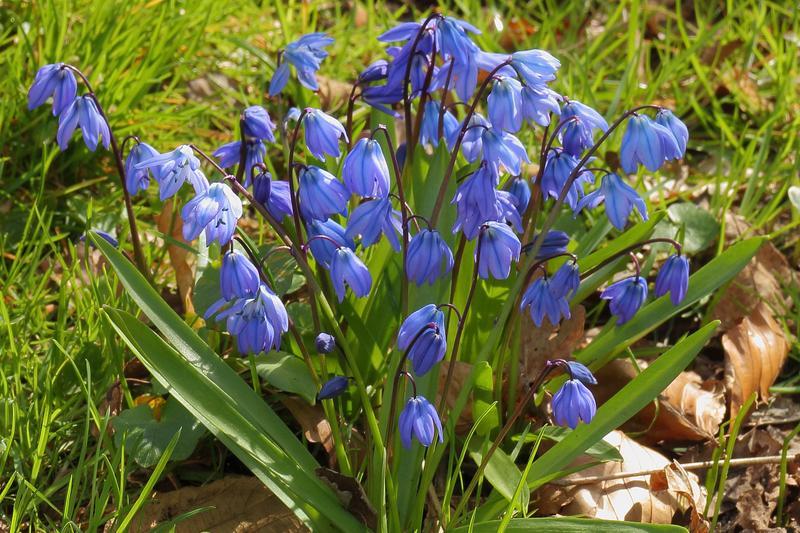
Quick facts
- Watering
- Minimal once established
- Sunlight
- Partial shade to full sun
- Soil
- Well-drained, humus-rich
- Humans
- Toxic
- Cats
- Toxic
- Dogs
- Toxic
- Height
- 10–15 cm
- Spread
- 5–8 cm
- Spacing
- 8–10 cm apart
- RHS recognition
- Award of Garden Merit
About Scilla
Scilla siberica is a charming early spring bulb producing nodding, bell-shaped flowers in brilliant cobalt blue. Native to southwestern Russia and the Caucasus, it has naturalised widely across British gardens and woodlands since Victorian times. UK gardeners prize it for its ability to carpet shaded areas with intense colour from late February through April, often flowering alongside snowdrops and crocuses. The small bulbs multiply freely, creating drifts of blue that return reliably year after year with minimal intervention.
UK fact: Scilla siberica holds the RHS Award of Garden Merit and has naturalised so successfully in British parks and gardens that it often appears in ancient woodlands, creating spectacular blue carpets that rival native bluebells in early spring.
Watering Scilla
Scilla bulbs need moisture during their active growth period from autumn through late spring, which typically coincides with natural British rainfall. Water newly planted bulbs if autumn is exceptionally dry, but established clumps rarely require supplementary watering. The bulbs enter dormancy after flowering and foliage dies back, tolerating dry summer conditions well. Avoid planting in areas prone to waterlogging during winter, as this can cause bulb rot.
Sunlight requirements
Scilla performs best in partial shade, particularly beneath deciduous trees where it receives spring sunlight before the canopy leafs out. In British gardens, north-facing borders and woodland edges provide ideal conditions. Full sun positions are acceptable, especially in northern regions, though flowers may fade more quickly in intense light.
Soil and feeding
Scilla grows best in humus-rich soil with good drainage, making it ideal for woodland gardens where leaf mould naturally enriches the ground. It tolerates a wide pH range from slightly acidic to neutral (pH 6.0-7.5), typical of most British garden soils. Heavy clay can be improved with organic matter and grit to prevent waterlogging. Sandy soils benefit from added compost to retain moisture during the spring growing season.
Scilla bulbs store energy efficiently and need little supplementary feeding in reasonably fertile soil. Apply a light dressing of bone meal when planting new bulbs in autumn. Established clumps benefit from an annual autumn mulch of well-rotted compost or leaf mould, which mimics their natural woodland habitat and provides slow-release nutrients.
Pruning Scilla
Deadheading spent flowers is unnecessary unless you wish to prevent self-seeding, though most gardeners welcome the natural spread. The key maintenance task is to leave foliage intact after flowering until it yellows and withers completely, usually by late May or early June. This allows the bulbs to photosynthesise and store energy for next year's display. Avoid tidying away leaves prematurely, even if they look untidy, as this weakens the bulbs and reduces flowering.
Propagating Scilla
Scilla spreads naturally through both seed and bulb offsets, often forming extensive colonies in favourable conditions. Division of congested clumps in late summer provides the quickest method for increasing stock, whilst self-sown seedlings take three to four years to reach flowering size. The species naturalises so freely in British gardens that intervention is rarely needed. For controlled propagation, lift and divide clumps every four to five years when dormant.
Common problems
Scilla is remarkably trouble-free in British gardens, with few serious pests or diseases. Bulbs may occasionally suffer from grey mould (Botrytis) in excessively wet conditions, causing rotting; ensure good drainage to prevent this. Slugs and snails sometimes nibble emerging shoots in early spring, though damage is rarely severe. The main issue is over-enthusiastic spreading in small gardens, as self-seeding can become invasive; deadhead after flowering if containment is desired.
Spot a problem with your plant? Photograph the affected area using the Loam app and it will suggest the most likely cause and treatment.
Safety
- Humans
-
Toxic
All parts contain toxic glycosides that can cause nausea, vomiting, and diarrhoea if ingested. Handle bulbs with care and wash hands after planting.
- Cats
-
Toxic
Contains cardiac glycosides toxic to cats. Ingestion may cause vomiting, diarrhoea, and cardiac effects. Keep cats away from bulbs during planting.
- Dogs
-
Toxic
Toxic to dogs if ingested, causing gastrointestinal upset and potentially cardiac symptoms. Bulbs pose the greatest risk during autumn planting.
Toxicity information is for general guidance only. If a person or pet has been exposed to this plant and you are concerned, seek advice from a medical professional or vet.
Seasonal care calendar
Monthly care guide for Scilla in the UK, based on average conditions.
| Month | Care tasks |
|---|---|
| January | Shoots may begin emerging in mild winters. Ensure bulbs are not waterlogged during wet spells. |
| February | Flowering begins in mild regions. Protect emerging shoots from slug damage if necessary. |
| March | Peak flowering period. Enjoy the display and note areas where additional bulbs could be planted next autumn. |
| April | Late flowers fade. Allow foliage to remain and photosynthesize; avoid tidying or cutting back leaves. |
| May | Foliage begins yellowing and dying back. Continue to leave in place until completely withered. |
| June | Foliage fully died back. Bulbs can be lifted and divided if desired, or left to naturalise undisturbed. |
| July | Bulbs dormant. Last opportunity to lift and divide established clumps before autumn planting season. |
| August | Bulbs dormant. Prepare planting sites for new bulbs by improving soil with compost and ensuring good drainage. |
| September | Ideal time to plant new bulbs or replant divisions. Plant 5-8 cm deep in groups for natural effect. |
| October | Continue planting bulbs. Apply autumn mulch of leaf mould over planting areas to enrich soil. |
| November | Last chance to plant bulbs before winter. Roots developing underground; ensure adequate moisture. |
| December | Bulbs establishing roots. No action needed; allow natural winter rainfall to support development. |
Frequently asked questions
- When should I plant Scilla bulbs in the UK?
- Plant Scilla bulbs in September or October for best results. This gives them time to establish roots before winter and ensures strong flowering in late winter and early spring. Bulbs can be planted as late as November, though earlier planting produces better displays.
- Why didn't my Scilla flower this year?
- The most common cause is foliage being cut back too early the previous year, preventing bulbs from storing sufficient energy. Other reasons include planting too shallowly, overcrowding, or excessively dry conditions during the growing season. Bulbs planted from seed take three to four years to reach flowering size. If you're struggling to diagnose the specific issue, the Loam app can help identify problems with your bulbs and provide personalised care advice based on your garden conditions.
- What soil conditions do Scilla need to thrive?
- Scilla thrives in well-drained soil and tolerates most soil types, from sandy to clay, provided drainage is adequate. They prefer a position in partial shade under deciduous trees or shrubs, where they receive spring sunlight before the canopy fills in. Scilla is unfussy about soil pH and will grow in both acidic and alkaline conditions. Avoid waterlogged areas, as bulbs may rot in consistently wet soil over winter.
Got a question about growing Scilla that isn't covered here? Ask the Garden Advisor in the Loam app. It knows your saved plants and local conditions.
Related plants
This page was compiled with AI assistance and reviewed by our team. .