Autumn Crocus
Colchicum autumnale
Bulbs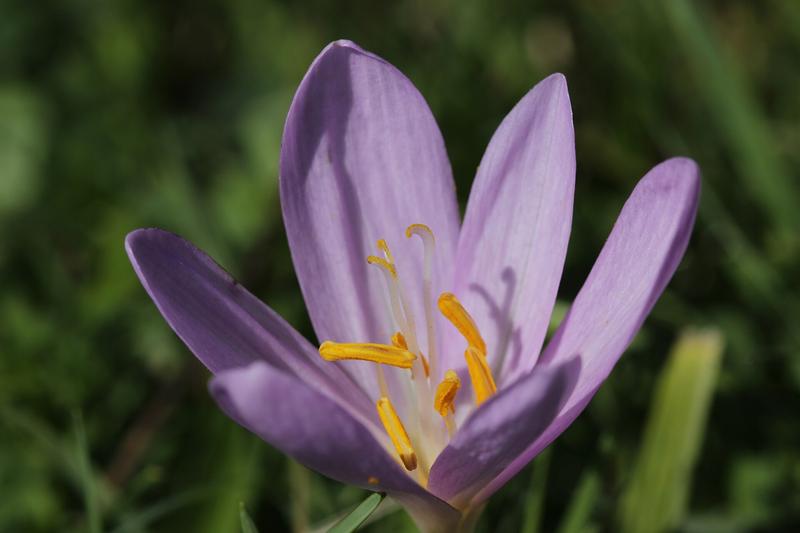
Quick facts
- Watering
- Minimal once established
- Sunlight
- Full sun to partial shade
- Soil
- Well-drained, moderately fertile
- Humans
- Toxic
- Cats
- Toxic
- Dogs
- Toxic
- Height
- 10–25 cm
- Spread
- 8–10 cm
- Spacing
- 10–15 cm apart
About Autumn Crocus
Autumn Crocus is a charming bulbous perennial native to Europe, including parts of the British Isles, producing goblet-shaped pink-purple flowers in September and October when most other plants are fading. Despite its common name, it is not a true crocus but belongs to the lily family, with large glossy leaves appearing in spring before dying back in summer. UK gardeners prize it for bringing unexpected colour to autumn borders, naturalising beautifully in grass, and thriving in our temperate climate. The corms are planted in late summer for a spectacular display just weeks later.
UK fact: Autumn Crocus grows wild in damp meadows across parts of England and Wales, particularly in the Cotswolds and Welsh borders, where it has been used historically in traditional medicine despite its extreme toxicity.
Watering Autumn Crocus
Autumn Crocus requires very little supplementary watering in the UK, as our autumn and winter rainfall typically provides sufficient moisture. Water newly planted corms if the soil is dry at planting time in late summer, but thereafter natural rainfall should suffice. The corms are dormant during summer and require dry conditions, so avoid planting in areas that remain waterlogged. Overwatering during dormancy can cause the corms to rot.
Sunlight requirements
Autumn Crocus performs best in full sun or dappled shade, making it ideal for planting beneath deciduous trees or shrubs that lose their leaves in autumn. In the UK, a south or west-facing position ensures the flowers receive adequate light during their brief autumn display. Avoid deep shade, which can reduce flowering and cause the blooms to stretch towards the light.
Soil and feeding
Autumn Crocus thrives in well-drained soil that does not become waterlogged, particularly during the summer dormant period. It tolerates a range of soil types including clay, loam, and chalky soils, provided drainage is adequate. A neutral to slightly alkaline pH (6.5-7.5) is ideal, which suits most UK garden soils. Improve heavy clay with grit or sharp sand to prevent winter waterlogging, which is the main cause of corm failure.
Apply a balanced fertiliser or bone meal in early spring when the foliage emerges to support leaf growth and replenish the corms for the following year's flowers. Avoid feeding in autumn when the plant is flowering, as this is unnecessary and the foliage that feeds the corm does not appear until spring. A light top-dressing of compost in late winter provides gentle nutrition.
Pruning Autumn Crocus
No pruning is required for Autumn Crocus. Allow the flowers to fade naturally in autumn and leave them in place, as removing spent blooms makes little difference to the plant's performance. Crucially, do not cut back the foliage when it emerges in spring, even though it can look untidy by early summer; the leaves must be left to die back naturally to feed the corm for next year's display. If naturalised in grass, delay mowing until the foliage has completely yellowed, typically by late June.
Propagating Autumn Crocus
Autumn Crocus spreads naturally by producing offset corms, which can be lifted and divided in summer when the plant is fully dormant (July to early August). Carefully dig up the clumps, separate the larger corms, and replant immediately at a depth of 10cm with the pointed end facing upwards. Division is best carried out every 3-4 years to prevent overcrowding and maintain flowering vigour. Seed propagation is possible but very slow, taking 5-7 years to reach flowering size, so division is the preferred method for UK gardeners.
Common problems
Autumn Crocus is relatively trouble-free but can suffer from slug and snail damage to emerging flowers and spring foliage, particularly in damp UK autumns. Grey mould (Botrytis) may affect flowers in prolonged wet weather, causing them to rot; remove affected blooms promptly. The main cultural problem is premature removal of spring foliage, which weakens the corms and reduces flowering. All parts of the plant are extremely toxic due to colchicine content, so always wear gloves when handling and ensure children and pets cannot access the corms or foliage.
Spot a problem with your plant? Photograph the affected area using the Loam app and it will suggest the most likely cause and treatment.
Safety
- Humans
-
Toxic
All parts of Autumn Crocus are extremely toxic, containing colchicine, which can cause severe vomiting, organ failure, and death if ingested. Even handling the corms can cause skin irritation; always wear gloves.
- Cats
-
Toxic
Highly toxic to cats; ingestion of any part can cause severe gastrointestinal distress, organ damage, and potentially fatal poisoning. Keep cats away from all parts of the plant.
- Dogs
-
Toxic
Highly toxic to dogs; ingestion causes severe vomiting, diarrhoea, organ failure, and can be fatal. All parts of the plant, especially the corms, are dangerous.
Toxicity information is for general guidance only. If a person or pet has been exposed to this plant and you are concerned, seek advice from a medical professional or vet.
Seasonal care calendar
Monthly care guide for Autumn Crocus in the UK, based on average conditions.
| Month | Care tasks |
|---|---|
| January | No action needed; corms dormant underground. |
| February | Watch for first foliage emerging in mild spells; apply bone meal if desired. |
| March | Large glossy leaves now fully emerged; apply balanced fertiliser to support growth. |
| April | Foliage at its peak; ensure leaves are not damaged or removed. |
| May | Leaves beginning to yellow; continue to leave foliage in place. |
| June | Foliage dying back naturally; can be removed once completely brown. Delay mowing if naturalised in grass. |
| July | Plant is dormant; ideal time to lift and divide congested clumps if needed. |
| August | Plant new corms 10cm deep by mid-month for autumn flowering. Complete any division work early in the month. |
| September | Flowers emerge directly from soil; enjoy the display and protect from slugs. |
| October | Peak flowering period; deadhead spent blooms if desired, though not essential. |
| November | Flowering finishing; allow all plant material to remain in place. |
| December | No action needed; corms entering dormancy underground. |
Frequently asked questions
- When should I plant Autumn Crocus bulbs in the UK?
- Plant Autumn Crocus corms in late July to mid-August for flowering in September and October the same year. Unlike spring bulbs, these need to be planted in summer whilst dormant, at a depth of 10cm in well-drained soil. The earlier you plant in this window, the more established the corms will be before flowering.
- Why didn't my Autumn Crocus flower this year?
- Common causes include cutting back the spring foliage too early (which starves the corm), planting too shallow or too deep, or waterlogged soil during summer dormancy. The Loam app can send you timely reminders not to remove foliage and help diagnose specific issues based on your garden conditions and care history.
- Can I grow Autumn Crocus in grass like spring crocuses?
- Yes, Autumn Crocus naturalises beautifully in grass and meadows, creating drifts of autumn colour. However, you must not mow the area from February until late June to allow the spring foliage to feed the corms. Mark the area clearly to avoid accidentally mowing, and choose a spot where long spring grass will not be problematic.
Got a question about growing Autumn Crocus that isn't covered here? Ask the Garden Advisor in the Loam app. It knows your saved plants and local conditions.
Related plants
This page was compiled with AI assistance and reviewed by our team. .