Solanum Crispum
Solanum crispum
Climbers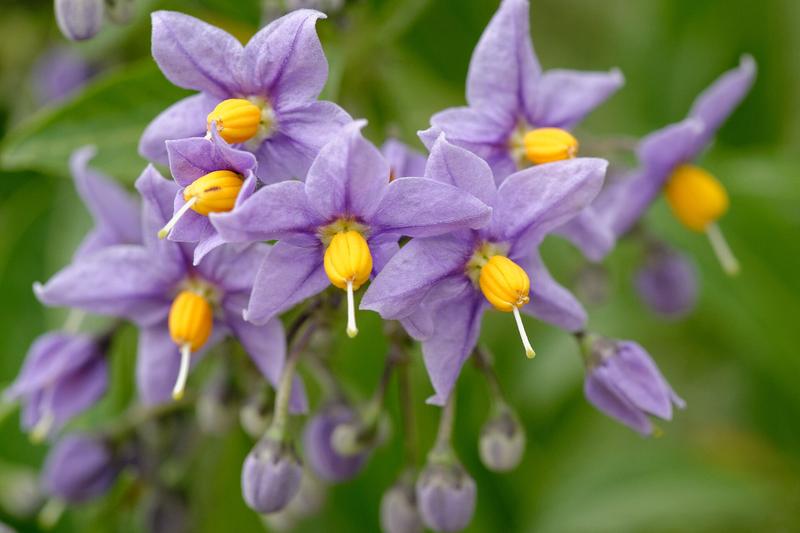
Quick facts
- Watering
- Weekly during growing season
- Sunlight
- Full sun to partial shade
- Soil
- Well-drained, moderately fertile loam
- Humans
- Toxic
- Cats
- Toxic
- Dogs
- Toxic
- Height
- 400–600 cm
- Spread
- 200–300 cm
- Spacing
- 200–250 cm apart
- RHS recognition
- Award of Garden Merit
About Solanum Crispum
Solanum crispum is a vigorous semi-evergreen climber native to Chile, prized for its profuse clusters of fragrant, purple-blue flowers with prominent yellow stamens from summer through to autumn. This fast-growing scrambler can quickly cover walls, fences and pergolas, bringing a Mediterranean feel to British gardens. UK gardeners value it for its long flowering season, relative ease of cultivation in milder regions, and ability to thrive in urban gardens where it softens hard landscaping beautifully.
UK fact: The cultivar Solanum crispum 'Glasnevin' holds the RHS Award of Garden Merit and was selected at the National Botanic Gardens in Dublin, proving particularly reliable in British and Irish maritime climates.
Watering Solanum Crispum
Newly planted specimens require consistent watering throughout their first growing season to establish a strong root system. Once established, Solanum crispum is moderately drought-tolerant but performs best with weekly watering during prolonged dry periods in summer. In typical British summers with regular rainfall, supplementary watering is rarely needed except during heatwaves. Reduce watering significantly in autumn and winter, allowing the soil to dry out between waterings to prevent root diseases.
Sunlight requirements
Plant against a south or west-facing wall for maximum flowering and protection from cold winds. In northern gardens, a sunny, sheltered spot is essential for the plant to ripen its wood and survive winter. Partial shade is acceptable but may reduce flowering intensity and make the plant more susceptible to frost damage.
Soil and feeding
Solanum crispum adapts to most soil types provided drainage is adequate, making it suitable for typical British garden soils. Improve heavy clay by incorporating grit and organic matter before planting to prevent winter waterlogging. The plant tolerates slightly alkaline to neutral pH (6.5-7.5) and doesn't require particularly rich soil—overly fertile conditions can promote excessive leafy growth at the expense of flowers. In containers, use a loam-based compost such as John Innes No. 3 with added grit for drainage.
Feed established plants with a general-purpose fertiliser such as blood, fish and bone in early spring as growth resumes. Follow up with a high-potash tomato feed fortnightly from late May through July to promote flower production. Avoid nitrogen-rich feeds after midsummer as these encourage soft growth vulnerable to frost damage.
Pruning Solanum Crispum
The main pruning session should take place in April or early May once you can distinguish live growth from frost-damaged stems. Cut back dead, damaged or weak shoots to healthy wood, and thin out overcrowded stems to maintain an open framework that allows air circulation. Solanum crispum flowers on the current season's growth, so don't be afraid to prune quite hard if necessary—it will quickly regenerate. Deadhead spent flower clusters throughout summer to prolong blooming, and tie in new growth to supports as it develops to maintain the desired shape.
Propagating Solanum Crispum
Semi-ripe cuttings taken in July or August offer the most reliable propagation method for Solanum crispum. Select healthy, non-flowering side shoots and root them in a propagator or on a warm windowsill. Layering is also successful—peg down a low-growing stem in spring and it should root by autumn. Seed propagation is possible but named cultivars like 'Glasnevin' won't come true, and seedlings are variable in flower quality.
Common problems
Solanum crispum is relatively trouble-free but can be affected by aphids on new growth during spring and summer—treat with insecticidal soap or encourage natural predators. Glasshouse whitefly may appear in sheltered positions; use yellow sticky traps for monitoring and control. Frost damage is the most common problem in British gardens, causing dieback of stems in harsh winters, though plants usually regenerate from the base in spring. In damp conditions, powdery mildew can affect foliage, particularly in late summer—improve air circulation and avoid overhead watering to minimise risk.
Spot a problem with your plant? Photograph the affected area using the Loam app and it will suggest the most likely cause and treatment.
Safety
- Humans
-
Toxic
All parts contain toxic alkaloids and should not be ingested. Berries are particularly dangerous if eaten.
- Cats
-
Toxic
Contains solanine and other toxic alkaloids that can cause vomiting, diarrhoea and neurological symptoms if ingested.
- Dogs
-
Toxic
Contains solanine and other toxic alkaloids that can cause vomiting, diarrhoea and neurological symptoms if ingested.
Toxicity information is for general guidance only. If a person or pet has been exposed to this plant and you are concerned, seek advice from a medical professional or vet.
Seasonal care calendar
Monthly care guide for Solanum Crispum in the UK, based on average conditions.
| Month | Care tasks |
|---|---|
| January | No action needed. Protect roots of young plants with a mulch in cold regions. |
| February | Check ties and supports are secure before spring growth begins. Order new plants for spring delivery. |
| March | Apply a general-purpose fertiliser around the base. Begin assessing frost damage but delay pruning until April. |
| April | Prune out dead and damaged wood once new growth reveals what has survived winter. Plant new specimens. |
| May | Tie in new growth to supports. Begin fortnightly high-potash feeding. Water during dry spells. |
| June | Enjoy the first flush of flowers. Continue feeding and watering. Monitor for aphids on soft new growth. |
| July | Deadhead spent flowers to prolong blooming. Take semi-ripe cuttings for propagation. Water regularly in dry weather. |
| August | Continue deadheading and watering. Take final cuttings early in the month. Peak flowering period. |
| September | Reduce watering as growth slows. Flowering continues into early autumn. Pot on rooted cuttings. |
| October | Late flowers may still appear in mild areas. Stop feeding to allow wood to ripen before winter. |
| November | Apply a protective mulch around the base in cold regions. Check supports are secure for winter winds. |
| December | No action needed. In severe weather, protect plants with horticultural fleece if temperatures drop below -10°C. |
Frequently asked questions
- When should I prune Solanum crispum?
- Prune Solanum crispum in April or early May, after the risk of hard frost has passed. Remove dead, damaged or frost-damaged stems first, cutting back to healthy wood. Then lightly trim back the previous year's growth by about one-third to maintain shape, and tie in new shoots to your support system. Avoid pruning later than May as this removes the current season's flowering shoots. Hard pruning in autumn or winter increases frost damage risk.
- Why are my Solanum crispum leaves turning yellow?
- Yellowing leaves on Solanum crispum usually indicate waterlogging, nutrient deficiency, or root problems. Check soil drainage—these plants dislike sitting in wet soil, especially in winter. Container-grown plants may need repotting if root-bound, or feeding if nutrients are depleted. Occasional lower leaf yellowing is normal. For accurate diagnosis of leaf problems and personalised care reminders, the Loam app can analyse photos of your plant and track its health over time.
- How do I propagate Solanum crispum from cuttings?
- Take semi-ripe cuttings in July or August from healthy side shoots. Cut 10-15cm lengths just below a leaf node, remove lower leaves, and dip the cut end in hormone rooting powder. Insert cuttings into pots of 50:50 multipurpose compost and perlite, water well, and cover with a clear plastic bag. Keep in a shaded cold frame or sheltered spot. Cuttings should root within 6-8 weeks. Pot on individually and overwinter in a frost-free greenhouse before planting out the following spring.
Got a question about growing Solanum Crispum that isn't covered here? Ask the Garden Advisor in the Loam app. It knows your saved plants and local conditions.
Related plants
This page was compiled with AI assistance and reviewed by our team. .