Soapwort
Saponaria officinalis
Wildflowers and Natives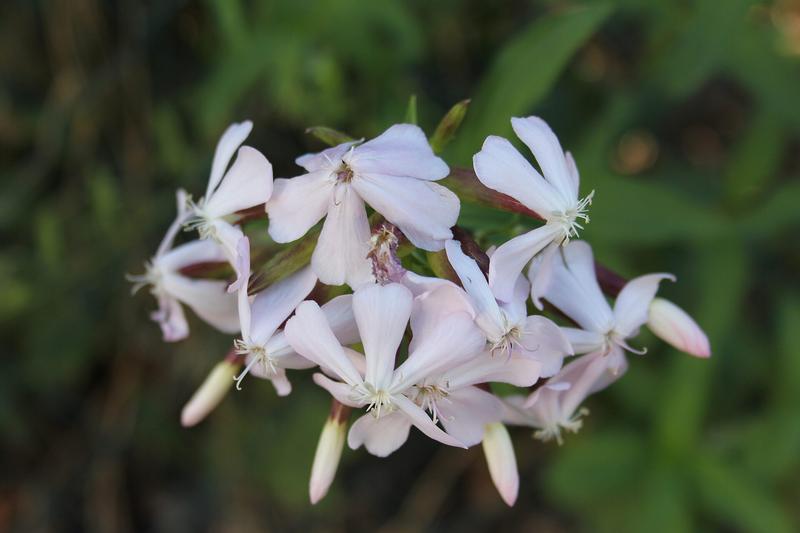
Quick facts
- Watering
- Fortnightly once established
- Sunlight
- Full sun to partial shade
- Soil
- Well-drained, moderately fertile
- Humans
- Toxic
- Cats
- Toxic
- Dogs
- Toxic
- Height
- 30–90 cm
- Spread
- 60–100 cm
- Spacing
- 45–60 cm apart
About Soapwort
Soapwort is a vigorous herbaceous perennial native to Europe, including Britain, producing clusters of pale pink, sweetly scented flowers from July to September. Growing 30–90 cm tall, this cottage garden favourite has been cultivated for centuries for its saponin-rich leaves and roots, which produce a natural lather when crushed in water. UK gardeners value it for its resilience, fragrant blooms that attract pollinators, and historical significance as a traditional cleaning agent. It spreads readily via rhizomes, making it ideal for naturalising in wild gardens or alongside streams and hedgerows.
UK fact: Soapwort was historically grown near fulling mills and textile workshops across Britain, where it was used to clean delicate fabrics and restore antique tapestries—a practice still employed by textile conservators at the National Trust and Victoria and Albert Museum today.
Watering Soapwort
Water newly planted soapwort weekly during the first growing season to establish a deep root system. Once established, plants are remarkably drought-tolerant and typically require watering only during prolonged dry spells—every two weeks in summer if rainfall is scarce. Soapwort growing near ponds or streams needs no supplementary watering. Avoid waterlogging, which can lead to root rot, though the plant tolerates occasional flooding.
Sunlight requirements
Soapwort thrives in full sun but tolerates partial shade, particularly in warmer southern regions where afternoon shade prevents stress during hot spells. In northern Britain, a sunny south or west-facing position encourages the most prolific flowering. Plants in shadier spots produce lush foliage but fewer blooms.
Soil and feeding
Soapwort adapts to a wide range of soil types, from sandy loam to clay, provided drainage is adequate. It prefers neutral to slightly alkaline conditions (pH 6.5–8.0) but tolerates mildly acidic soils. Avoid overly rich or heavily amended ground, which encourages excessive leafy growth at the expense of flowers and can make the plant invasively vigorous. Poor to moderately fertile soil keeps growth in check whilst still supporting healthy flowering.
Soapwort requires minimal feeding and thrives in lean conditions. A light application of general-purpose fertiliser or well-rotted compost in early spring is sufficient for established plants. Avoid high-nitrogen feeds, which promote rampant foliage growth and reduce flowering, and can make the plant difficult to control in smaller gardens.
Pruning Soapwort
Deadhead spent flowers regularly throughout summer to prolong blooming and prevent excessive self-seeding, which can lead to unwanted spread. Cut back stems to ground level in late autumn or early spring to tidy the plant and encourage fresh growth. If soapwort becomes too invasive, dig out unwanted rhizomes in spring or autumn, ensuring you remove all root fragments to prevent regrowth. Divide congested clumps every 3–4 years to maintain vigour.
Propagating Soapwort
Soapwort propagates readily from division, seed, or root cuttings. Divide established clumps in spring or autumn, ensuring each section has several shoots and roots, then replant immediately at the same depth. Sow seeds outdoors in spring or autumn where they are to grow, lightly covering with soil; germination occurs within 2–3 weeks. Alternatively, take 5–8 cm root cuttings in late winter, inserting them vertically into gritty compost and keeping them in a cold frame until new shoots appear.
Common problems
Soapwort is generally trouble-free but can suffer from aphids on young shoots in spring, which are easily controlled with insecticidal soap or by encouraging natural predators. Powdery mildew may appear on foliage in dry summers, particularly on plants in poor air circulation; improve spacing and avoid overhead watering. The plant's main issue is its vigorous spreading habit via rhizomes, which can become invasive in small gardens or borders—regular division and removal of unwanted shoots keeps it in check. Slugs occasionally nibble young growth but rarely cause significant damage.
Spot a problem with your plant? Photograph the affected area using the Loam app and it will suggest the most likely cause and treatment.
Safety
- Humans
-
Toxic
Soapwort contains saponins, which are toxic if ingested in quantity, causing nausea, vomiting, and diarrhoea. Avoid internal consumption and wash hands after handling.
- Cats
-
Toxic
Saponins in soapwort can cause gastrointestinal upset in cats if ingested. Keep cats away from the plant.
- Dogs
-
Toxic
Saponins in soapwort can cause vomiting, diarrhoea, and stomach pain in dogs if eaten. Prevent access to the plant.
Toxicity information is for general guidance only. If a person or pet has been exposed to this plant and you are concerned, seek advice from a medical professional or vet.
Seasonal care calendar
Monthly care guide for Soapwort in the UK, based on average conditions.
| Month | Care tasks |
|---|---|
| January | No action needed; plant is dormant. |
| February | Take root cuttings in late winter and place in a cold frame. |
| March | Cut back old stems if not done in autumn. Divide congested clumps and replant. Apply light compost mulch. |
| April | New shoots emerge; watch for aphids and treat if necessary. Sow seeds outdoors. |
| May | Water newly planted specimens weekly. Remove any unwanted seedlings or spreading shoots. |
| June | Flower buds form. Water during dry spells and mulch to retain moisture. |
| July | Flowering begins. Deadhead spent blooms regularly to prolong display and prevent self-seeding. |
| August | Continue deadheading. Water fortnightly if rainfall is scarce. Monitor for powdery mildew. |
| September | Flowering continues into early autumn. Deadhead and remove any invasive growth. Divide plants if needed. |
| October | Flowering finishes. Cut back stems to ground level or leave for winter structure. Divide clumps if required. |
| November | Clear away dead foliage if not already done. Dig out unwanted rhizomes to control spread. |
| December | No action needed; plant is dormant. |
Frequently asked questions
- Is soapwort invasive in UK gardens?
- Soapwort can be invasive due to its spreading rhizomes, particularly in smaller gardens or rich soil. Regular division every 3–4 years, removal of unwanted shoots, and planting in lean soil helps control its vigour. It's ideal for wild gardens or naturalising where its spreading habit is an asset rather than a problem.
- Why isn't my soapwort flowering well?
- Poor flowering is usually caused by too much shade, overly rich soil, or excessive nitrogen feeding, all of which promote leafy growth at the expense of blooms. The Loam app can help you track sunlight levels, soil conditions, and feeding schedules to optimise flowering and diagnose specific issues with your plant's performance.
- Can I really use soapwort as soap?
- Yes, soapwort's leaves and roots contain saponins that produce a gentle lather when crushed and mixed with water. Historically used for cleaning delicate fabrics and still employed by textile conservators today, it's effective for washing woolens and antique textiles. Simply simmer a handful of leaves or chopped roots in water, strain, and use the liquid as a mild cleanser.
Got a question about growing Soapwort that isn't covered here? Ask the Garden Advisor in the Loam app. It knows your saved plants and local conditions.
Related plants
This page was compiled with AI assistance and reviewed by our team. .