Herb Robert
Geranium robertianum
Wildflowers and Natives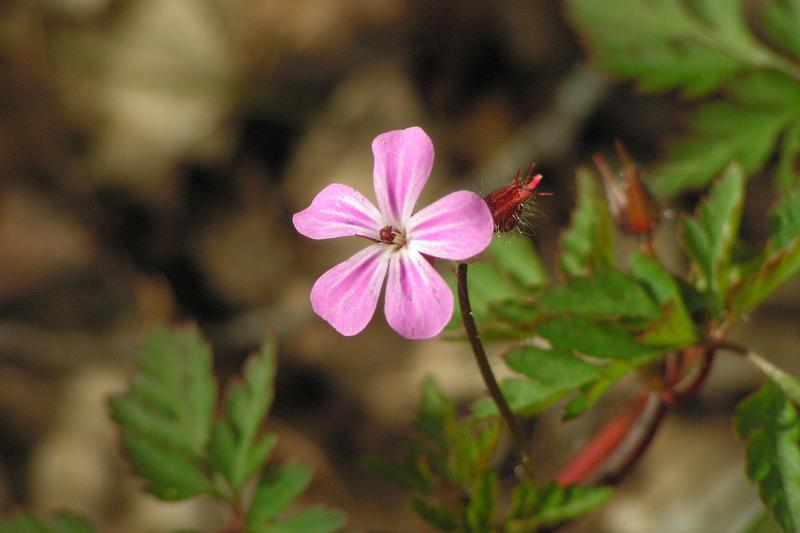
Quick facts
- Watering
- Minimal once established
- Sunlight
- Partial shade to full shade
- Soil
- Well-drained, moderately fertile
- Humans
- Safe
- Cats
- Safe
- Dogs
- Safe
- Height
- 10–40 cm
- Spread
- 15–30 cm
- Spacing
- 20–30 cm apart
About Herb Robert
Herb Robert is a delicate native British wildflower with deeply divided, fern-like foliage that often takes on attractive reddish tints, particularly in autumn. This low-growing annual or biennial produces small, five-petalled pink flowers from April through to October, making it a valuable nectar source for pollinators throughout the growing season. UK gardeners value it for naturalising in shady corners, woodland gardens, and wildlife areas where its self-seeding habit creates drifts of colour. The entire plant emits a distinctive, slightly musky scent when bruised, which has led to its use in traditional British herbal remedies.
UK fact: Herb Robert has been used in British folk medicine for centuries, with the name 'Robert' possibly derived from the Latin 'ruber' meaning red, referring to the plant's reddish stems and autumn foliage, or from the medieval herbalist Robert of Molesme who popularised its medicinal uses.
Watering Herb Robert
This native wildflower is remarkably drought-tolerant once established and typically requires no supplementary watering in most UK gardens. During prolonged dry spells in summer, plants in very free-draining soils may benefit from occasional watering to prevent premature die-back. Newly sown seeds or young seedlings should be kept lightly moist until established. Avoid overwatering, as Herb Robert naturally thrives in relatively dry, shaded conditions.
Sunlight requirements
Herb Robert thrives in partial to full shade, making it ideal for north-facing borders and beneath deciduous trees. In the UK, it will tolerate some morning sun but performs best when protected from hot afternoon light. Plant it in woodland settings or shady corners where few other flowering plants will flourish.
Soil and feeding
Herb Robert adapts to a wide range of soil types but performs best in well-drained, moderately fertile soil with a neutral to slightly alkaline pH of 6.5-7.5. It will tolerate poor, stony soils and is often found growing in cracks in walls and rocky areas in the wild. Heavy clay soils should be improved with grit or sharp sand to ensure adequate drainage. The plant actually flowers more prolifically in leaner soils, as overly rich conditions promote foliage at the expense of blooms.
Herb Robert requires no supplementary feeding and actually performs better in nutrient-poor conditions. Excessive fertiliser will produce lush foliage but fewer flowers and can make plants prone to flopping. If growing in containers, a single application of dilute liquid feed in spring is sufficient.
Pruning Herb Robert
Deadheading spent flowers will prevent excessive self-seeding, though many gardeners allow Herb Robert to naturalise freely in appropriate areas. Cut back any tatty or mildewed foliage in late summer to encourage fresh growth. As an annual or short-lived biennial, plants will naturally die back after setting seed, at which point they can be removed or left to decompose. In areas where self-seeding is unwanted, remove plants before seed pods ripen and explosively disperse their contents.
Propagating Herb Robert
Herb Robert propagates readily from seed and will self-seed prolifically if conditions suit. Sow seeds directly outdoors in spring or autumn where they are to grow, barely covering them with soil. Seeds germinate best with some light exposure and will establish quickly in shaded, well-drained spots. Alternatively, allow established plants to self-seed naturally and transplant seedlings to desired locations whilst still small, as older plants resent root disturbance.
Common problems
Herb Robert is generally trouble-free but can occasionally suffer from powdery mildew in very dry conditions or overcrowded plantings, appearing as white powdery patches on leaves. Rust may affect foliage in damp summers, causing orange-brown spots. The main issue for UK gardeners is controlling its enthusiastic self-seeding habit, as the explosive seed pods can scatter seeds several metres from the parent plant. In some gardens, particularly in shaded areas with bare soil, Herb Robert can become invasive and may require regular removal of unwanted seedlings.
Spot a problem with your plant? Photograph the affected area using the Loam app and it will suggest the most likely cause and treatment.
Safety
- Humans
- Safe
- Cats
- Safe
- Dogs
- Safe
Toxicity information is for general guidance only.
Seasonal care calendar
Monthly care guide for Herb Robert in the UK, based on average conditions.
| Month | Care tasks |
|---|---|
| January | No action needed. Overwintering rosettes remain dormant. |
| February | No action needed. Rosettes begin to show new growth in mild spells. |
| March | Sow seeds directly outdoors in prepared areas. Clear away winter debris around established plants. |
| April | First flowers begin to appear. Thin overcrowded seedlings to 20-30cm spacing. |
| May | Peak flowering begins. Transplant self-sown seedlings to desired locations whilst still small. |
| June | Continue flowering. Deadhead to prevent excessive self-seeding if required. |
| July | Flowering continues. Remove any mildewed foliage during dry spells. |
| August | Seed pods begin to ripen. Remove plants before seeds disperse if controlling spread. |
| September | Foliage takes on reddish autumn tints. Sow seeds for spring germination. Allow some self-seeding for naturalising. |
| October | Late flowers fade. Clear away spent plants or leave to provide winter habitat for insects. |
| November | Overwintering rosettes establish. No action needed. |
| December | No action needed. Plants remain dormant through winter. |
Frequently asked questions
- Is Herb Robert invasive in UK gardens?
- Herb Robert can self-seed enthusiastically in UK gardens, particularly in shaded areas with bare soil, but it's easily controlled by removing plants before seed pods ripen or pulling unwanted seedlings. It's a native British wildflower rather than an invasive non-native species, and many gardeners welcome its naturalising habit in woodland gardens and wildlife areas where it provides valuable nectar for pollinators from spring through autumn.
- Why are my Herb Robert leaves turning red?
- Reddish foliage on Herb Robert is completely normal and often indicates the plant is stressed by dry conditions, poor soil, or approaching the end of its lifecycle. The Loam app can help you track seasonal colour changes and identify whether intervention is needed, or if your plant is simply displaying its characteristic autumn tints.
- Can I grow Herb Robert in pots?
- Yes, Herb Robert grows well in containers filled with well-drained, gritty compost, making it suitable for shaded patios or balconies. Use pots at least 15cm deep with drainage holes, and position in partial to full shade. Container-grown plants may need occasional watering during dry spells, unlike their garden-grown counterparts which are largely self-sufficient once established.
Got a question about growing Herb Robert that isn't covered here? Ask the Garden Advisor in the Loam app. It knows your saved plants and local conditions.
Related plants
This page was compiled with AI assistance and reviewed by our team. .