Hardy Geranium
Geranium
Perennials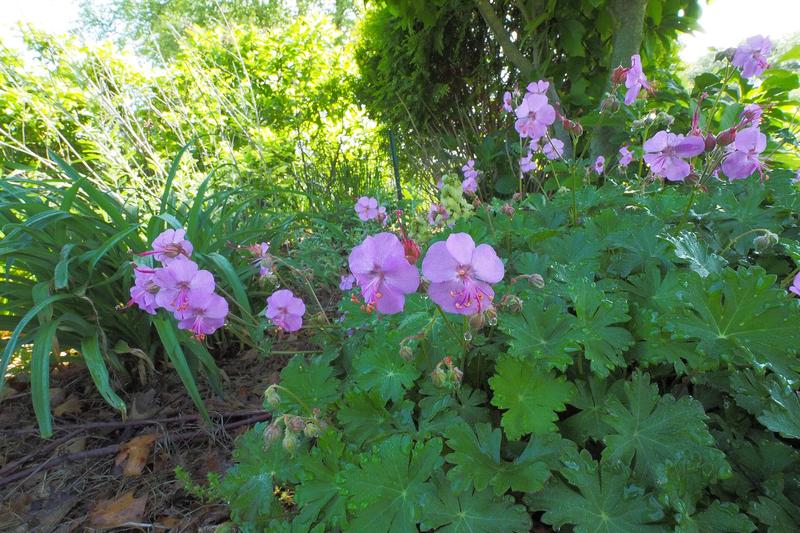
Quick facts
- Watering
- Weekly during establishment
- Sunlight
- Full sun to partial shade
- Soil
- Well-drained, moderately fertile
- Humans
- Safe
- Cats
- Safe
- Dogs
- Safe
- Height
- 15–90 cm
- Spread
- 30–120 cm
- Spacing
- 30–60 cm apart
- RHS recognition
- Award of Garden Merit
About Hardy Geranium
Hardy geraniums are versatile, long-flowering perennials beloved by British gardeners for their reliability and charm. Native to temperate regions across Europe, Asia, and North America, these true geraniums (not to be confused with tender pelargoniums) produce masses of five-petalled flowers in shades of pink, purple, blue, and white from late spring through autumn. Their mounded, often aromatic foliage and exceptional ground-covering ability make them indispensable in cottage gardens, borders, and woodland settings. Hardy geraniums thrive in the UK climate, requiring minimal maintenance once established whilst providing months of colour and excellent weed suppression.
UK fact: Many hardy geranium cultivars hold the RHS Award of Garden Merit, with British nurseries leading the world in breeding new varieties—Geranium 'Rozanne', bred in Somerset in the 1990s, became one of the best-selling perennials globally and flowers continuously from May to November in UK gardens.
Watering Hardy Geranium
Newly planted hardy geraniums require weekly watering during their first spring and summer, particularly during dry periods. Once established (typically after one full growing season), they are remarkably drought-tolerant and rarely need supplementary watering in most UK regions. During extended summer droughts, water deeply every 10-14 days rather than little and often, encouraging deep root growth. Avoid overhead watering in humid conditions to reduce the risk of fungal diseases, and ensure soil drains freely to prevent winter waterlogging.
Sunlight requirements
Most hardy geraniums perform best in full sun to partial shade, with at least four hours of direct sunlight daily for optimal flowering. In hotter, south-facing positions, afternoon shade helps prevent scorching and extends the flowering period. Woodland species like Geranium phaeum thrive in shadier north-facing borders, whilst Mediterranean types such as G. × cantabrigiense prefer sunny, well-drained spots.
Soil and feeding
These adaptable perennials grow well in most garden soils, from sandy loams to heavier clay, provided drainage is reasonable. They prefer moderately fertile, humus-rich soil with a pH between 6.0 and 7.5, though they tolerate slightly alkaline conditions. Improve heavy clay with organic matter and grit to prevent winter waterlogging, which can cause crown rot. Avoid overly rich soils, which promote lush foliage at the expense of flowers and reduce hardiness.
Apply a light dressing of blood, fish and bone or a balanced slow-release fertiliser in early spring as new growth emerges. Alternatively, mulch with a 2-3cm layer of well-rotted compost or leaf mould, which provides gentle nutrition whilst improving soil structure. Avoid high-nitrogen feeds, which encourage soft, disease-prone growth and reduce flowering.
Pruning Hardy Geranium
After the main flowering period in June or July, cut back spent flower stems and straggly growth to ground level or to fresh basal foliage using shears or hedge trimmers. This encourages a flush of new leaves and often a second wave of flowers in late summer and autumn. Remove any mildewed or damaged foliage promptly throughout the season. In late autumn or early spring, cut back deciduous types to ground level, whilst evergreen species like G. macrorrhizum need only tidying of dead leaves.
Propagating Hardy Geranium
Division is the simplest and most reliable method, carried out in March-April or September-October when plants are not in full growth. Lift established clumps with a fork, tease or cut apart sections with healthy roots and shoots, and replant immediately. Basal cuttings taken in April-May root readily in gritty compost. Some species self-seed freely, providing seedlings that can be transplanted, though named cultivars may not come true from seed.
Common problems
Hardy geraniums are generally trouble-free, but vine weevil larvae can damage roots, particularly in container-grown plants—look for notched leaf edges and apply biological controls in late summer. Powdery mildew may appear as white patches on foliage during dry spells with cool nights, especially on G. × magnificum; improve air circulation and remove affected leaves. Capsid bugs occasionally cause distorted, puckered leaves with small holes, though damage is usually cosmetic. Slugs and snails may nibble young spring growth but rarely cause serious harm.
Spot a problem with your plant? Photograph the affected area using the Loam app and it will suggest the most likely cause and treatment.
Safety
- Humans
- Safe
- Cats
- Safe
- Dogs
- Safe
Toxicity information is for general guidance only.
Seasonal care calendar
Monthly care guide for Hardy Geranium in the UK, based on average conditions.
| Month | Care tasks |
|---|---|
| January | No action needed. Plants are dormant; avoid walking on crowns in frosty conditions. |
| February | Cut back any remaining dead foliage on deciduous types if not done in autumn. Prepare planting sites. |
| March | Apply balanced fertiliser or compost mulch as new growth emerges. Divide established clumps. Plant new specimens. |
| April | Continue planting and dividing. Take basal cuttings. Water new plantings regularly. Watch for slug damage on emerging shoots. |
| May | Enjoy early flowers. Deadhead spent blooms to prolong display. Water during dry spells, especially new plants. |
| June | Peak flowering period. Deadhead regularly. After main flush, shear back for fresh growth and repeat flowering. |
| July | Cut back early-flowering varieties hard to encourage second flush. Water during prolonged dry periods. Watch for powdery mildew. |
| August | Enjoy second flowering on cut-back plants. Continue deadheading. Apply biological vine weevil control if needed. |
| September | Divide congested clumps. Plant new specimens. Late-flowering varieties still performing well. |
| October | Continue planting and dividing until mid-month. Allow some seed heads to develop for self-seeding if desired. |
| November | Cut back deciduous types to ground level. Leave evergreen types untouched. Tidy borders and compost healthy debris. |
| December | No action needed. Plants are dormant and fully hardy throughout winter. |
Frequently asked questions
- When should I divide hardy geraniums?
- Divide hardy geraniums every 3-4 years in early spring (March-April) or autumn (September-October) when plants become congested or flowering declines. Lift clumps with a fork, tease or cut apart sections with healthy roots and shoots, and replant immediately at the same depth. Spring division establishes quickest, whilst autumn-divided plants need well-drained soil to avoid winter rot.
- Why are my hardy geranium leaves turning yellow?
- Yellowing leaves can indicate several issues: waterlogged soil causing root problems, powdery mildew on older foliage after flowering, or natural die-back in late summer. Check soil drainage and reduce watering if soggy. If you're unsure what's affecting your plant, the Loam app can help diagnose the problem from a photo and provide personalised care advice to restore your geranium's health.
- Can hardy geraniums grow in shade?
- Most hardy geraniums prefer sun or partial shade, but woodland species like Geranium phaeum, G. nodosum, and G. macrorrhizum tolerate full shade and make excellent ground cover under trees and in north-facing borders, though flowering may be reduced.
Got a question about growing Hardy Geranium that isn't covered here? Ask the Garden Advisor in the Loam app. It knows your saved plants and local conditions.
Related plants
This page was compiled with AI assistance and reviewed by our team. .